Airmanship

You Are The Backup To Safety Enhancing Aircraft Avionics

Theres no going back-we are in an era of high-tech avionics and cockpit automation. Even some LSAs are sporting “glass” cockpits and simple autopilots; cross-country airplanes sport panels and equipment unheard of even in high-end turbines scant years ago, and the turbines themselves are becoming more accessible to owner-pilots. Even the most capable of these airplanes, however, has its automation limitations. Proper operation and constant monitoring of automated systems remains the responsibility of well-trained and emergency-current pilots. On April 19, 2008, a Cessna Citation Mustang suffered substantial damage when its pilot ground-looped the light jet to prevent a runway overshoot at Carlsbad, Calif. According to the NTSBs preliminary report, this was an intentional act to prevent going off a cliff past the end of the runway after the pilot landed “fast” and beyond the mid-point of Carlsbads 4600-foot available landing surface. The pilots quick action may be credited with sparing injury (or worse) to the four people on board.

Read More »

Are Some FAA Flight Regulations Too Lax?

Theres no way the FAA can come up with a regulation covering every possible scenario, which is a good thing. If they did, wed rarely be able to roll our airplanes out of their hangars except on the clearest of days when no airliners were about. So, the FARs set certain minimum standards for pilots and once we determine were in compliance, its up to us to decide if the proposed operation is safe, morally acceptable and non-fattening. Or something like that. Frequently what we want to do complies with both the FARs letter and spirit. Sometimes its borderline; certainly legal but safe only if everything goes our way and nothing on the airplane breaks. And then, there are occasions when the proposed operation is both legal but really not smart.

Read More »

Smoothing The Bumpy Ride

Nothing can spoil a nice trip on a good-weather day like bumpy air. Like most other things in meteorology, its somewhat possible to predict turbulence. But unlike most other things in meteorology, as well as in life itself, there is something you can do about it. Altitude, time of day, tall-and not-so-tall-buildings and the relative flatness of the terrain over which were flying can all combine to make what should have been a smooth, relaxing flight into your (or your passengers) worst nightmare. Sometimes, those are the cards youre dealt. Most of the time, though, it doesnt have to be that way. The air that supports our aircraft is a fluid subject to the laws of physics. Ignoring the local influence of the sun and obstructions for a moment, when the wind blows, its flow is laminar-all air moves together smoothly. Even though that air might be moving rapidly it will be pretty smooth. If you upset the laminar flow of that wind, things can get interesting in a hurry. The upset can be something physical like a mountain or just a different air flow. The result on the nice days is just a slight change to the laminar flow of the wind. On bumpy days, though, the result is air in the boundary between the laminar flow and the upsetting influence is not smooth at all. In fact, there are often eddies and backflows, same as you get aft of an airfoil thats just at or past the its critical angle of attack. Depending on the strength of the wind and the opposing forces, those eddies and backflows can be slight or quite severe, with the corresponding flight through them being either a little jittery or enough to separate wing from fuselage.

Read More »

Gladden MOA Mess

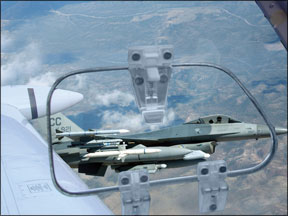
The military operations area, or MOA, is the Rodney Dangerfield of special use airspace (SUA): It doesnt get any respect. Part of the reason few pilots pay much attention to whether a MOA is hot or not is VFR operations are allowed-at our own risk-in an active MOA. This is much different from a MOAs more-serious brethren, the restricted or prohibited areas, or even the temporary flight restriction. That doesnt mean punching through an active MOA is a good idea. In late March, two civilian pilots found out the hard way that what goes on in a MOA probably should stay there. Online sister publication AVweb.com was on this story like a wet blanket-including a podcast with one of the civilian pilots and another with an F-16 driver-and the story generated a lot of comments from rank and file pilots. Many of those comments evidence some misunderstandings of MOAs and SUA: What kind of operations is the military engaged in, anyway? Are civilian aircraft endangering themselves or military pilots by entering? Under what rules, if any, is the military operating when in a MOA? As often is the case in an online discussion, these and other questions got thrown about with no clear answers. But were here to help make sense of it all.

Read More »

Trimming

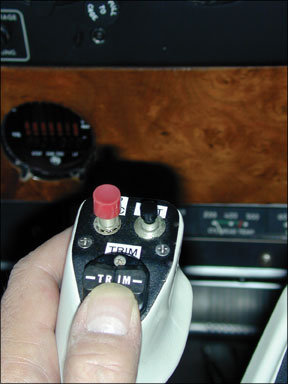
Like most student pilots, I tended to fly with the type of casual lan my primary instructor described, none too deferentially, with the term “death grip.” Then somewhere along the way came my first introduction to that little knurled disk, which is usually just called the trim wheel. Trim? Huh? Whats that? What does it do? How does it work? How is it used? Its nothing miraculous, really. Just think back to your childhood. If you were like me and many other airplane-crazy kids, when you built a balsa wood glider and you started flying it, whats the first thing you adjusted? You adjusted its surfaces balance and deflection so it would fly the way you wanted it to, thats what. Unlike what youre doing today, there was no little man or woman in there jockeying the controls. Instead, the slots in the fuselage within which one could adjust the forward or aft position of the wings and horizontal stabilizer was strictly a hands-off affair. If youre younger, and your glider was made of that new-fangled plastic foam, you might have had the luxury of “bendable” control surfaces. Same idea; different solution.

Read More »

Runway Incursions: Failed Expectations

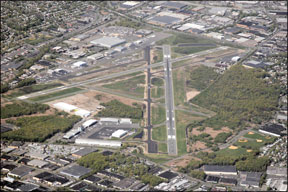
Fortunately for those of us who fly, runway incursions that cause accidents are relatively rare. But thats not to say incursions themselves are rare: Runway blunders have become an everyday thing, so much so that NASAs Aviation Safety Reporting System (ASRS) has thousands of incident reports best described as coulda-beens. We recently reviewed an intriguing report on this subject delivered to the [IMGCAP(1)]International Symposium on Aviation Psychology in Dayton, Ohio, last April by Dr. Ed Wischmeyer, an aviation researcher and contributor to our sister publication, KITPLANES. Wischmeyer mined some 2000-plus ASRS reports collected between January 2003 and January 2006. His search criteria sought out reports on ground conflict and ground incursion incidents. This search yielded 1049 relevant reports, 723 of which were from turbine operators and 326 from smaller piston aircraft on personal or instructional flights.

Read More »

Flying On-Top of The CloudsTips

I love clouds; I always have, even as a child. When I learned to fly, I came to understand what they could tell me-as well as what they could do to me. Then, as I earned the thin suit of armor we call an instrument rating, I could not only look upon clouds from my new perspective, I could get up close and personal with them. Soon, I learned getting above them offered the best of many worlds, including greater visibility, better weather, a smoother ride and more advance notice of challenging weather ahead. But I also learned getting and staying on top of a cloud deck can put you someplace youd rather not be, even with an instrument rating.

Read More »

Flying In The Margins

In some ways VFR flying can be more challenging than flying under instrument flight rules. Apart from achieving the skill of being able to read and understand the instruments, controlling an aircraft solely by reference to them, talking to and taking notes from ATC and planning your next move-all at the same time-IFR flying is almost entirely built upon procedures. Compared to VFR flying, its about as intuitively challenging as rendering a picture by the use of numbered colored pencils. When the weather is marginal and youre flying under visual flight rules, the challenge comes from knowing how to interpret a different set of numbers.

Read More »

Can I Land On That?

You are a skilled, proficient and responsible pilot. You do everything in your power to avoid dangerous situations but there are a few unavoidable moments during each flight where, if the unthinkable happened, youd be left with few options. Flying is, after all, an exercise in risk management, not risk elimination.Imagine that youre departing from Mega City Municipal. With a healthy climb rate established, you tuck away the landing gear, set climb power and prepare to enter the soup. Just as the airport fence slides underneath the belly, your sole engine shivers and goes silent. Youre only 500 feet above the ground, so turning back to the runway is not a reasonable option. You look out the window and all you see is a patchwork of gray and black boxes. Can you land on that stuff?

Read More »

Its Not Just Aviation Talk

Communication is something we all take for granted; we talk, somebody else listens, somebody else talks, we listen, so whats so complicated about that? Actually, more than you might think. What, for example, if youre speaking French to someone who doesnt understand French? Or maybe someone who speaks your language misinterprets something you said, or doesnt understand something you were talking about. You were certainly speaking clearly enough.

Read More »
Pilot in aircraft
Sign-up for newsletters & special offers!

Get the latest stories & special offers delivered directly to your inbox.

SUBSCRIBE