











You are a skilled, proficient and responsible pilot. You do everything in your power to avoid dangerous situations but there are a few unavoidable moments during each flight where, if the unthinkable happened, youd be left with few options. Flying is, after all, an exercise in risk management, not risk elimination. Imagine that youre departing from Mega City Municipal. With a healthy climb rate 288
Can I Land On That?
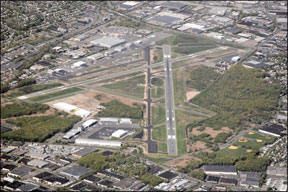
You are a skilled, proficient and responsible pilot. You do everything in your power to avoid dangerous situations but there are a few unavoidable moments during each flight where, if the unthinkable happened, youd be left with few options. Flying is, after all, an exercise in risk management, not risk elimination.Imagine that youre departing from Mega City Municipal. With a healthy climb rate established, you tuck away the landing gear, set climb power and prepare to enter the soup. Just as the airport fence slides underneath the belly, your sole engine shivers and goes silent. Youre only 500 feet above the ground, so turning back to the runway is not a reasonable option. You look out the window and all you see is a patchwork of gray and black boxes. Can you land on that stuff?

Key Takeaways:
- In a low-altitude engine failure, maintaining control and landing straight ahead at the lowest possible airspeed is paramount for survivability, regardless of the landing surface.
- Non-traditional landing options like warehouse roofs or parking lots, while challenging due to potential obstacles and structural limits, may offer a better chance of survival than denser areas.
- Pilots should conduct pre-flight research using satellite imagery to identify and evaluate potential emergency landing sites around airports, which aids in making quick, informed decisions during an emergency.
Key takeaways sponsored by Aviator Pro | Start Your Training ->
See a mistake? Contact us.

