Airmanship

Aim Guidance On SVFR

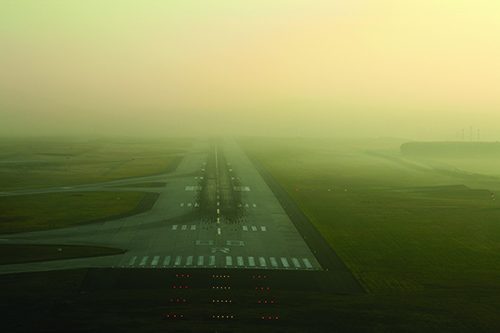
If you still have questions after perusing FAR 91.157, the FAA’s Aeronautical Information Manual may help. Highlights from its discussion (at para. 4-4-6) include: 1. Pilots must request an SVFR clearance; ATC won’t offer it (although controllers may hint at it: ”Is there anything special we can do for you today?”). 2. An SVFR clearance […]
Read More »

SVFR – What The FARS Say

The FAA regulation describing SVFR weather minima for both fixed-wing aircraft and helicopters is FAR 91.157. Here are the highlights: 1. SVFR may only be conducted below 10,000 feet msl and to the surface within the lateral boundaries of an airport’s controlled airspace. An ATC clearance is required. 2. SVFR weather minima, except for helicopters […]

Read More »

Special VFR

The only time I’ve used Special VFR “in anger” goes back some 20 years, to a less-than-perfect day at a towered airport. I was set to depart the following day, on a mission to ferry a familiar airplane from one coast to the other. At the time, I hadn’t flown the airplane in a couple […]

Read More »

Proactive Avoidance

Several pilots to whom I’ve given check rides or flight reviews in recent years were willing to needlessly tempt fate and accept a takeoff or landing clearance in situations where a potential encounter with wake turbulence was a real possibility; I’ve had to stop them from taking off or landing. Nonchalance, carelessness and ignorance—or combinations […]

Read More »

Early Wake Turbulence Research

Prior to the advent of jet transports like the Boeing 707 and Douglas DC-8 in the late 1950s, what we’ve come to know as wake turbulence was often dismissed as “propwash.” As heavier and heavier aircraft, like the Lockheed C-5 and the Boeing 747, grew in numbers, the FAA, NASA, the U.S. Air Force and […]

Read More »

Wake Turbulence and Situational Awareness

Editor’s note: Last month’s issue included a cover story on wake turbulence and how we may encounter it even when our training suggests it shouldn’t be a factor in our operations. This article is a companion piece, featuring a deeper dive into wake turbulence characteristics and behavior to help us predict where it is and […]

Read More »

Dynon Skyview HDX

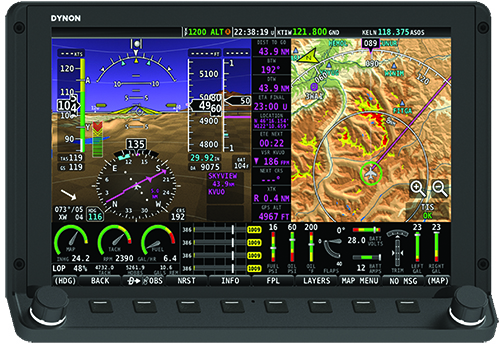
Dynon’s Skyview HDX EFIS solutions for certified aircraft include a pair of EFIS displays in 10-inch and 7-inch form factors. The units can be installed individually, as shown at right, or in pairs and provide many more operational capabilities than just primary flight instrumentation. They’re not “flight decks” like a Garmin G1000 and require an […]

Read More »

Aspen Avionics Evolution ES

The Evolution E5 is Aspen’s entry-level electronic flight instrument. Like the Garmin G5 stack, it combines an artificial horizon and a heading indicator but, unlike with two G5s, these capabilities are in one unit. That complicates the redundancy consideration somewhat, but the E5 also incorporates a backup battery. In my installation, it’s likely an additional […]

Read More »

Garmin International G5

Garmin’s G5 can be configured as an artificial horizon or directional gyro and mounts into the same instrument panel openings as the removed mechanical instruments. A stack of two, as depicted at right, helps eliminate the vacuum system and “offers reversionary display capability plus the added redundancy of dual ADAHRS and dual backup batteries,” according […]

Read More »

Garmin International GI 275

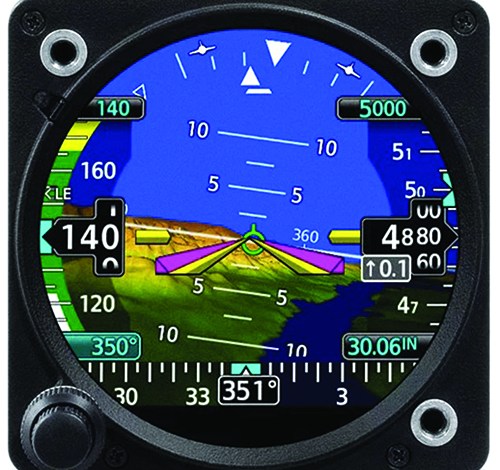
Garmin’s new GI 275 is a series of instruments designed to fit in the standard 3.125-inch panel opening but offer an all-electronic attitude indicator/attitude directional indicator (ADI), course deviation indicator (CDI), horizontal situation indicator (HSI) and engine indication system (EIS). At right, the attitude indicator version is shown at top, with the HSI at bottom. […]

Read More »
Pilot in aircraft
Sign-up for newsletters & special offers!

Get the latest stories & special offers delivered directly to your inbox.

SUBSCRIBE