Accident Probes

Not At Night

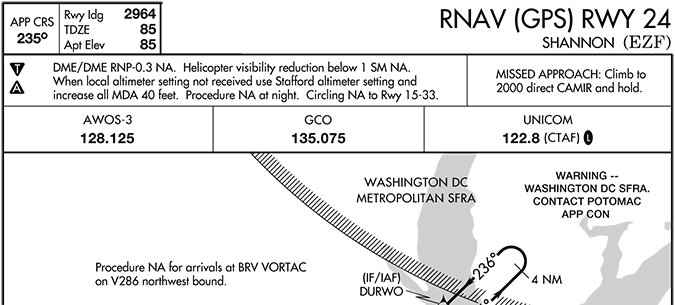
One of the first things instrument pilots learn during their training to fly approaches is reading the fine print, the various notes that may accompany a published procedure. Its a classic case of the large print holding great promise while the small print dashes any lingering hopes. Perhaps most ubiquitous is the NoPT admonition that a procedure turn is not authorized when flying to the final approach fix on certain segments.

Read More »

Impaired Flying Targeted

According to the FAA and its Civil Aerospace Medical Institute, CAMI, between six and 14 percent of pilot fatalities are related to alcohol intoxication. While that seems like a very high number of pilots in our experience-and a wide, inexact statistical range-the agency said it reached its conclusion by analyzing deceased pilots blood and tissue samples after accidents.

Read More »

Download the Full November 2016 Issue PDF

If your aircraft model has a type club or owners organization, you may want to join and participate in their training programs and related activities. Many of the name-brand types are well-served by these programs, and their graduates often come away with new and safer insights on how to operate their aircraft. If your aircraft has unusual handling characteristics-or if you just want to be able to take full advantage of its performance-obtaining specialized instruction from an instructor or training center with experience in that model should be a no-brainer.

Read More »

Aircraft Stalling: 3 Basic Kinds

Veteran pilots know better, because theyve learned that stalls are a normal part of flying, neither an aberration nor abnormal. They realize and understand stalls are simply what happens at the lowest end of an aircrafts normal flight envelope. Stalls when not wanted, not needed, at the wrong time, wrong place bend airplanes and break people. Which brings us to the first and most-important rule to remember about stalls: A stall can occur at any airspeed, in any attitude and at any power setting, from dead engine through full power.

Read More »

Preventing In-Flight Fires

While there are differing statistics regarding causes of aircraft fire-related accidents, it is safe to say that aircraft maintenance and pre-flight actions by the pilot play a significant role in most such events. And since the chances of surviving an in-flight fire without major injury or death are poor, preventing a fire from occurring in the first place should be Job One. Pilots can memorize procedures, talk about scenarios and what-ifs, but when it is all said and done, avoiding one starts on the ground.

Read More »

NTSB Reports: October 2016

The flight instructor set the airplane up for simulated engine failure by pulling out the carburetor heat control and reducing throttle to 1200 rpm. The student pilot followed emergency procedures, used the checklist and prepared to land. After the carburetor heat control was pushed back in and the throttle advanced, there was a sudden loss of power; efforts to restart the engine were unsuccessful. The airplane collided with the fence during the landing.

Read More »

Leaking Fuel Line

Once I started the engine and made it to the runup area, the Dynon D-180 registered about 10 gallons in the selected right tank (I have a Lycoming O-235-L2C engine installed and typically I burn about 5-6 gallons an hour). I thought it was peculiar, but I attributed the loss of five gallons to starting, taxi and runup. I took off and headed the 30 miles to my practice area.

Read More »

Where The Drones Are

Understanding how drones-in FAA parlance, an unmanned aircraft system (UAS) is sometimes called a drone-are used is the first step toward avoiding an unexpected and unwanted encounter. In its recently released Part 107 regulations on commercial use of UAS, the FAA focused on small UAS, craft weighing under 55 pounds. Given their numbers and popularity, this is the class of systems with which we should be most concerned.

Read More »

Missing Flight Plan

Depending on the controller and his/her workload, plus how professional you sound on the radio, ATC may offer to fix the problem immediately. A controller can prompt you for enough information to enter your plan into the system directly, without you needing to chase down someone else on the phone or another frequency to re-file. If you can do it with your cell-connected tablet and an EFB app, try it. Otherwise, youll have to figure out a way to contact Flight Service and file all over again. Of course, you can depart VFR instead of IFR. If the weather is good, thats an option, and you can raise Flight Service on the radio once youre airborne and file, then call ATC for the clearance.

Read More »

When The Juice Drys Up

On the first occasion, I was on an IFR flight plan departing into an 800-foot ceiling on my way to a destination reporting clear skies. At some point, I would clear the fog layer covering the inversion and find those clear skies, I just didnt know exactly where the layer would burn off. On departure I passed through the 500-foot-thick layer and was soon in VMC on top. Tops were at roughly 6500 feet and I was cruising along at 8500 with nothing but blue skies above me and a flat layer of white tops 2000 feet below.

Read More »
Pilot in aircraft
Sign-up for newsletters & special offers!

Get the latest stories & special offers delivered directly to your inbox.

SUBSCRIBE