Sunday, June 2, 2019

Flying Your Propeller

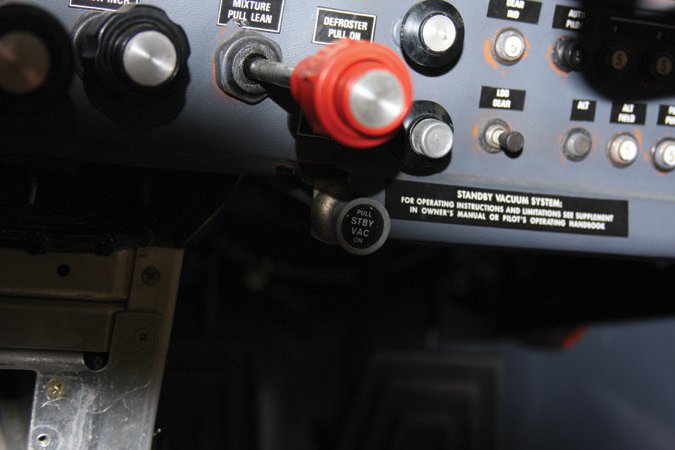
Remember that propeller blades are airfoils moving in a plane different from and usually perpendicular to the direction of flight. As an airfoil, the amount of lift the blade creates when moving through the air depends on its angle of attack, and its angle of attack-plus drag-can depend on a variety of factors, including the airplanes pitch attitude. Remember, too, that the outer portions of long prop blades move faster-they cover greater distance in the same amount of time-than shorter ones.

Read More »
Tuesday, October 30, 2018

EAA Lauds Experimental Aircraft Safety News

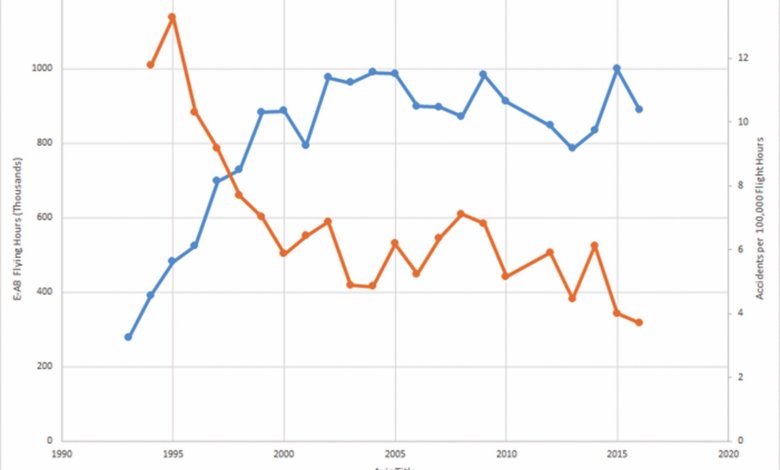
Experimental amateur-built aircraft in 2017 achieved their safest year ever, according to the Experimental Aircraft Association (EAA). The association based its findings on the recently finalized results of the FAAs 2017 General Aviation and Part 135 Activity Survey (GA Survey). Pilots of experimental amateur-built (E-AB) aircraft were involved in fatal accidents at a lower rate than has ever been recorded, with 2.63 fatal accidents per 100,000 flight hours last year, the association said. That fatal accident rate-2.63-breaks a record set the previous year, when E-AB pilots were involved in 3.6 fatal accidents per 100,000 flight hours, EAA added.

Read More »
Monday, October 29, 2018

Piston Engine Health Monitoring And Analysis

Looking back, the results were predictable, but the pilots and operators of earlier aircraft rarely had a choice. Advances in technology today allow precise engine monitoring and data evaluation so as to accurately predict and prevent upcoming partial or complete engine failures. In fact, monitoring has improved to the point that its rare for a modern and properly maintained-and operated-piston aircraft engine to fail without some kind of warning. The operators job is to conduct appropriate monitoring and analysis, and then to act when the data indicate a problem. Establishing an engine monitoring program and the minimal investment in equipment and training can be a significant factor in improving safety and reducing the overall cost of operation.

Read More »
Sunday, September 30, 2018

ELTs

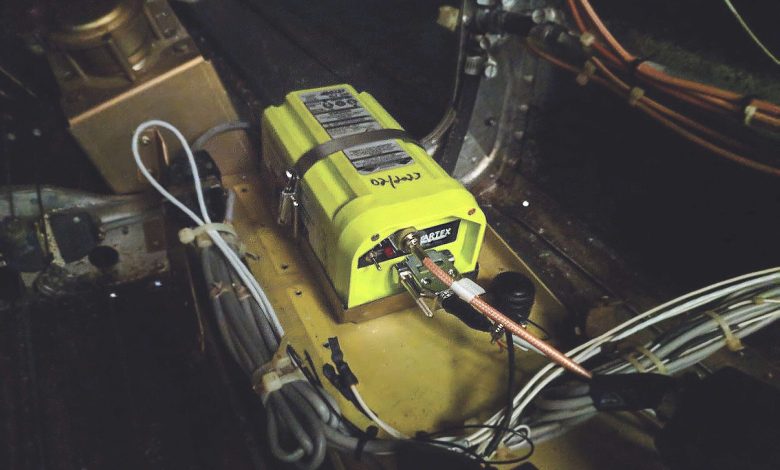
Those first ELTs, produced under FAA technical standard order (TSO) C91, failed to activate in a crash more than 75 percent of the time. When they did activate, according to AOPA, 97 percent of the time it was a false alarm. By 1985, when the FAA revised the standards and came up with TSO-C91a, a lot of the bugs had been worked out, but the ELTs troubled history painted it with a mostly deserved reputation for unreliability. Those earlier devices still meet the FAAs requirement to carry an ELT (see the sidebar on the bottom of the opposite page), but it perhaps is time they were retired in favor of newer technology.

Read More »
Friday, June 22, 2018

Good To Go?

Regardless of what you fly, how its equipped, and how old or new it is, you eventually will encounter inoperative instruments and/or equipment during a preflight inspection. It can be something known to the operator and the maintenance department, or it can be something new. Once the inoperative component is discovered, you have to make a determination whether its legal to fly the airplane without repairs, and then decide if its safe to fly. The two are not the same.

Read More »
Tuesday, May 22, 2018

Mind The Gaps

NY NEXRAD. There is a large wind farm nearby with turbines oriented from due north through southeast of the radar. The turbines are close enough (within 18 km) to cause spurious multipath scattering that extends well beyond the wind farm and contaminates data at multiple scanning elevation angles.ӟOur modern Nexrad (Next-Generation Weather Radar) system is still based on radar

Read More »
Wednesday, February 21, 2018

E/AB Aircraft Safety

The Experimental/Amateur-Built aircraft category has been the fastest-growing segment of general aviation for some years. The term amateur-built suggests the aircraft was assembled by an individual instead of a factory. In fact, the FARs state that an amateur-built aircraft is one that the major portion of which has been fabricated and assembled by persons who undertook the construction project solely for their own education or recreation. The FAA requires that an amateur-built aircraft must be assembled or constructed at least 51 percent by an amateur, not including the engine(s), propeller(s) or accessories. Meanwhile, the term experimental encompasses much more than just amateur-built aircraft. Examples include those used for research and development, air racing, exhibition, etc.

Read More »
Tuesday, January 16, 2018

Choosing An Alternate

Most IFR operations dont require an alternate airport. Thats because the advertised weather often is better than required to select one and list it in a flight plan. That doesnt mean we shouldnt at least have something in mind as an alternative place to land if, say, some nummy lands gear-up at your destination or, as we saw in December 2017, an entire major airport finds itself without power.

Read More »
Tuesday, December 19, 2017

How Will They Know?

Many years ago, I happened to overhear one pilot ask another, How did they find out? The question revolved around a situation resulting from an error in judgment concerning operation of an unairworthy (out-of-annual-inspection) aircraft. While there was no accident, a somewhat unusual event occurred that was traced to a mouse nest in the carburetor heater duct, which caused a rough-running engine. After a precautionary landing, mechanics discovered the problem and thought it was hilarious.

Read More »
Loading Posts