











It’s been a pretty smooth flight so far, but out of the haze, you see the emerging outline of a huge towering cumulus. Oh, wonderful—an afternoon thunderstorm in your way.
ATC Sees Weather, too

Key Takeaways:
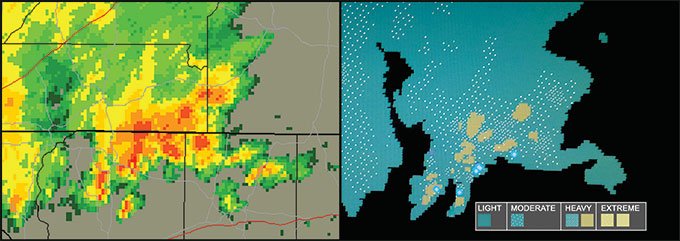
- ATC radar displays for weather are limited to showing only precipitation in muted colors and few intensity levels, omitting crucial details like cloud cover, lightning, wind, or the vertical extent of storms.
- The freshness of weather data varies significantly: TRACONs provide near real-time precipitation from local radars, while Air Route Traffic Control Centers rely on NEXRAD data via WARP, which has a significant time lag (often 5+ minutes), making it less reliable for rapidly developing weather.
- Due to the inherent limitations and potential inaccuracies of automated systems and radar displays, pilot reports (PIREPs) are crucial for providing accurate, real-time, firsthand weather information to ATC, helping verify conditions and enhance safety for all aircraft.
Key takeaways sponsored by Aviator Pro | Start Your Training ->
See a mistake? Contact us.

