












The mystery of Amelia Earhart’s disappearance will remain just that for a little while longer.
On Monday, just two weeks before Purdue University, the Purdue Research Foundation, and the Archaeological Legacy Institute (ALI) were set to launch the Taraia Object expedition to Nikumaroro Island in the South Pacific, the mission was postponed due to permit delays and a closing weather window.
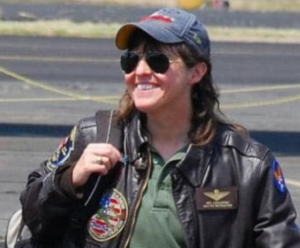
In a recorded statement, expedition member Sirisha Bandla noted that the team needs additional clearance from the government of Kiribati, and it is running up against the winter cyclone season in the South Pacific, Therefore, the decision was made to postpone the expedition until 2026.
“We are continuing to work through the clearing approval process, which unfortunately could not be finished in time for a safe departure,” said Steve Shultz, expedition member and Purdue University’s senior vice president and general counsel.
- READ MORE: Earhart Expedition Prepares for South Pacific Search
- READ MORE: Sonar Image Once Thought Proof of Missing Earhart Plane Is Actually a Rock Formation
The 15-person expedition was originally scheduled to launch from Majuro in the Marshall Islands on November 4.
“The team will continue positive engagement with Kiribati, with plans to go to Nikumaroro as soon as possible and when safe to do so,” the university said in a statement.
Purdue hosted a media conference Monday to answer questions.
“We were pretty much ready to go,” said Richard Pettigrew, ALI executive director, adding that the issue causing the delay was the lack of the research permit from Kiribati that the team has been working on getting for months.
The team thought they would have it by now, but it is a many-layered process, according to Shultz.
“…You are working with many different layers of government,” he said. “You are working with many different sections. Some deal with the environment, and some deal with fisheries.”
Another challenge is determining who will take ownership of the artifacts, if any are found, Shultz said. He said the team had to submit plans detailing the equipment it planned to use and the impact of the work on the island. It had submitted an artifact curation plan, but had not received word as to if it was approved.
“Postponing a complex project like this poses logistical and financial challenges for us and our partners, but we have to take it in stride,” said Pettigrew, who has been planning the expedition for the better part of four years. “We’ve overcome other challenges to this project over the past four years, and we will get past this one, too. Because of the compelling evidence we have in front of us, we have to go to Nikumaroro and get a close look at the Taraia Object. Rest assured that we will do just that, so stay tuned.”
Pettigrew also pointed out that the postponement comes with a “silver lining” as now the team has more time to become familiar with the equipment they will be using and establish procedures for mapping, excavation, and curation of any artifacts discovered.
As for the new dates for the expedition, they have not been determined yet, but Shultz said it would not be until at least April, when the cyclone season in the South Pacific ends.
The expedition plan in broad strokes will remain unchanged. A field team will depart the Marshall Islands and travel by sea for six days to Nikumaroro to confirm whether the visual anomaly seen in satellite and other imagery in the island’s lagoon is what remains of Earhart’s missing Lockheed Electra 10-E.



