













Register

ALL ABOUT MOISTURE

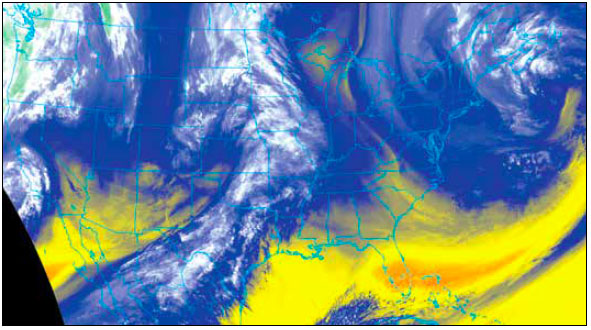
The GOES satellite water vapor channel detects moisture even in clear air.
Gemini Sparkle

Key Takeaways:

  • Atmospheric moisture, primarily measured by dewpoint and relative humidity, is critical for understanding aviation weather, affecting visibility, cloud formation, and precipitation.
  • Pilots can use dewpoint depression (the difference between temperature and dewpoint) as a practical indicator: a small spread (e.g., 5°C or less) suggests high relative humidity and a strong potential for fog or low clouds.
  • Clouds and fog form through condensation when air cools to its dewpoint, causing relative humidity to approach 100%, a process often aided by the presence of Cloud Condensation Nuclei (CCN).
  • Different types of fog, such as radiational, advection, and frontal fog, are specific manifestations of air cooling to its dewpoint under various atmospheric and surface conditions.
See a mistake? Contact us.

With summer approaching, we often think about those hot temperatures, high density altitudes, and storms. But another factor enters the picture: moisture. High relative humidity brings foggy mornings, and with soaring dewpoints comes the prospect for storms and rain.

With moisture having such a profound impact on flight operations, it’s time to take a closer look. Maybe we can even help you understand that dewpoint you always dutifully copy down from the METAR.


Ready to Sell Your Aircraft?

List your airplane on AircraftForSale.com and reach qualified buyers.

List Your Aircraft
AircraftForSale Logo | FLYING Logo
Pilot in aircraft
Sign-up for newsletters & special offers!

Get the latest stories & special offers delivered directly to your inbox.

SUBSCRIBE