

I see in The New York Times that rugged-individualist Western farmers are using drones to inspect crops and locate lost cattle, defying FAA regulations that forbid commercial use of the ubiquitous gadgets. “Precision agriculture,” as this kind of eye-in-the-sky farming has come to be called, seems like a pretty harmless thing — a good thing, actually, if you like food. In Japan, thousands of robot helicopters are already being used for crop spraying. However, despite the surging popularity of recreational multicopters, drones have gotten rather bad press in the United States. Their potential for annoying invasions of privacy and for colliding, accidentally or deliberately, with real airplanes has temporarily eclipsed their many beneficial uses.
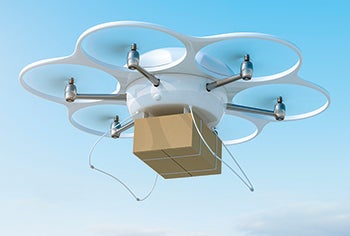
If the present rules are any indication, I suspect that the greatest challenge facing the FAA in the coming years will not be the implementation of the GPS-based air traffic control system but the progressive integration of pilotless airplanes into it. Technology, especially software design, moves far faster than rulemaking. Schemes of package delivery by drones, of robotic passenger-carrying “personal aerial vehicles” — just take a seat, select a destination and press “start” — or of pilotless cargo liners flying, like geese, in efficiency-enhancing V-formations may not be as fanciful as they seem. For the time being, however, the FAA clamps down on model airplanes.