














How Does an Electric Motor Work?

Gemini Sparkle

Key Takeaways:

  • Electric motors operate by using electromagnetic forces (attraction and repulsion) to spin a rotor, requiring dynamic switching of magnetic poles to maintain continuous torque.
  • Electric aircraft motors are typically powered by lithium-polymer (Li-poly) batteries, favored for their lower cost, durability, and high power output, although they pose an increased fire risk if overcharged.
  • The reduced cooling requirements of electric motors provide airplane designers with flexibility to create innovative and highly efficient propeller blade profiles.
See a mistake? Contact us.

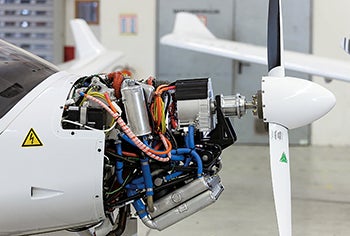
Electric motors use electromagnetic force to produce movement. Magnetic forces — attraction and repulsion — cause the electromagnet inside an electric motor to spin. Motors with metal brushes perform this function by creating opposite charges that attract and repel as the rotor changes polarity. A brushless electric motor relies instead on a solid-state controller to do the same thing.

In magnetic motors, magnetic fields form in both the rotor and the stator. These two fields give rise to a force, producing instantaneous torque on the motor shaft. These fields must be made to change with the rotation of the motor — otherwise it would abruptly stop. This is done by switching the poles on and off at the right time or varying the strength of the pole.


The battery packs that power an electric aircraft motor consist of stacks of thin lithium-polymer cells. An evolution of lithium-ion batteries, Li-poly batteries are favored because they cost less to produce, are more durable and can supply more power. One downside is the increased risk of fire if a Li-poly battery is overcharged.

Because electric motors don’t require much cooling, airplane designers can get creative with the shape of the propeller blades, creating blade profiles that maximize performance and efficiency. Bye Energy, for example, has proposed a slick six-blade prop for its developmental electric Skyhawk.

Read more about electric airplanes in our feature “Electric Future” here.

We welcome your comments on flyingmag.com. In order to maintain a respectful environment, we ask that all comments be on-topic, respectful and spam-free. All comments made here are public and may be republished by Flying.

Ready to Sell Your Aircraft?

List your airplane on AircraftForSale.com and reach qualified buyers.

List Your Aircraft
AircraftForSale Logo | FLYING Logo
Pilot in aircraft
Sign-up for newsletters & special offers!

Get the latest stories & special offers delivered directly to your inbox.

SUBSCRIBE
