














Air Force Ends Search for Remains in CV-22 Crash That Killed 8

The mishap prompted a massive search that included more than 1,000 personnel, 46 aircraft, and 23 maritime vessels, military officials said.

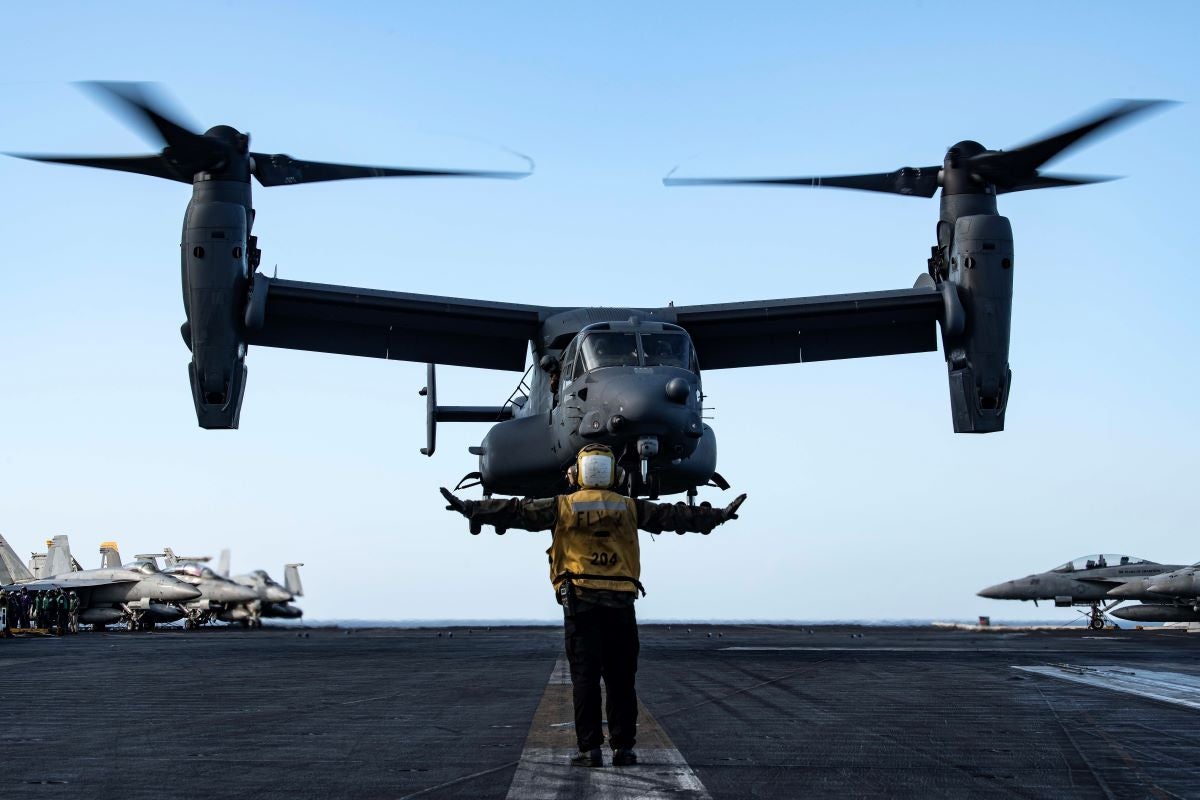
A U.S. Air Force CV-22B Osprey prepares to land on the flight deck of the USS George H.W. Bush (CVN 77) in March, 2023. [Courtesy: U.S. Air Force]
Gemini Sparkle

Key Takeaways:

  • The U.S. Air Force has concluded its over 40-day search for the final missing crewmember from a CV-22 Osprey that crashed off the coast of Japan in November, which resulted in the death of all eight personnel onboard.
  • The CV-22B Osprey crashed during a routine training mission with reports of a left engine fire, prompting a massive, multi-branch search effort that ultimately failed to recover the last crewmember.
  • Most of the aircraft has been salvaged, and the investigation into the cause of the crash is ongoing.
  • Following the incident, all V-22 Osprey fleets across the Air Force, Navy, and Marine Corps have been grounded globally, with no set timeline for the operational stand-down to be lifted.
See a mistake? Contact us.

After more than 40 days, the Air Force has ended search efforts for the remains of a missing CV-22 Osprey crewmember on board the aircraft when it crashed off the coast of Japan in late November, killing all eight personnel on board.

The CV-22B assigned to the Air Force’s 353rd Special Operations Wing at Yokota Air Base, Japan, went down offshore of Yakushima Island during a routine training mission on November 29. The Japan Coast Guard said it received an emergency call at the time of the incident, along with reports that the aircraft’s left engine was on fire as it fell.


The mishap prompted a massive search from five U.S. military branches alongside Japanese military search teams that included more than 1,000 personnel, 46 aircraft, 23 maritime vessels, and 21 unmanned aerial and underwater systems. The search area covered more than 60,000 square kilometers (about 23,100 square miles) of the ocean’s surface and 39 square kilometers (15 square miles) of the ocean floor, U.S. Air Force Special Operations Command (AFSOC) said in a statement Thursday.

“While it is with tremendous deep regret that we were unable to find our last teammate, Major Eric Spendlove, the combined joint efforts of our Japanese allies and U.S. military forces has been inspiring to see the lengths our forces will go in order to attempt to bring a teammate home,” Rear Admiral Jeromy Williams, commander of Special Operations Command Pacific, said in a statement. 

“Our main priority since the mishap has been locating and bringing our heroes back to their families. After over a month of exhausting air, surface, subsurface, and modeling and simulation assets, we have ruled out all identified possible options to recover our teammate. Our thoughts remain with the families and squadron mates of our CV-22 aircrew, and we extend our sincerest gratitude to every asset who assisted in the search.”

Salvage efforts recovered the majority of the aircraft, and AFSOC said its investigation into the cause of the crash continues.

Following the mishap, the Air Force, Navy, and Marine Corps grounded all V-22 variants among the ongoing probe into what caused the fatal accident.

“The operational stand-down is still in place,” an AFSOC spokesperson told FLYING Friday. “There is no timeline for when it will be lifted at this time.”

Ready to Sell Your Aircraft?

List your airplane on AircraftForSale.com and reach qualified buyers.

List Your Aircraft
AircraftForSale Logo | FLYING Logo
Pilot in aircraft
Sign-up for newsletters & special offers!

Get the latest stories & special offers delivered directly to your inbox.

SUBSCRIBE
