
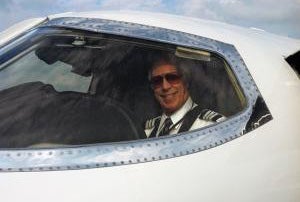


If I don’t practice one day, I know it; two days, the critics know it; three days, the public knows it.” So said Jascha Heifetz, the legendary violinist. Lately, I can relate. Last spring our Cheyenne turboprop sat, lonely and forlorn, in the hangar at Landmark Aviation in Tampa, Florida (our home base), for six weeks without so much as an engine start. The airplane was not down for maintenance. Its idleness was occasioned by other distractions in life and the price of fuel.
Concurrently, my Learjet career was subjected to similar disuse. First typed in the type almost a year prior, I’d managed to accumulate only 33 hours in Elite Air’s Lear 31As. Elite Air, an aircraft management and charter company, has changed my life by giving me the opportunity to learn the Lear. The reasons for the paucity of hours were other commitments on my part and the sudden appearance of a new first officer; young, handsome (I am told) and hungry. I’d had spates of Lear experience, but they were grouped in sudden bursts separated by months of inactivity. In the Cheyenne this is less of a problem than it is in the jet. There are two reasons. I have 1,600 hours in the Cheyenne and am familiar with its every noise, quirk and stunning attribute. The other reason is even more simple: The jet is twice as fast. Where I’ve got a few dropped steps in the taxi checklist in the turboprop, I’ve really been slow to relearn what I once knew in the jet. Add to that my years of auditory acclimation. For 13 years I’ve listened for ATC communications ending in “58 Whiskey.” Now I have to be alert for “Juliet Hotel” and “Fox Fox.” It is a slow process.