











Takeoffs, as a friend and CFI likes to inform her students, are optional. Landings, however, are mandatory. Within the soaring community, the line was “Get one free landing with every takeoff!” And therein is the most sobering aspect of facing a power-off landing: the reality the old stand-by go-around option we enjoy for other situations is eliminated. So while making all the usual efforts to restart an engine after it stops, the savvy pilot must simultaneously make a quick assessment of available options-and adjust to flying the aircraft as a glider. That means trimming for best glide while working the restart prospects and looking for the best suitable landing area available. And you must take these steps quickly: 288
Power-Off Approaches
Takeoffs, as a friend and CFI likes to inform her students, are optional. Landings, however, are mandatory. Within the soaring community, the line was "Get one free landing with every takeoff!" And therein is the most sobering aspect of facing a power-off landing: the reality the old stand-by go-around option we enjoy for other situations is eliminated. So while making all the usual efforts to restart an engine after it stops, the savvy pilot must simultaneously make a quick assessment of available options-and adjust to flying the aircraft as a glider. That means trimming for best glide while working the restart prospects and looking for the best suitable landing area available. And you must take these steps quickly: Altitude equals time to touchdown; the lower the failure altitude the less the time available, and the smaller is the radius of territory you have to consider. Gravity will prevail; your job is to make the arrival survivable, maybe even a great landing that leaves the airplane ready to fly again-once the engine problem is fixed, of course. Ultimately, an engine failure in a single-or, say, flameout of both engines after flying through a flock of birds-presents a situation demanding the best of your stick-and-rudder skills along with all your top judgment and experience.
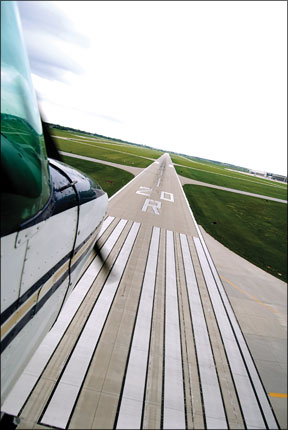

Key Takeaways:
- An engine failure eliminates the go-around option, forcing pilots to immediately transition to flying the aircraft as a glider and quickly make critical decisions for a power-off landing.
- Pilots must know their aircraft's specific power-off glide performance (speed, descent rate, and range) to rapidly assess available altitude, time to touchdown, and the feasibility of reaching suitable landing areas like airports or open fields.
- Effective power-off landing training should emphasize real-world scenarios, focusing on maintaining best-glide speed, managing altitude (e.g., with S-turns or slips), and judging turns to align with the chosen landing spot.
Key takeaways sponsored by Aviator Pro | Start Your Training ->
See a mistake? Contact us.

