













Register

Fronts

Gemini Sparkle

Key Takeaways:

  • Modern meteorology defines frontal systems, characterized by sharp thermal gradients, as the fundamental drivers of weather, moving beyond the older focus on highs and lows.
  • Each type of front (cold, warm, stationary, occluded) possesses distinct structural characteristics and produces specific weather phenomena, including instability, precipitation, fog, icing, and elevated convection.
  • The dryline, a critical moisture boundary separate from thermal fronts, is a significant factor in forecasting severe weather, especially in the Great Plains, due to its role in triggering storm development.
See a mistake? Contact us.

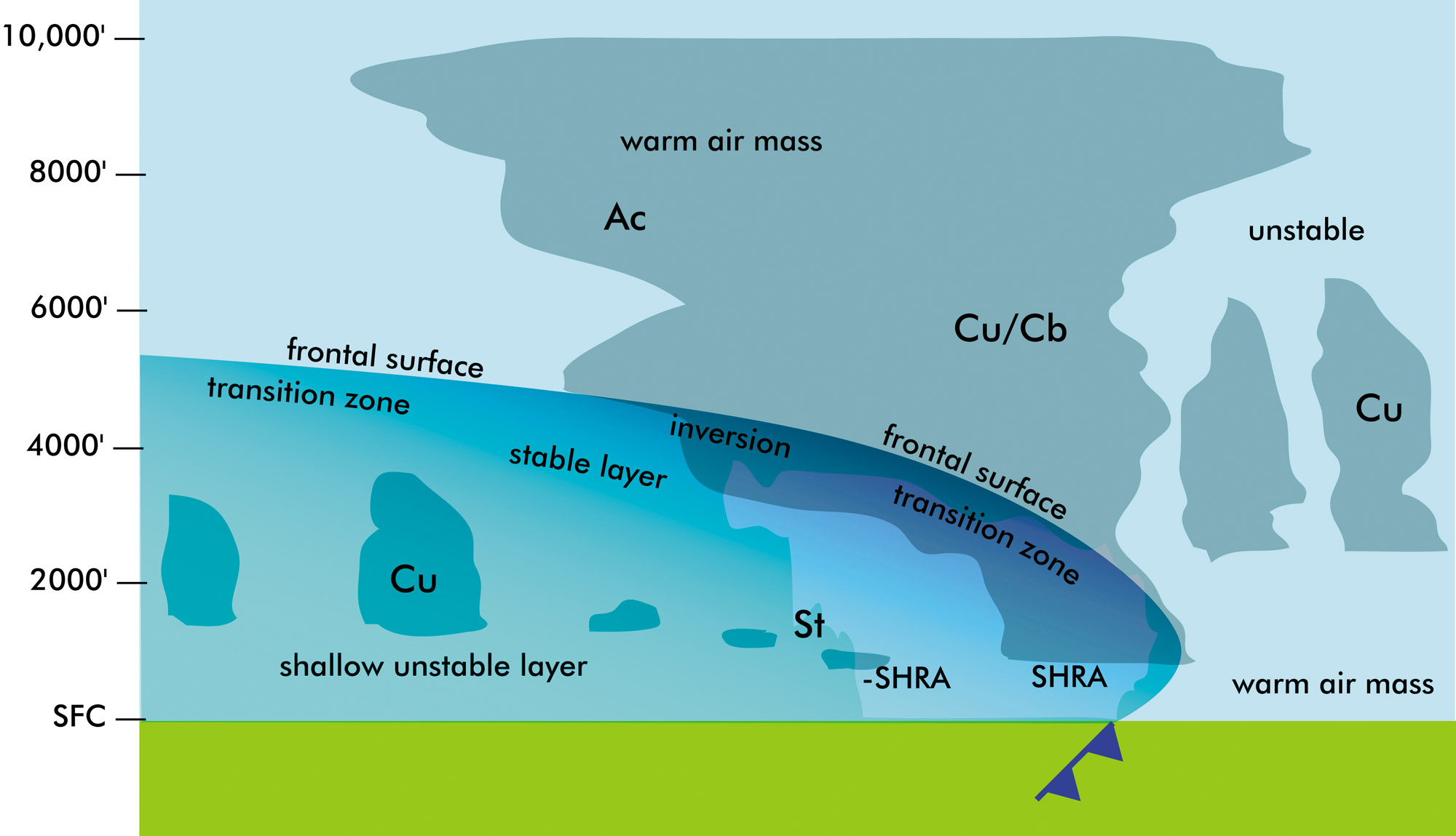
The frontal system is somewhat of an elephant in the room. We talk about the weather it produces. We point to where it’s located on a map. Many of us recognize the symbols. But we hear very little discussion about what it is exactly and why it produces weather. Now that winter is fast approaching, it’s time to address this special area of forecasting so we can better understand how it affects flight weather and conditions at your destination.

A Brief History

One of the little ironies of meteorology is the fact that almost every hobbyist, pilot, and forecasting professional knows a bit about the importance of cold fronts and warm fronts. We see them on the Weather Channel and they appear on flight-weather briefing panels. 

Ready to Sell Your Aircraft?

List your airplane on AircraftForSale.com and reach qualified buyers.

List Your Aircraft
AircraftForSale Logo | FLYING Logo
Pilot in aircraft
Sign-up for newsletters & special offers!

Get the latest stories & special offers delivered directly to your inbox.

SUBSCRIBE
