











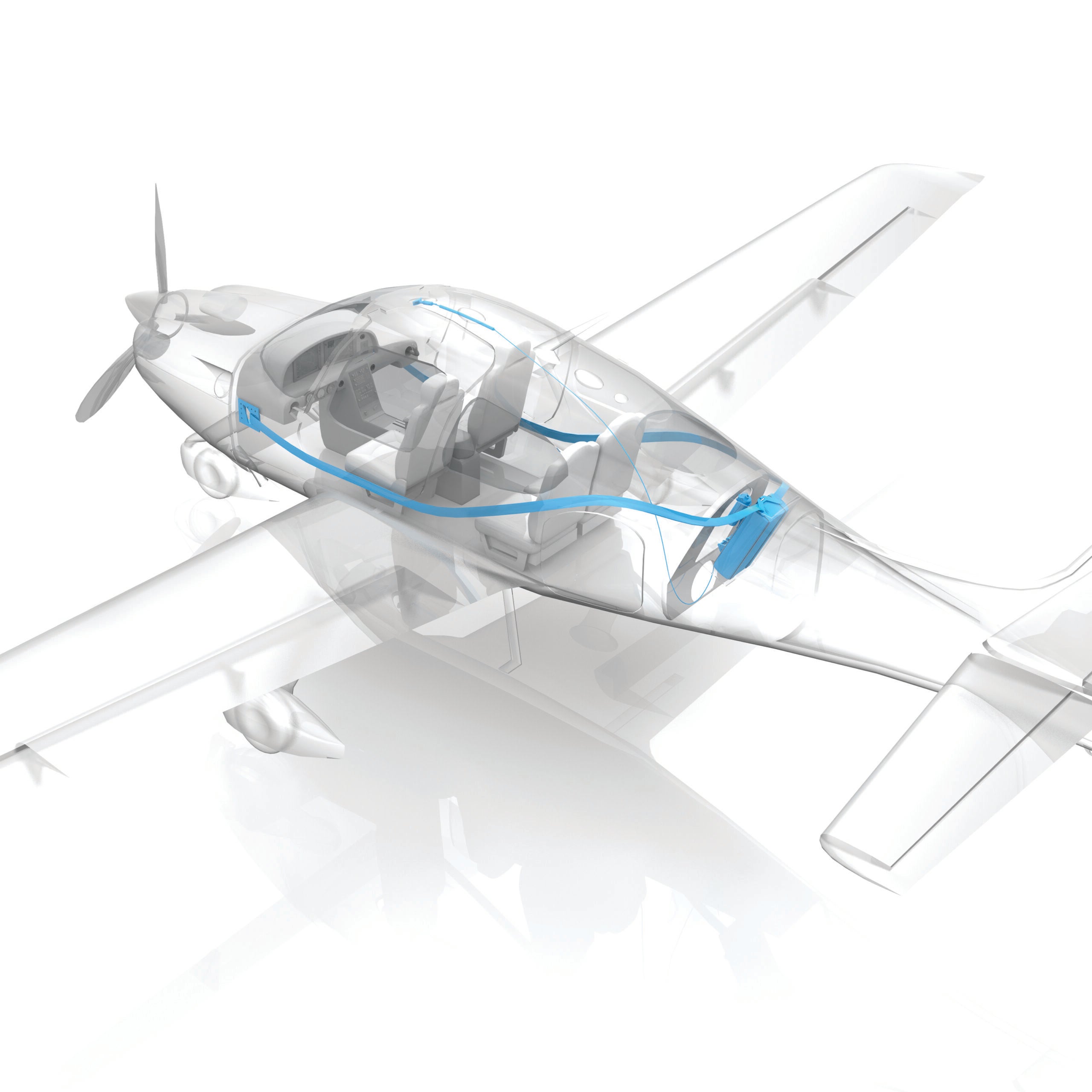


According to BRS, tests have shown that its parachutes can be pulled and still fully inflate at altitudes as low as 260 feet and speeds as high as 187 knots. Individual pilots have testified that they successfully deployed their chutes below 100 feet. BRS does not provide a specific minimum-altitude limitation (Cirrus recommends a minimum deployment height of 580 feet in the latest-generation SR22), but that doesn’t mean pilots should wait to pull the handle. For your best chance at a safe, injury-free landing, BRS encourages pilots experiencing midair emergencies to pull the chute sooner rather than later, with a 2,000-foot deployment height being the norm.

How It Works: BRS Aircraft Parachute
Key Takeaways:
- BRS parachutes have demonstrated successful deployment at altitudes as low as 260 feet and speeds up to 187 knots, with pilots reporting success even below 100 feet; however, BRS encourages early deployment (around 2,000 feet) for optimal safety.
- The system activates with a single handle pull, which triggers a rocket motor to rapidly propel and deploy the parachute's suspension lines, with a slider ensuring full inflation only after the aircraft reaches a safe speed.
- Upon deployment, the aircraft experiences a significant "opening shock" (3-7 Gs) before settling into a nose-down attitude under the chute, descending at a rate of 15 to 28 feet per second.
See a mistake? Contact us.
