













Register

Foreign Affairs

Away from the warm embrace of North Dakota, our hero takes on foreign ATC, poorly marked pavement, U.S. Customs and even Florida. Along the way, lessons were learned. 

Gemini Sparkle

Key Takeaways:

  • Pilots flying internationally must adapt to diverse Air Traffic Control (ATC) communication styles, including language barriers and accents, necessitating the use of clear, concise English phrases.
  • Thorough pre-flight study of airport diagrams and local procedures is crucial for safe navigation, especially when encountering unfamiliar layouts, dim lighting, or high-speed approach requirements.
  • Navigating international customs and border protection requires strict adherence to protocols, understanding required documentation and fees, and maintaining professionalism with officials and their service animals.
See a mistake? Contact us.

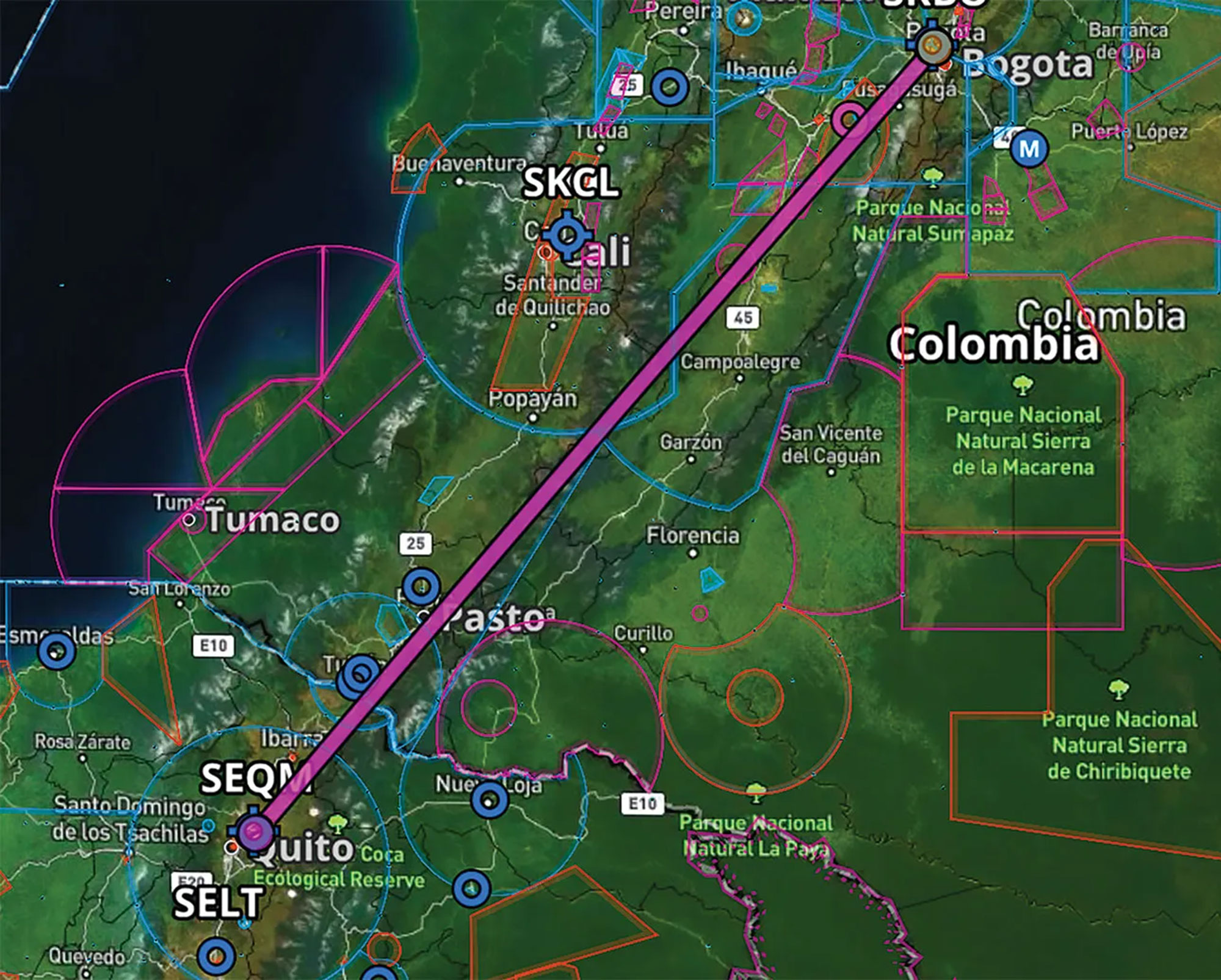
We listened very intently to the Spanish-speaking air traffic controller, coming in “double-broken”: broken radio transmission, broken English. The woman’s voice in Spanish in our earphones that night, high over Bogota, Colombia. It just sounds “high,” since the field elevation at Bogota is about 8400 feet, so they bring you in at like 13,000 feet on an initial leg for the approach.

Turns out 13,000 feet is lower there than 13,000 feet in Fargo, North Dakota, my home plate, thanks to mountainous terrain. I’m told this is because of the Coriolis effect, but I’m not sure about that.


Ready to Sell Your Aircraft?

List your airplane on AircraftForSale.com and reach qualified buyers.

List Your Aircraft
AircraftForSale Logo | FLYING Logo
Pilot in aircraft
Sign-up for newsletters & special offers!

Get the latest stories & special offers delivered directly to your inbox.

SUBSCRIBE