











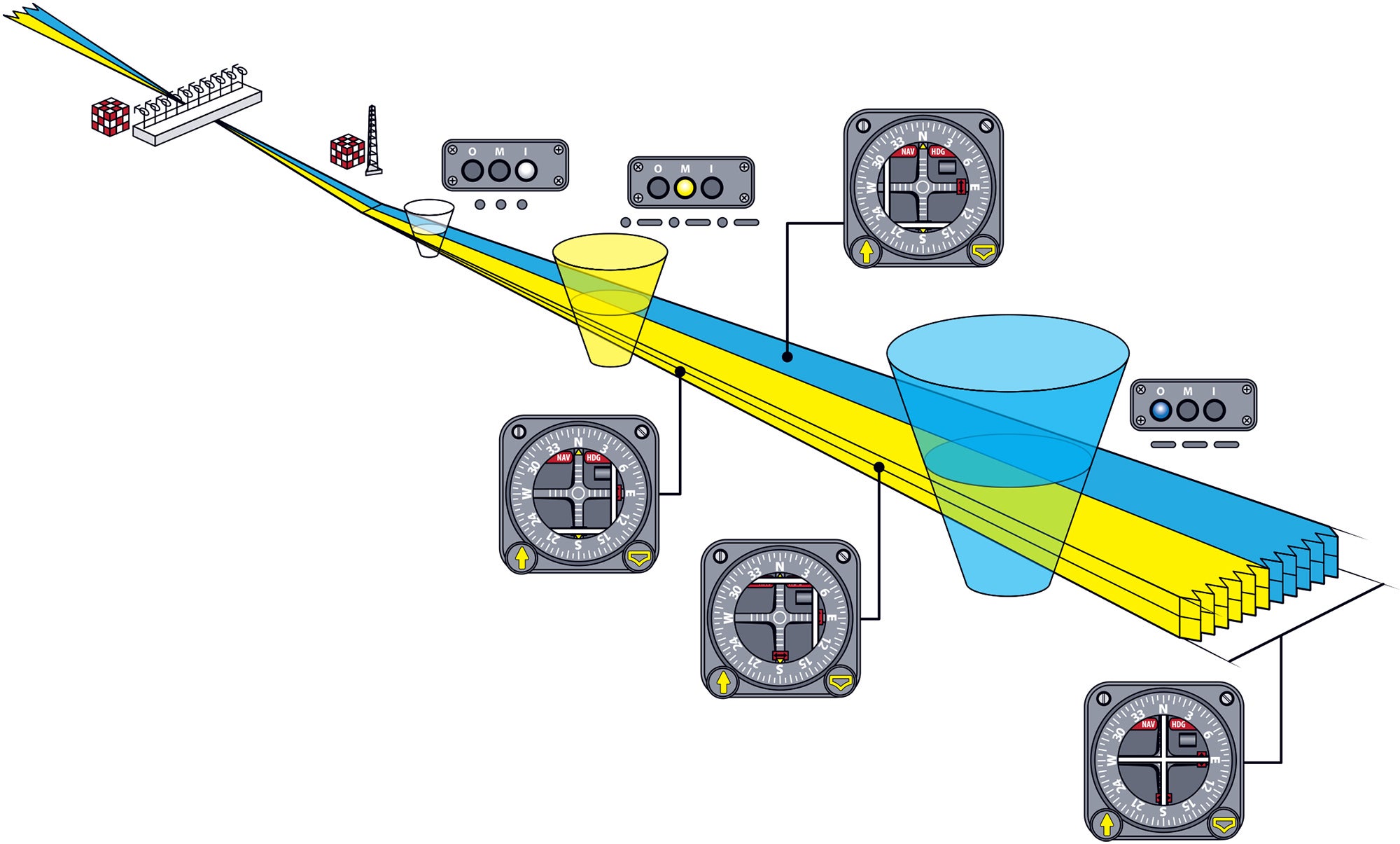
An instrument landing system (ILS) uses two separate ground-based radio transmitters to provide both lateral and vertical guidance to pilots during an instrument approach procedure that normally includes the lowest landing minimums. A Category I ILS approach, for example, typically offers a 200-foot decision height above the ground. ILS approach visibility minimums are measured either in statute miles or by using runway visual ranges down to zero-zero for a Category IIIc ILS approach. (Approaches of Cat 2 and greater require special flight crew certification.)
How an Instrument Landing System Works

Key Takeaways:
- An Instrument Landing System (ILS) provides precise lateral (localizer) and vertical (glideslope) guidance through ground-based radio transmitters, enabling instrument approaches with the lowest landing minimums.
- The ILS guidance becomes increasingly sensitive as an aircraft approaches the runway, demanding exact pilot control and progressively smaller corrections to maintain the correct flight path.
- ILS approaches are categorized (e.g., Cat I to IIIc) with varying minimums, and while a localizer-only approach is possible if the glideslope fails (at higher minimums), a glideslope-only approach is not.
Key takeaways sponsored by Aviator Pro | Start Your Training ->
See a mistake? Contact us.

