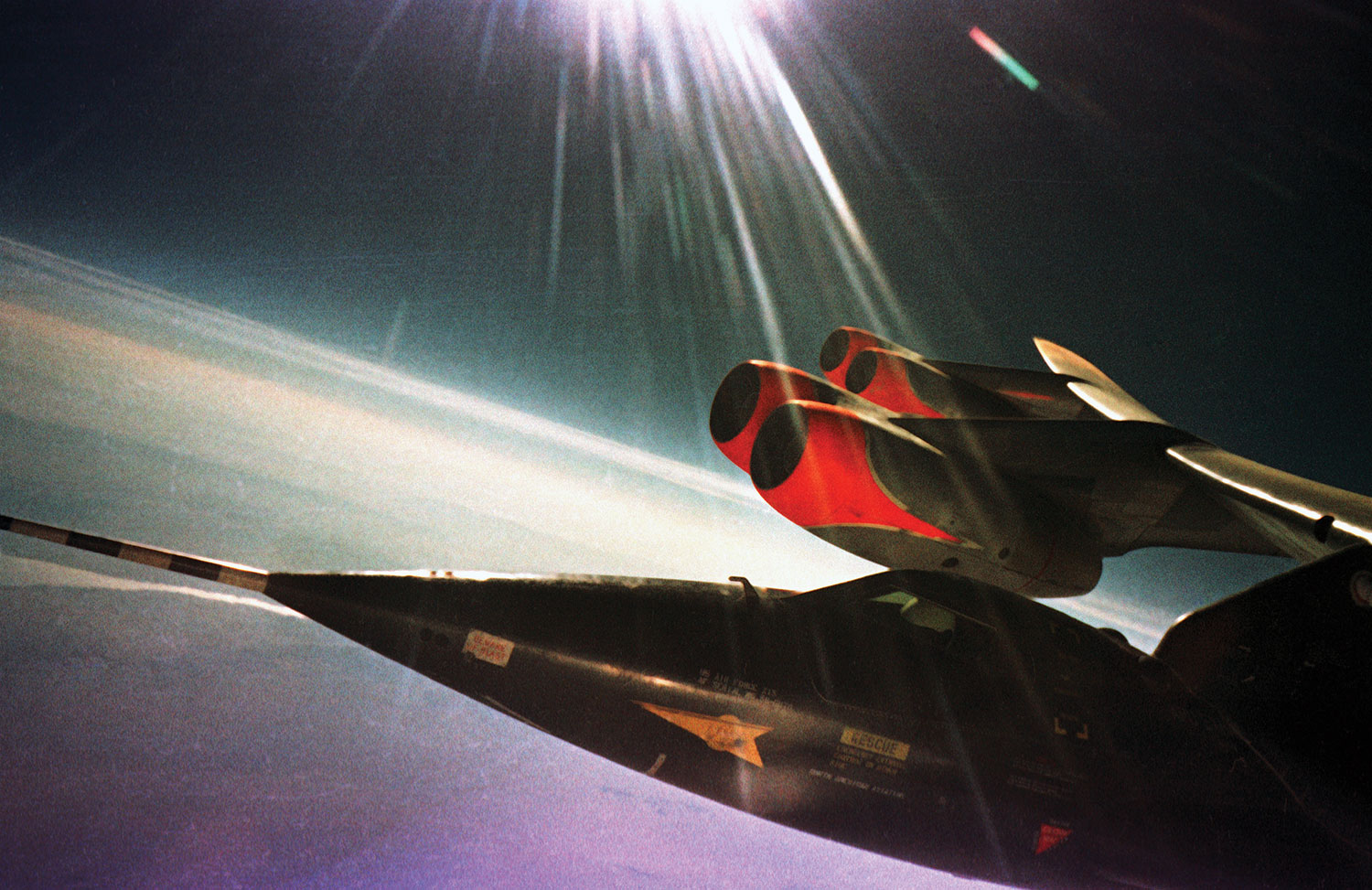
This view of an X-15 rocket-powered research airplane from the cockpit of its B-52 carrier aircraft is a perfect way to illustrate the juxtaposition of power and wing loading. The NASA B-52B “mothership” was powered by eight Pratt & Whitney J-57-19 turbojets, each capable of producing 12,000 pounds of thrust with water injection at takeoff. Its maximum gross takeoff weight was 420,000 pounds, but it likely never carried that much, ever. At that weight, its maximum power loading was 4.375 per pound of thrust. Meanwhile, the X-15’s single Thiokol XLR99-RM-2 liquid-fuel rocket engine generated 70,400 pounds of thrust at an altitude of 30 kilometers. Since the X-15 weighed 34,000 pounds, its power loading works out to slightly less than half a pound for each pound of thrust. If you have enough power, you can fly a brick (not that the X-15 was a brick).
Key Takeaways:
Wing loading (aircraft weight relative to wing area) and power loading (aircraft weight relative to engine power or thrust) are fundamental, dynamic aerodynamic concepts that constantly change with flight conditions like weight, load factor, and density altitude.
These loadings critically influence an aircraft's performance: low wing loading typically improves short-field capability and reduces stall speed, while high wing loading enables faster cruise and a smoother ride in turbulence.
Similarly, low power loading enhances climb rates and airspeed, whereas high power loading indicates compromised performance, particularly evident during high-density altitude takeoffs or engine failure in multi-engine aircraft.
A practical understanding of these concepts is essential for pilots to safely predict and optimize an aircraft's capabilities, influencing factors like takeoff/landing distances, climb performance, cruise speeds, and stability.
This view of an X-15 rocket-powered research airplane from the cockpit of its B-52 carrier aircraft is a perfect way to illustrate the juxtaposition of power and wing loading. The NASA B-52B “mothership” was powered by eight Pratt & Whitney J-57-19 turbojets, each capable of producing 12,000 pounds of thrust with water injection at takeoff. Its maximum gross takeoff weight was 420,000 pounds, but it likely never carried that much, ever. At that weight, its maximum power loading was 4.375 per pound of thrust. Meanwhile, the X-15’s single Thiokol XLR99-RM-2 liquid-fuel rocket engine generated 70,400 pounds of thrust at an altitude of 30 kilometers. Since the X-15 weighed 34,000 pounds, its power loading works out to slightly less than half a pound for each pound of thrust. If you have enough power, you can fly a brick (not that the X-15 was a brick).
Why can one airplane take off and land on short runways while another requires significantly longer takeoff and landing distances? Why does one airplane have better performance (rate of climb, airspeed) than another? Is the airplane you’re about to fly underpowered or overpowered? The answers to these and similar questions lie in understanding fundamental aerodynamic concepts like wing loading and power loading.
CREATE A FREE ACCOUNT
Sign up to keep reading
Create a free account to continue. Already a member? Sign in below.