











While it is unlikely youll ever have to use your hard-earned partial panel flying skills in a real emergency, critical systems do and will fail at the worst possible times. The good news is there are several relatively inexpensive tools on the market that can make the ordeal more manageable for a single pilot in IMC. The Garmin GPSMAP 396 and 496 handheld GPS receivers retail for under $2500, plus about $50 a month for the databases and XM weather subscriptions. In addition to a color moving-map display loaded with terrain and weather graphics, a 288
Handheld Six-Pack?
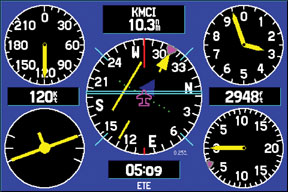
While it is unlikely youll ever have to use your hard-earned partial panel flying skills in a real emergency, critical systems do and will fail at the worst possible times. The good news is there are several relatively inexpensive tools on the market that can make the ordeal more manageable for a single pilot in IMC. The Garmin GPSMAP 396 and 496 handheld GPS receivers retail for under $2500, plus about $50 a month for the databases and XM weather subscriptions. In addition to a color moving-map display loaded with terrain and weather graphics, a "five pack" of virtual instrumentation provides most of the information one needs to accomplish partial-panel instrument flying. (There is no attitude information, hence its not a "six pack," but more on that in a moment.) The 296 and monochrome 196 units each offer the panel page, too, but not the XM weather.

Key Takeaways:
- Garmin GPSMAP handhelds (e.g., 396/496) offer an inexpensive "five pack" of virtual instruments and XM weather, serving as a valuable backup for single pilots experiencing critical system failures like vacuum or electrical loss in IMC.
- These portable units are not IFR certified and display flight information differently from traditional panel instruments (e.g., groundspeed, magnetic track, no attitude indicator), with their "virtual glideslope" being a VNAV profile, not for LPV approaches.
- Effective emergency use requires pilots to thoroughly practice with the device in visual conditions, understand its unique data presentation, ensure proper mounting and antenna function, and integrate it with their existing partial-panel flying skills.
Key takeaways sponsored by Aviator Pro | Start Your Training ->
See a mistake? Contact us.

