













Register

Vertical Air Movement

Gemini Sparkle

Key Takeaways:

  • Understanding fundamental meteorological factors like vertical motion, instability, and water phase changes is crucial for pilots to anticipate cold-weather hazards such as fog, icing, and widespread precipitation.
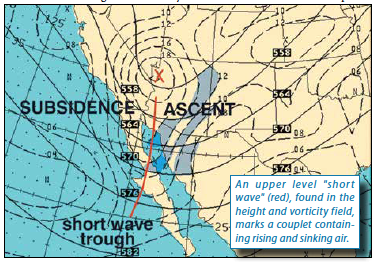
  • Vertical motion (lift and subsidence), which drives cloud formation and clear skies, is influenced by mechanisms including convection, dynamic forcing, terrain-induced lift (orographic effects), and mass imbalances (mass continuity).
  • Atmospheric instability (cold air over warm) encourages vertical motion and turbulence, while stability suppresses it; similarly, latent heat release/absorption during water phase changes significantly impacts buoyancy and weather system development.
  • Pilots can enhance situational awareness and interpret forecasts better by recognizing these principles, such as predicting deteriorating weather when low-level winds move from warm to cold regions (isentropic lift) or when gusty winds indicate instability.
See a mistake? Contact us.

Heading into another winter season, our thoughts begin shifting to cold-weather flying hazards—fog, icing, and widespread precipitation. Most pilot training considers each of these factors individually. But most of them share a common cause, and it’s rooted in the weather patterns. Because of that, most pilots will be ahead of the game if they can identify some of those underlying factors. And in WX SMARTS we give experienced pilots a taste of the technical side of weather, so you can better understand how weather briefers think while gaining insight into complex aviation weather problems.

Vertical Motion

Ready to Sell Your Aircraft?

List your airplane on AircraftForSale.com and reach qualified buyers.

List Your Aircraft
AircraftForSale Logo | FLYING Logo
Pilot in aircraft
Sign-up for newsletters & special offers!

Get the latest stories & special offers delivered directly to your inbox.

SUBSCRIBE
