
The invasion of Normandy, also known as D-day, was one of the most horrific days in history, but it was also the beginning of the end of a horrific war — World War II. Most of the hundreds of thousands of men, women and children who died on that day remain nameless in the history books. The same is true for the airplanes that led the heroic efforts.The attacks came from several fronts on that fateful day, with ships dropping troops on the beaches of Normandy and airplanes deploying droves of people and ammunition from the skies. Once the war was over, most of those aircraft were destroyed or recommissioned, and their historic significance evaporated like the fuel that burned in their engines. Even some of the most notable airplanes fell into the shadows of the past.
Return to the Front Line

Key Takeaways:
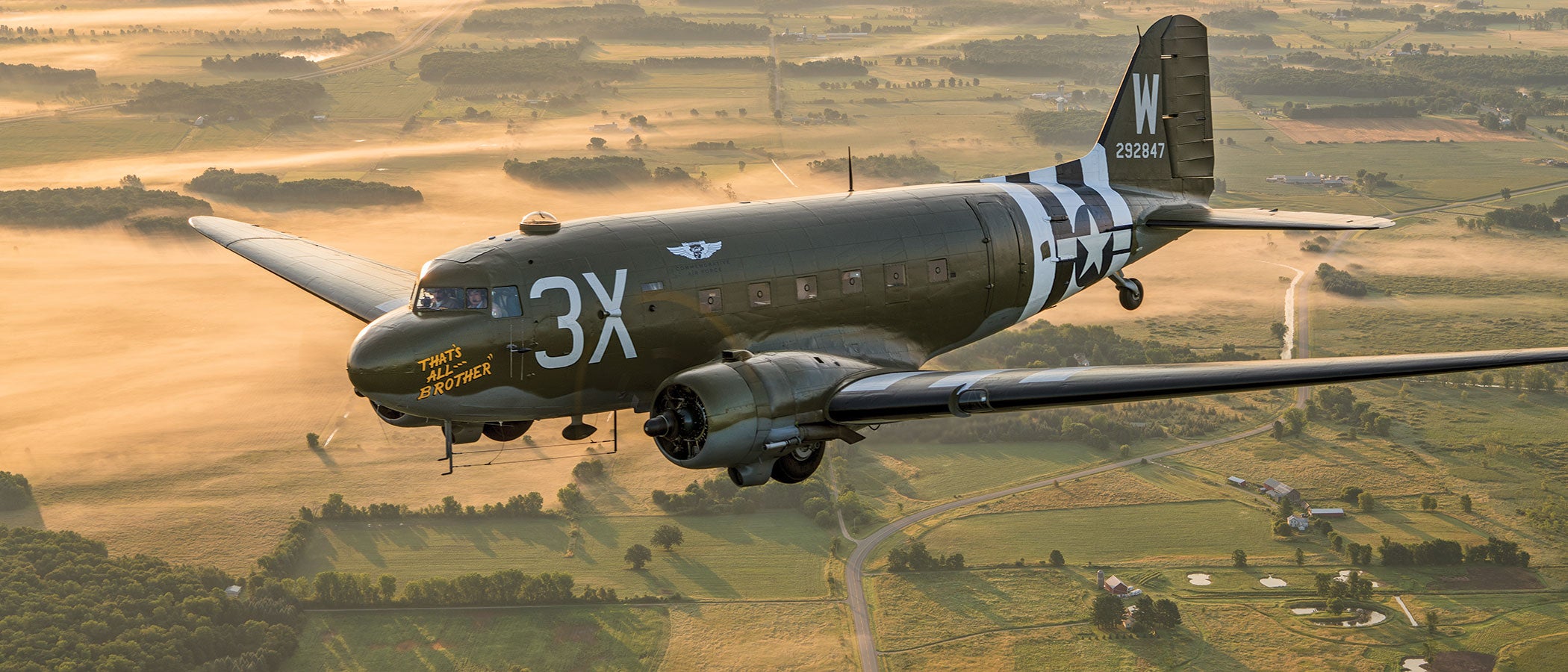
- "That's All, Brother," the lead C-47 transport aircraft during the D-Day invasion, had its historical significance largely forgotten and was nearly converted into a modern turbine plane after World War II.
- Through a series of serendipitous discoveries and a highly successful Kickstarter campaign, the Commemorative Air Force acquired and undertook a meticulous restoration of the aircraft.
- The extensive restoration efforts returned "That's All, Brother" to its authentic 1944 D-Day appearance, blending historical accuracy with hidden modern avionics for airworthiness.
- The fully restored aircraft will lead a formation of C-47s across the Atlantic to Europe to commemorate the 75th anniversary of D-Day, serving as a "flying museum" to educate and connect people with this pivotal historical event.
Key takeaways sponsored by Aviator Pro | Start Your Training ->
See a mistake? Contact us.