“Hinge moment” is the technical name for the force required to deflect a control surface. In small, relatively slow airplanes, hinge moments are not very large; pilots move the controls with ease. But as control surfaces get larger and speeds get higher, hinge moments grow rapidly. They increase with the chord length of the control surface, with the square of speed and with the cube of the linear dimensions. Thus, if you double the speed, the hinge moments grow four times greater; if you double the size of an airplane, keeping all of its proportions unchanged, they become eight times greater. If you double both size and speed, hinge moments increase by a factor of 32.
Hinge Moments Explained

Key Takeaways:
- Aircraft control surfaces experience rapidly increasing "hinge moments" with greater size and speed, making manual control difficult; Anton Flettner's innovation of control tabs provided a mechanical advantage, enabling pilots to move large surfaces with less effort.
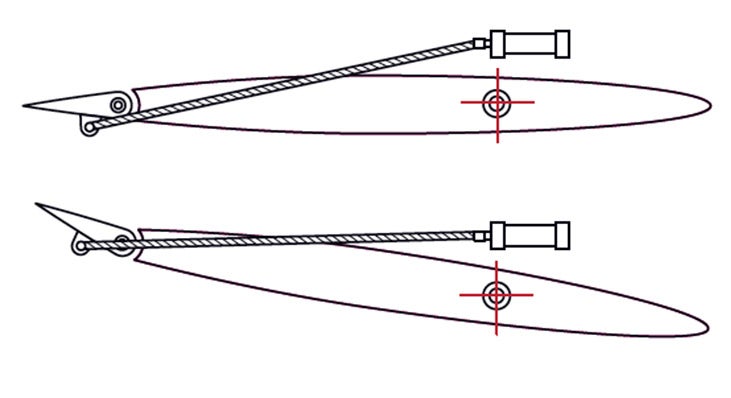
- Tabs evolved into various forms: trim tabs adjust the neutral position, servo tabs reduce control forces, and anti-servo tabs deliberately increase control forces.
- Anti-servo tabs are crucial for "all-flying tails" or stabilators, providing a necessary "home base" or restoring force to ensure stability, as aerodynamically balanced stabilators would otherwise float without a self-centering mechanism.
Key takeaways sponsored by Aviator Pro | Start Your Training ->
See a mistake? Contact us.