
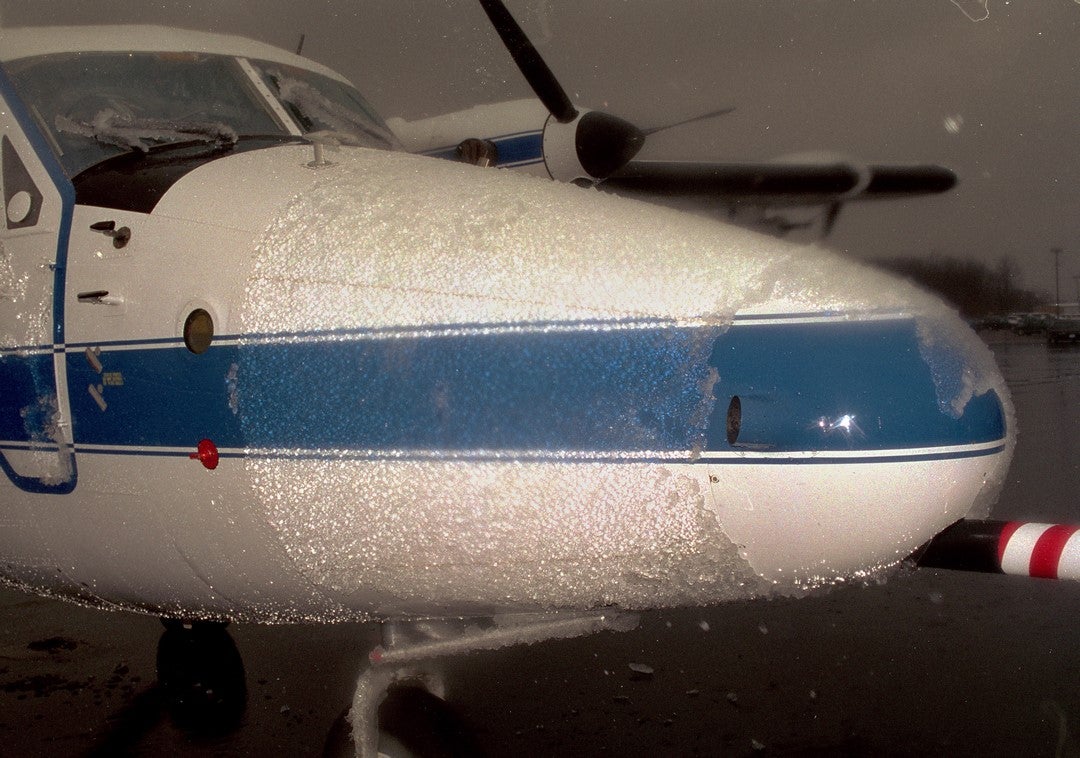


If I am flying IFR and encounter freezing rain, should I climb to escape?
Answer: It’s a common misconception that you should always climb when encountering freezing rain. Most pilots are trained that freezing rain occurs when snow is falling through a cold cloud and melts completely as it encounters a temperature warmer than 0 degrees Celsius (C), turning it into rain (this is usually courtesy of a temperature inversion or what meteorologists call a warm nose). Then, those raindrops fall into a subfreezing layer below and become freezing rain (FZRA). So, in this case, there is a layer of air above that is warmer than 0 C.
- READ MORE: What Is the Best Aircraft for Time Building?
This kind of temperature profile where the precipitation begins as snow only occurs in about 8 percent of the freezing rain events according to researchers at the National Center for Atmospheric Research (NCAR). If this is what you were taught, then you were taught the exception, not the rule. Aviation meteorologists and researchers call this the “classical” freezing rain profile, where the depth of the weather can be well into flight levels. This allows for the tops to be in the favorable regime for the development of ice crystals and snow. In this case, climbing will put you in a position to at least temporarily escape the freezing rain threat. Even so, this “melting” layer may not have a sufficient depth.