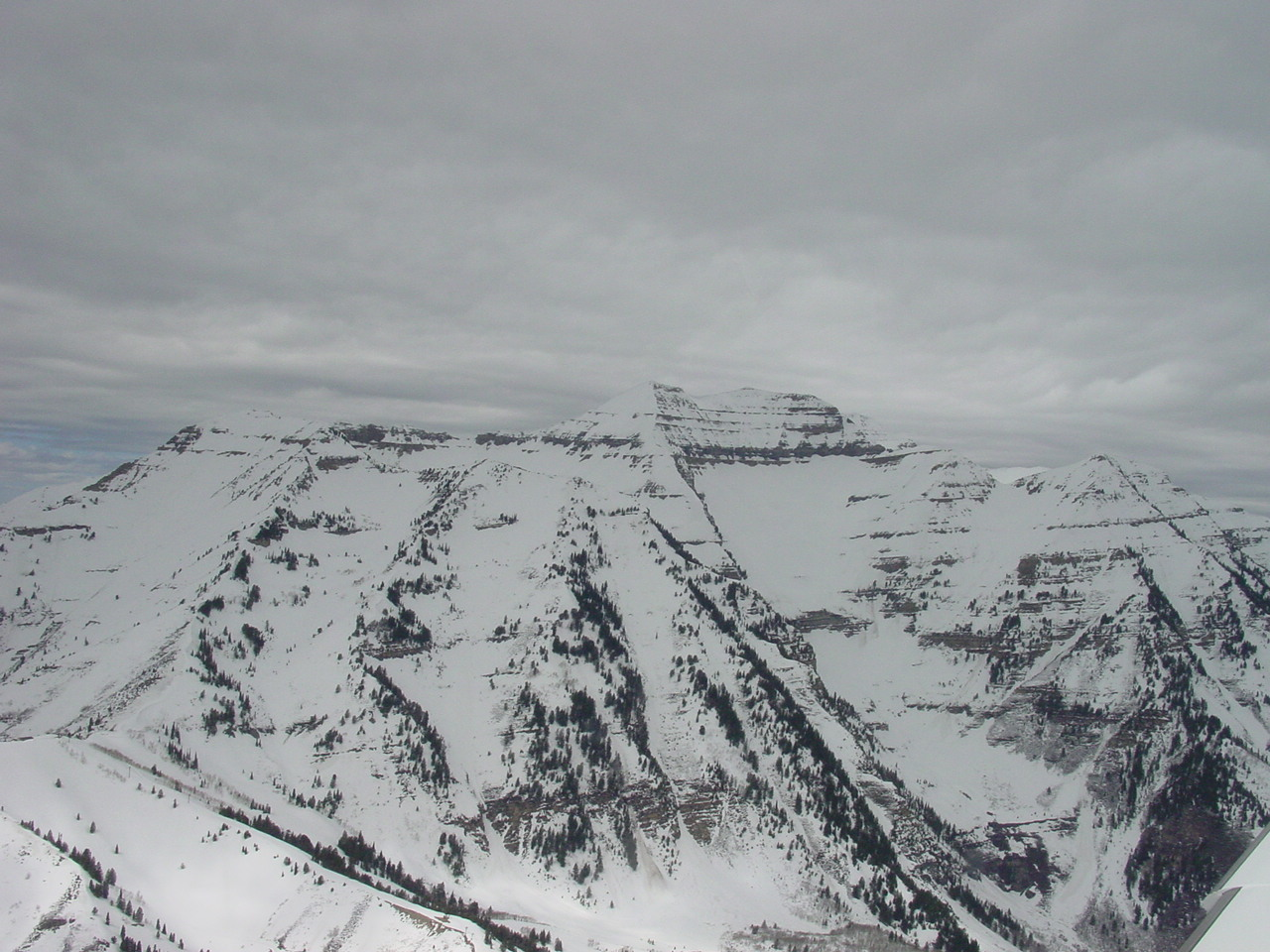
Snow-covered mountains in Utah. [Courtesy: Scott Dennstaedt]
Key Takeaways:
Flying through snow alone is generally not considered a significant airframe icing hazard for aircraft in flight, largely due to kinetic heating preventing snow from adhering to leading edges, a position supported by FAA interpretations and the Current Icing Product (CIP).
A true in-flight icing threat arises when snow is mixed with other precipitation types, such as freezing rain or drizzle.
Despite the low risk of airframe icing from snow alone, other hazards include induction icing, dangerous ground contamination (before takeoff), reduced visibility, disorientation, and slick runways leading to difficult landings.
Answer: There is an opinion in the aviation community that flying through snow is not only an icing hazard but also against FAA regulations for pilots in aircraft without a certified ice protection system. Keep in mind that each weather system is unique, and there are many exceptions to the general view presented here.
CREATE A FREE ACCOUNT
Sign up to keep reading
Create a free account to continue. Already a member? Sign in below.
Scott resides in Charlotte, North Carolina, and flies regularly throughout the Mid-Atlantic and Southeast U.S. He is a CFI and former NWS meteorologist. Scott is the author of "The Skew-T log (p) and Me: A Primer for Pilots" and the founder of EZWxBrief.