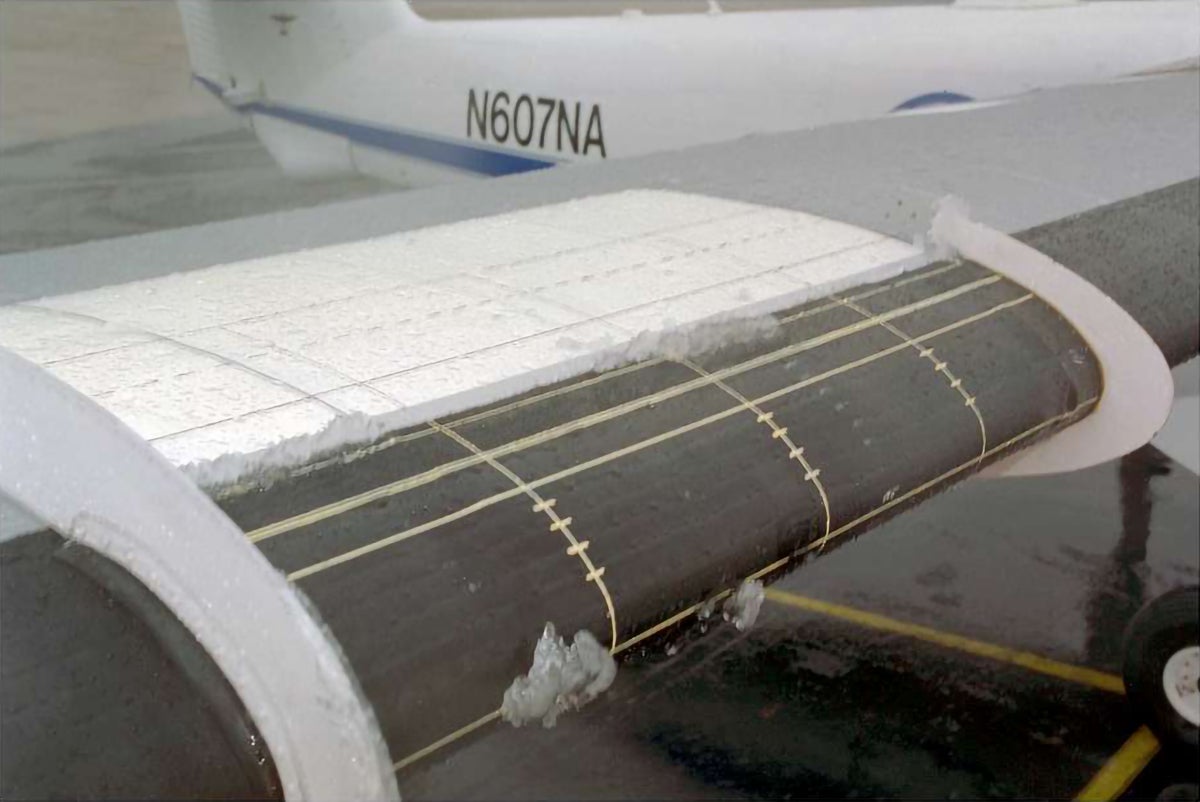
There are many environmental factors that determine what type of icing accretes on your airframe. [Courtesy: NASA Glenn Research Center]
Key Takeaways:
Pilots classify aircraft icing into three types: rime, clear, and mixed, each characterized by its appearance and formation conditions.
Rime icing is rough, milky, and opaque, formed by rapid freezing in cold temperatures with small supercooled water drops, and is the most commonly reported type.
Clear icing is glossy and translucent, resulting from slower freezing in warmer subfreezing temperatures with larger supercooled water drops.
Mixed icing represents a combination or transition between rime and clear ice, often forming as an aircraft passes through different atmospheric conditions, such as during climbs or descents.
Answer: To answer that question, let’s look at the three icing types that pilots are asked to report. These include rime, clear, and mixed. What icing type accretes on your airframe depends on many environmental factors. Let’s briefly discuss each of these factors as it relates to the type of icing.
CREATE A FREE ACCOUNT
Sign up to keep reading
Create a free account to continue. Already a member? Sign in below.
Scott resides in Charlotte, North Carolina, and flies regularly throughout the Mid-Atlantic and Southeast U.S. He is a CFI and former NWS meteorologist. Scott is the author of "The Skew-T log (p) and Me: A Primer for Pilots" and the founder of EZWxBrief.