











Garmin Debuts Visionary Autoland Capability
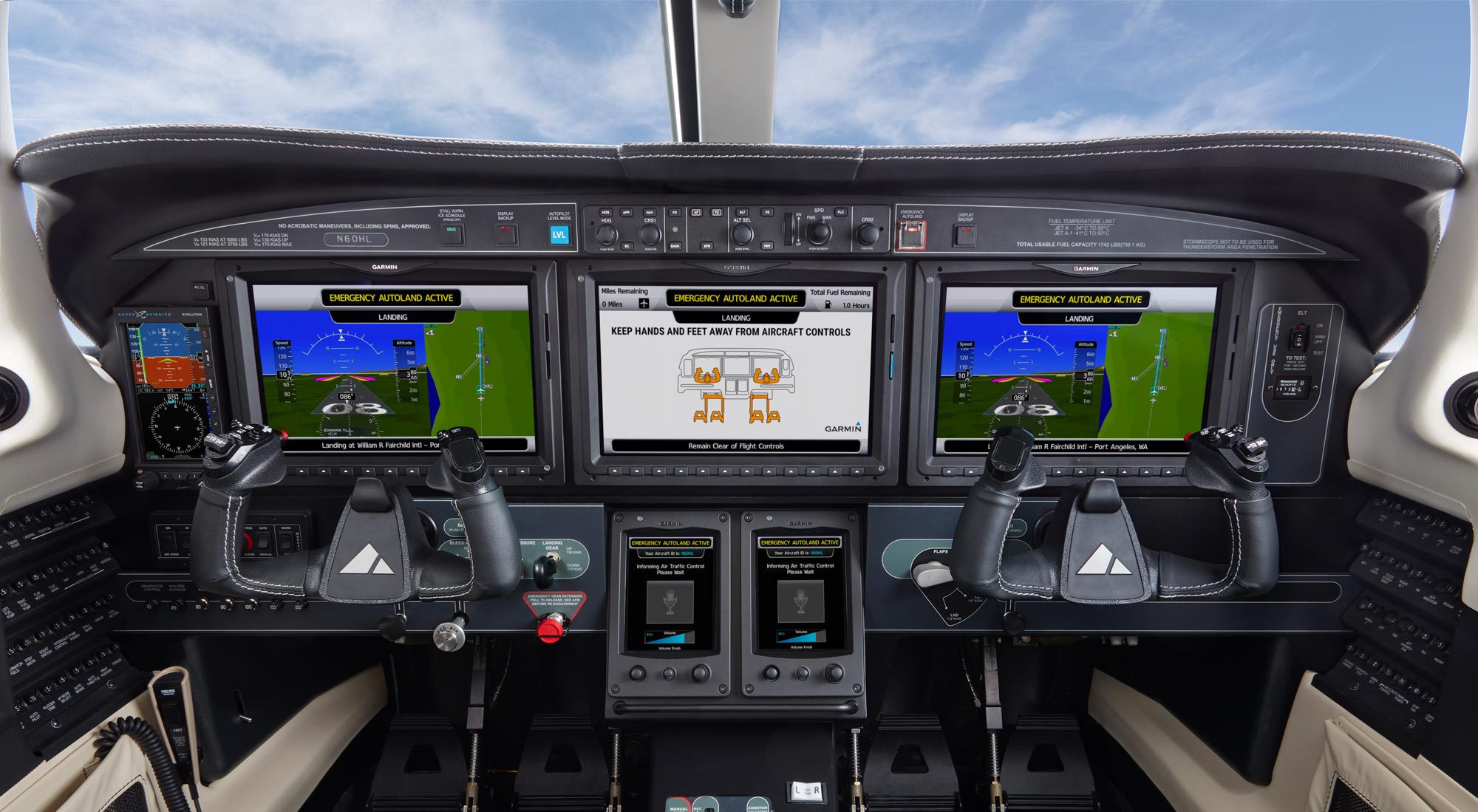
The Autonomí’s integrated system marries several critical functions within the aircraft to deliver a safe landing outcome after an emergency such as pilot incapacitation. Garmin
Gemini Sparkle

Key Takeaways:

  • Garmin has launched a revolutionary Autoland system for light, personal airplanes, designed to significantly enhance safety as part of its Autonomí suite.
  • The emergency system takes full control of the aircraft, performs upset recovery if needed, identifies the safest nearby airport, and executes a complete landing without human intervention.
  • Primarily intended for passenger activation in the event of pilot incapacitation, it features a simplified, guarded button and voice prompts to guide non-pilots through the process.
  • The system integrates existing Garmin flight deck technologies with new functions and is currently undergoing certification, with initial availability expected in aircraft like the Piper M600 and Cirrus Vision Jet.
See a mistake? Contact us.

Each aviation generation sees a handful of revolutionary concepts, those leading-edge technologies that, once introduced to the airplane—because they are so game-changing—undergo a transition period before we fully understand the increase in safety that they can provide. Garmin announced today its entry into that rarefied space: the first Autoland system developed exclusively for use in light, personal airplanes, as part of Garmin’s Autonomí suite.

When activated, the emergency system will assume control of the airplane, engage in an upset recovery if needed, determine the best route to an appropriate airport (based on weather, terrain, airport facilities and other factors), and maneuver the airplane to that airport—all the way to a full-stop landing on the runway—without human intervention.

“If you think about CAT III autoland, it’s been around a long time, but it [has been] out of reach in terms of general aviation airplanes,” says Phil Straub, Garmin executive vice president and managing director of aviation. “So, this idea really came about from the standpoint that we know we can do this [and] we have the components that can do that in an emergency situation, and do it very safely.”

Autonomí brings together several components that have been available separately on aircraft in the high-performance piston, turboprop, and light-jet market for varying periods of time. The system taps into the Emergency Descent Mode (EDM) and Enhanced Stability and Protection (ESP) functions already found within the Garmin G3000 integrated flight deck, and then adds an autothrottle, along with mechanical system sensors (for flaps and gear) and advanced autopilot functions to bring the airplane to the runway surface for a normal landing.

The primary use envisioned by Garmin is by a passenger following a pilot incapacitation, so Garmin Autoland was designed from the beginning to have a different user interface than one centered on the pilot. When the system is activated, using a guarded button accessible to the passengers, voice prompts lead the passengers through the execution of the aircraft’s path to the most appropriate airport as determined by the system algorithms and serve to reassure them as to what the airplane is doing at any given time. The initial callout: “The emergency Autoland system is controlling the aircraft and will land at the safest nearby airport. Please remain calm.” The system guides passengers in the use of the radio, if needed—though Garmin Autoland (true to its name) makes proper emergency calls to air traffic control throughout the descent and landing sequence.

At any time, the pilot can deactivate the system by actuating the autopilot key on the controller, or engaging the “autopilot disconnect” switch. The display will confirm that the system has been deactivated, and the flight can proceed under the pilot’s direction.

Certification is in process for a number of aircraft, with the Piper M600 looking to be first out the door, and the Cirrus Vision Jet to certify soon after. Autoland will come standard in most applications, as the companies involved in its initial certification share the philosophy that this level of safety should be part of a pilot’s regular tool kit. More to come—as we’ve flown with this system for an upcoming issue of Flying.

Ready to Sell Your Aircraft?

List your airplane on AircraftForSale.com and reach qualified buyers.

List Your Aircraft
AircraftForSale Logo | FLYING Logo
Pilot in aircraft
Sign-up for newsletters & special offers!

Get the latest stories & special offers delivered directly to your inbox.

SUBSCRIBE



