














Register

When Smoke Gets In Your Skies

Pilots must look for factors that could potentially turn VFR into IFR conditions.

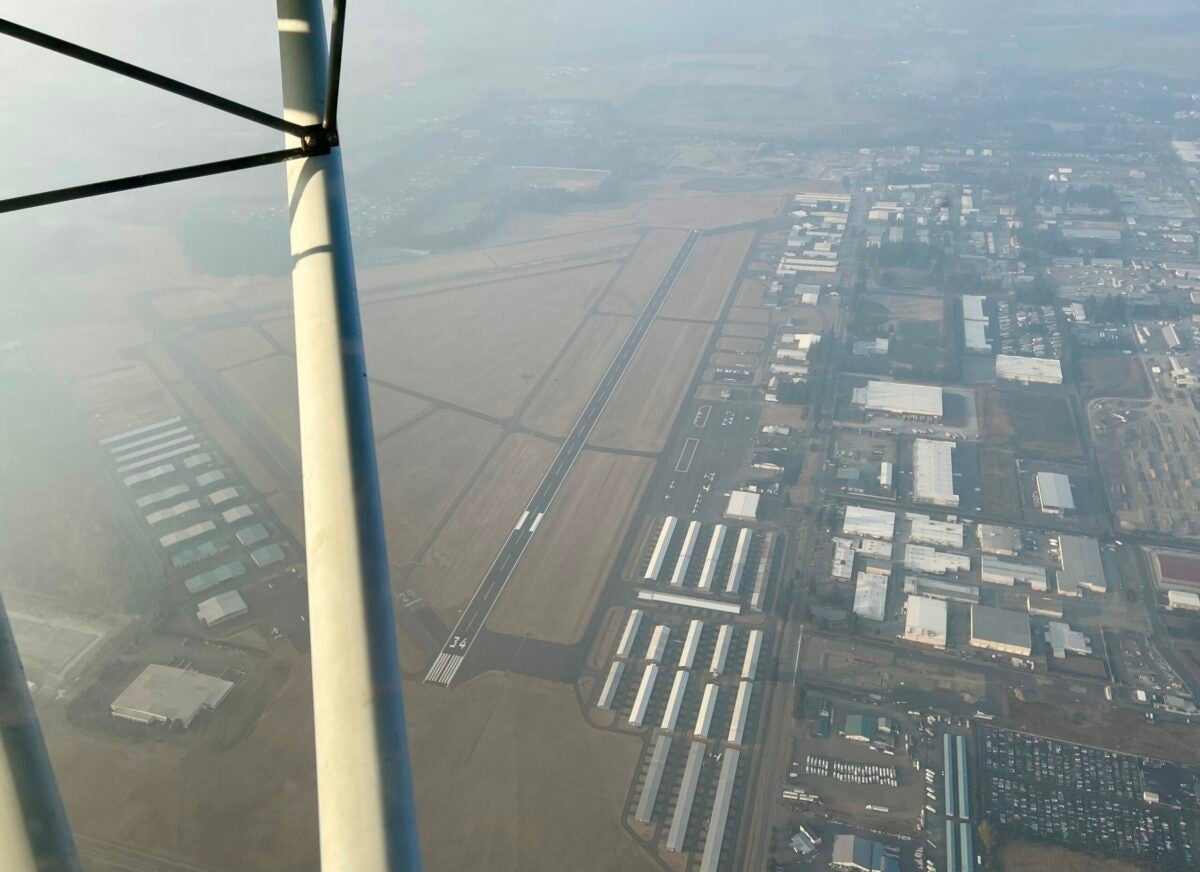
The runway at Arlington Municipal Airport (KAWO) seen at about 3,000 MSL on a smoky day. [Courtesy: John Marzulli]
Gemini Sparkle

Key Takeaways:

  • Pilots must understand and interpret weather briefings to recognize atmospheric conditions like mist, fog, haze, smoke, and smog, which severely reduce visibility and can convert VFR into IFR flight.
  • The article differentiates natural visibility reducers: mist (minute water/ice droplets, visibility <7 SM but >=5/8 SM), fog (water droplets at surface, visibility <5/8 SM, hazardous for VFR flight), and haze (fine particles, reduces depth perception and detail).
  • Man-made conditions like wildfire smoke and urban smog are highlighted as significant visibility threats, capable of creating hazardous IFR conditions and prompting pilots to file IFR for VFR flights.
  • Pilots are advised not to solely rely on automated weather reports, but to develop personal skills to assess actual airborne visibility using sectional chart landmarks, as reported conditions may not reflect reality.
See a mistake? Contact us.

During initial training, one of the first flight planning skills a pilot must learn is how to access a weather briefing, closely followed by how to interpret the weather briefing. Among the things pilots must look for are factors that could potentially turn VFR into IFR conditions. It takes many forms, from low clouds, fog, and mist in the winter to smoke and haze in the summer. Any of these things make it more difficult for pilots to see each other in the sky.

Mist and Fog and Haze, Oh My!

What do mist, fog, and haze all have in common? They all reduce visibility in their own special way. The FAA has provided us with definitions of each in Advisory Circular 00-6B.


Meg Godlewski

Meg Godlewski has been an aviation journalist for more than 24 years and a CFI for more than 20 years. If she is not flying or teaching aviation, she is writing about it. Meg is a founding member of the Pilot Proficiency Center at EAA AirVenture and excels at the application of simulation technology to flatten the learning curve. Follow Meg on Twitter @2Lewski.

Ready to Sell Your Aircraft?

List your airplane on AircraftForSale.com and reach qualified buyers.

List Your Aircraft
AircraftForSale Logo | FLYING Logo
Pilot in aircraft
Sign-up for newsletters & special offers!

Get the latest stories & special offers delivered directly to your inbox.

SUBSCRIBE
