
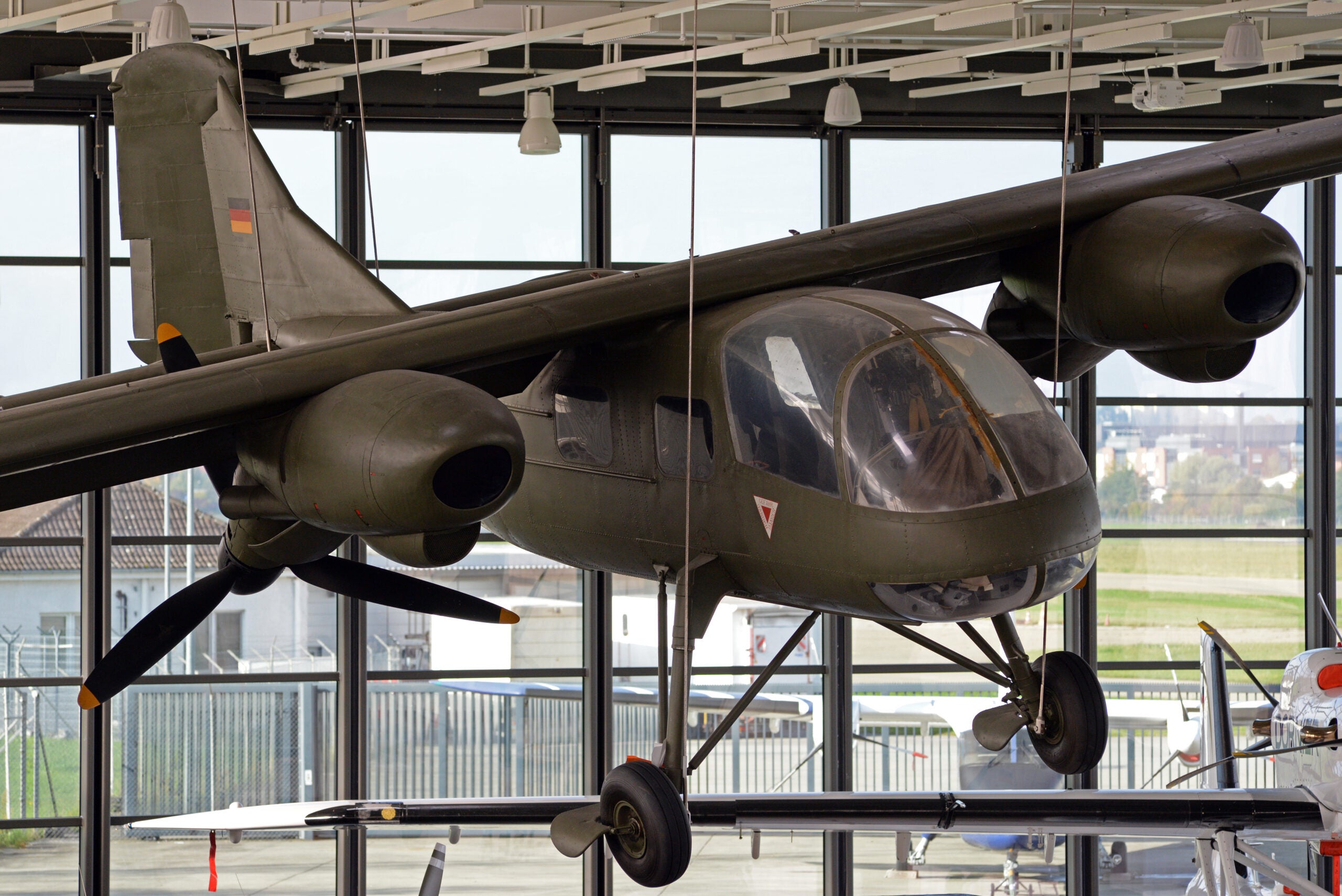


Since it was founded in 1914, Dornier was an aircraft company that was never short on imagination. From early 12-engined flying boats to World War II military aircraft and regional airliners to modern, composite flying boats, the OEM’s name has decorated a bewildering variety of aircraft types. Among them, hiding in the footnotes of the company’s history, are some truly unique examples of engineering.
Spearheaded by the German federal agency tasked with aerospace research, the Dornier Do-29 was an experimental aircraft intended to study the feasibility of utilizing vectored thrust to achieve extreme slow flight and short takeoff and landing (STOL) performance. A clean-sheet design, it utilized a high-wing, tailwheel configuration. Although as a test aircraft, it was configured for only one occupant, it was roughly the size of the de Havilland Beaver and the similarly sized fuselage could in theory be configured to carry four to six passengers.