











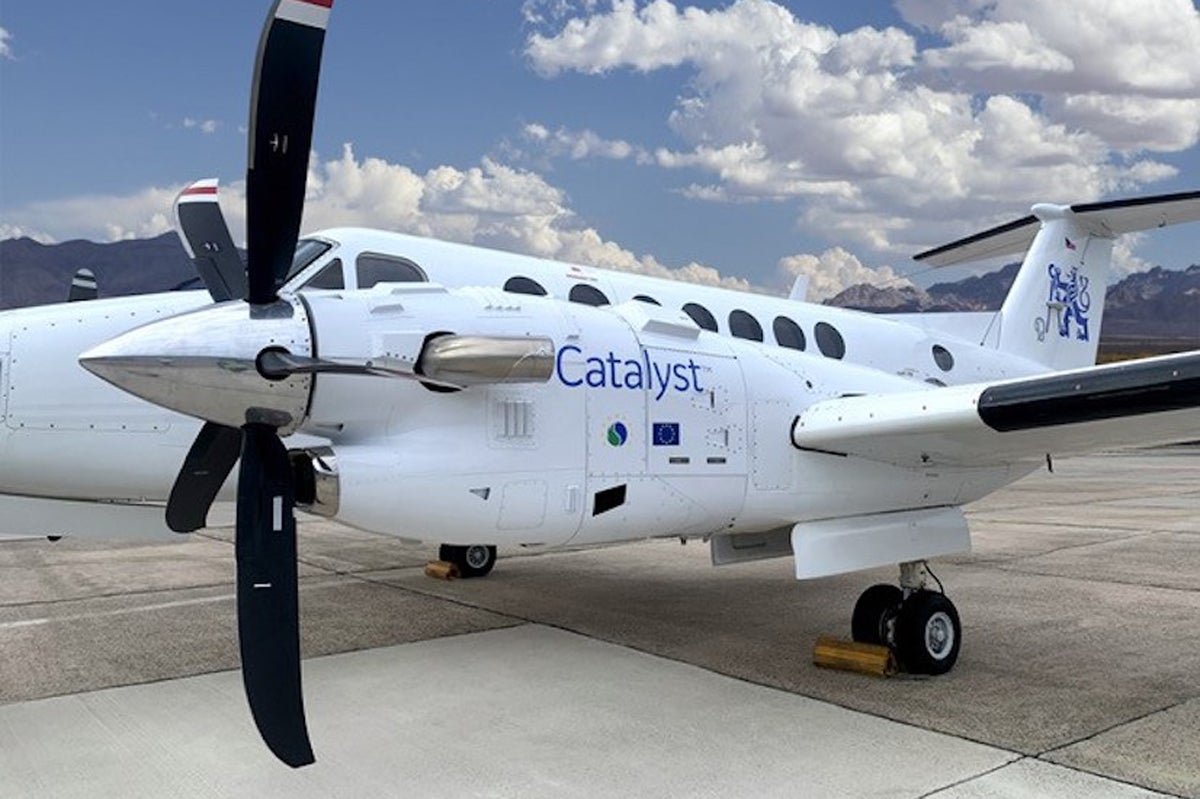
GE Aviation’s Catalyst engine will be the company’s first, all-new clean sheet turboprop engine in 50 years, according to the company’s website. It borrows many technologies from GE’s big engine business to create a full-authority digital engine control (FADEC) turboprop that—if it lives up to expectations—is certain to give Pratt & Whitney Canada’s venerable PT6 a run for its money. Textron Aviation chose the Catalyst to power its new Denali single-engine turboprop. GE expects Catalyst to be certified before the end of 2021. A bi-lateral agreement with European authorities means the FAA and EASA will recognize each region’s work on this US-designed engine that GE expects to be certified before the end of 2022. Work on Catalyst began in 2016. The result has been an engine with 800 fewer parts than traditional turboprops, all thanks to 3D printing.
GE’s Paul Corkery Updates Progress on the Catalyst Engine

Key Takeaways:
- GE Aviation's Catalyst is its first all-new turboprop engine in 50 years, designed to compete with the dominant PT6 and serve as the powerplant for Textron Aviation's new Denali.
- The engine features Full-Authority Digital Engine Control (FADEC) and 3D printing, resulting in 800 fewer parts, simpler pilot management, and projected 15-17% better fuel efficiency with reduced emissions.
- Currently undergoing extensive testing across Europe and the U.S., the Catalyst engine is expected to achieve certification by the end of 2022 and is being positioned for future use with sustainable fuels and hybrid aviation applications.
Key takeaways sponsored by Aviator Pro | Start Your Training ->
See a mistake? Contact us.

