











Few pilots pay much attention to their tires. They kick them a couple of times before lighting the fire, or put air in them when they look really low, but thats about it. Thats a little cavalier to us, considering those three (or more, if youre lucky) small, round, rubber donuts not only support the airplanes weight, but also supply the friction necessary to follow the yellow brick road and stop when you get to its end. As part of a project for sister publication Aviation Consumer, we recently had the opportunity to speak with industry executives about tires and tire failures, as well 288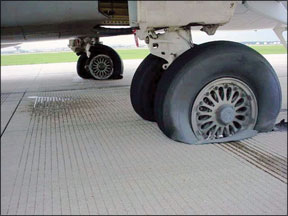
Tire Tech
Few pilots pay much attention to their tires. They kick them a couple of times before lighting the fire, or put air in them when they look really low, but thats about it. Thats a little cavalier to us, considering those three (or more, if youre lucky) small, round, rubber donuts not only support the airplanes weight, but also supply the friction necessary to follow the yellow brick road and stop when you get to its end. As part of a project for sister publication Aviation Consumer, we recently had the opportunity to speak with industry executives about tires and tire failures, as well as a myriad of other related topics, while researching why aircraft tires fail. We found that, short of suffering a puncture, paying close attention to the airframe manufacturers recommended inflation pressure is your best bet to prevent tire failures. We also found that, to understand why proper inflation is key, we need to understand how these tires are made. The basic light-plane tire isnt that much different from the ones your grandparents used on their Model T. The current standards for aircraft tires are embodied in the FAAs Technical Standard Order (TSO) C62e, last revised in 2006 (that TSO only addresses tires; inner tube standards are set by the Society of Automotive Engineers). Instead of the radial-ply tires common on modern automobiles, your light airplanes tires likely are a bias-ply design, where the internal fabric cords are sandwiched between two layers of rubber and laid diagonally-at 30- and 60-degree angles to the tires centerline-and extend from bead to bead. Additional plies are laid opposite to each other. This contrasts with a radial-ply tire, a technology widely used by larger, faster aircraft. Its based on plies laid from bead to bead but at right angles to the tread.

Key Takeaways:
- Despite being crucial for safety, aircraft tires are often neglected; improper inflation, particularly underinflation, is the leading cause of premature tire failure due to excessive heat from overdeflection.
- Pilots should always inflate tires to the pressure specified in the aircraft's POH/AFM (not the maximum rating on the sidewall) and check them cold, as slight overinflation is preferable to underinflation.
- Light aircraft typically use bias-ply tires made with nylon cords, which can develop temporary flat spots when parked but return to shape as they warm up during operation; modern butyl inner tubes significantly improve air retention.
Key takeaways sponsored by Aviator Pro | Start Your Training ->
See a mistake? Contact us.

