











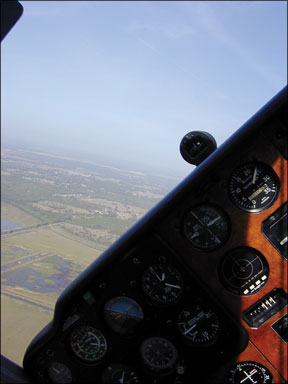
From Day One of our flight training, maneuvers practice fills much of our hours of dual instruction: turns around a point and such, unusual attitudes and recovery from them, and that most-basic skill from putting together all the control elements, flying pattern work. In aircraft so equipped, most of us learn to use the turn gyro when practicing maneuvering flight, striving to master the standard-rate, two-minute turn depicted by our little friend. But as we learn later in actual flying, that training also instilled flexibility and the skill to adapt maneuvers to the conditions. Among the best of all flexibilities is the ability to maneuver beyond our standards- Photo By Dave Higdon/Photoprose Productions
Beyond Standard Rate
From Day One of our flight training, maneuvers practice fills much of our hours of dual instruction: turns around a point and such, unusual attitudes and recovery from them, and that most-basic skill from putting together all the control elements, flying pattern work. In aircraft so equipped, most of us learn to use the turn gyro when practicing maneuvering flight, striving to master the standard-rate, two-minute turn depicted by our little friend. But as we learn later in actual flying, that training also instilled flexibility and the skill to adapt maneuvers to the conditions. Among the best of all flexibilities is the ability to maneuver beyond our standards-both beyond the standard-rate turn and past the point where turns become steep. At times it seems that too few of us practice to maintain competence at the higher demands of flight beyond 30 degrees of bank. Thankfully, with a bit of caution and common sense, steep turns are skills we can practice on our own or, even better, with the security and added safety of an instructor or safety pilot. The payoff can be a lifesaver. Steep-turn skill holds significant real-world application in everyday flying, whether for something as potentially dangerous as trying to escape from a dead-end canyon or the more routine need to complete a non-precision instrument approach by circling while remaining within sight of the runway. With a little regular practice, a pilot should be ready to safely, sanely fly steep turns up to and including the most demanding of such unusual maneuvers: the 60-degree bank, 360-degree turn, all while holding altitude within 50 feet, plus or minus, of our entry altitude. Acknowledging that such circumstances when we need that skill should be relatively rare only heightens the need to regularly hone your real-world steep-turns skills. And should we never actually need to, a great sense of self-satisfaction comes from bumping through ones own wake.

Key Takeaways:
- Steep turns are a critical, life-saving skill for pilots, essential for real-world scenarios such as escaping confined areas or executing specific instrument approaches.
- Regular practice of steep turns, ideally up to a 60-degree bank while maintaining altitude, builds the muscle memory and mental dexterity needed for unexpected, high-stakes situations.
- Increased bank angles in steep turns dramatically increase G-loading on the aircraft and significantly raise stall speeds, requiring pilots to be mindful of aircraft structural limits, V-speeds, and the risk of unintended stalls.
Key takeaways sponsored by Aviator Pro | Start Your Training ->
See a mistake? Contact us.

