











At my day job flying airliners I get a lot of idle time for my brain. To avoid the clich of that becoming the devil’s workshop, I try to occupy myself with deep thought. I’m not often successful, but on a recent rather long leg, I was. I’d just reviewed the sensor data for our single FMS and my mind began to look critically at our on-board equipment compared to what we see in general aviation, specifically the whole concept of “dual” installations of identical equipment.
Why Two?
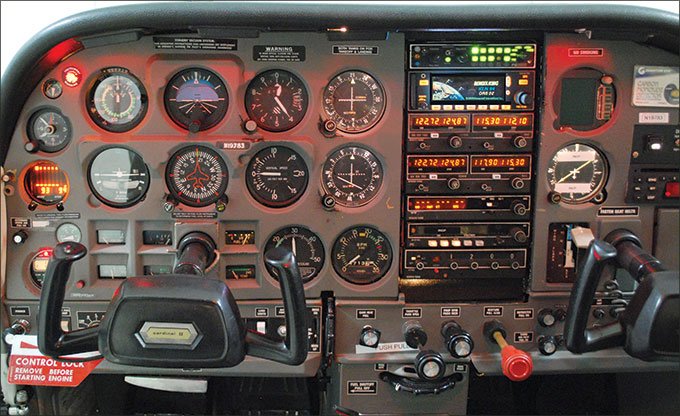

Key Takeaways:
- The article traces the evolution of "dual" avionics installations in general aviation, questioning the persistent mindset for redundant equipment from essential early NAV/COMs to modern GPS systems.
- Initially, the "dual NAV/COM" approach led to setups like twin Garmin GNS units, where the redundancy benefits for GPS were often debatable, and a single GNS paired with a dedicated MFD could offer greater functionality.
- Modern integrated systems like the Garmin GTN 650/750 have revitalized the practical benefits of dual installations by combining GPS, NAV/COM, and robust MFD capabilities into compact units, offering two full-featured displays.
- Despite these advancements, the author ultimately questions the necessity of fully redundant MFD/GPS/NAV/COM units when a primary EFIS MFD is present, suggesting a single integrated unit plus a basic NAV/COM often provides sufficient functionality.
Key takeaways sponsored by Aviator Pro | Start Your Training ->
See a mistake? Contact us.

