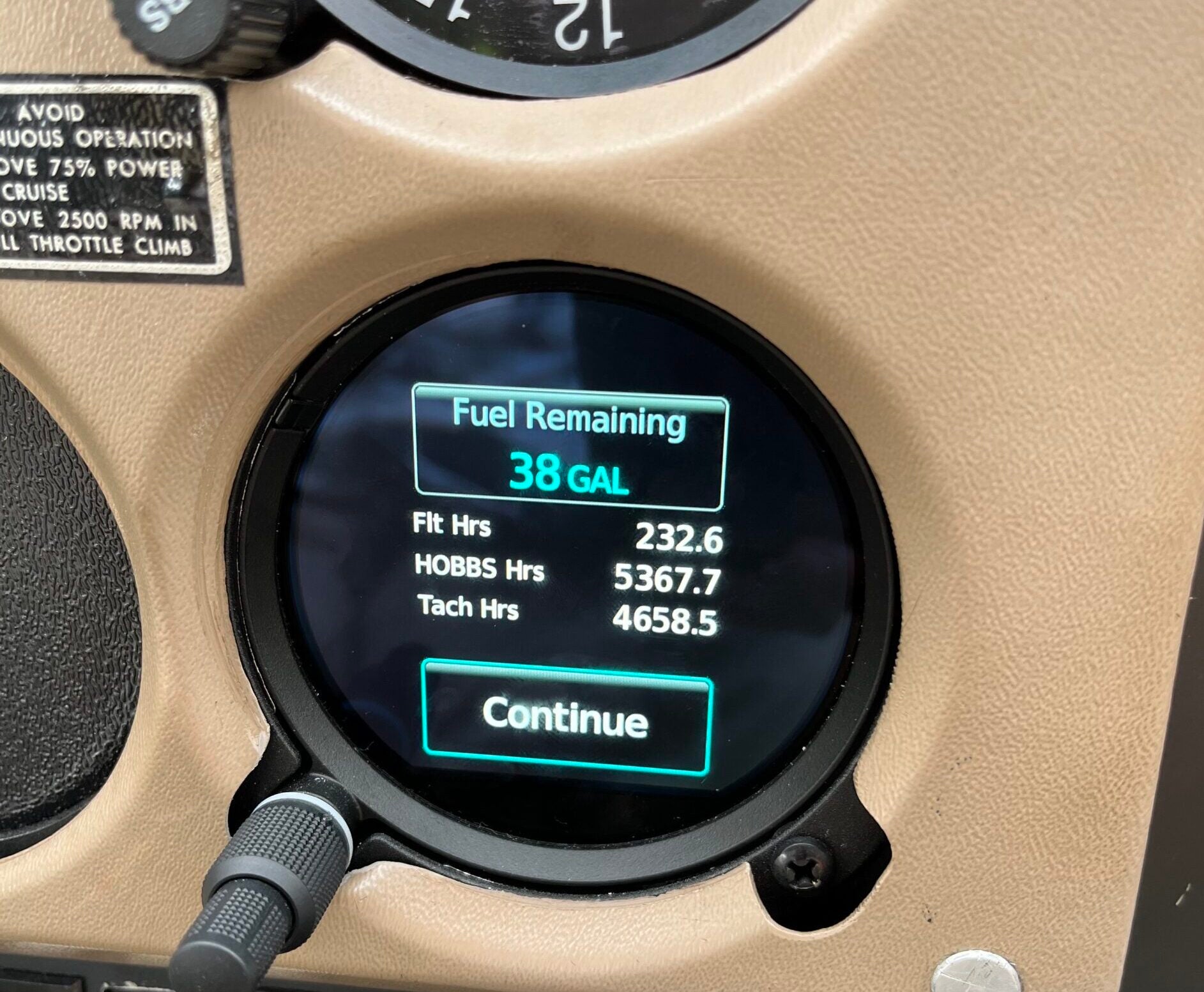
Tach and Hobbs meter numbers are critical for determining when certain aircraft inspections are due, when airworthiness directives need to be complied with, and how much the customer will be billed for the flight. [Credit: Meg Godlewski]
Key Takeaways:
Pilots must diligently check Hobbs (for billing/logbook) and Tach (for maintenance/ADs) numbers before flights to prevent errors, incorrect billing, or accidentally overflying critical inspections or Airworthiness Directives (ADs).
The Hobbs meter tracks flight time for billing and logbooks, while the tachometer measures engine operating time for maintenance scheduling, with tach time typically being about 20% less than Hobbs.
Flight schools actively manage maintenance schedules for their fleet, often using software and sometimes employing strategies like flying aircraft to "time out" for inspections, to minimize downtime and ensure compliance.
An aircraft needing a 100-hour inspection for commercial use (e.g., flight instruction) can still be legally flown solo for non-commercial pilot currency, provided no ADs are overdue and its annual inspection is current.
I wish I had a dollar for every time I was asked this, or asked someone else this. These numbers are critical for determining when certain aircraft inspections are due, when airworthiness directives (ADs) need to be complied with, and how much the customer will be billed for the flight.
CREATE A FREE ACCOUNT
Sign up to keep reading
Create a free account to continue. Already a member? Sign in below.
Meg Godlewski has been an aviation journalist for more than 24 years and a CFI for more than 20 years. If she is not flying or teaching aviation, she is writing about it. Meg is a founding member of the Pilot Proficiency Center at EAA AirVenture and excels at the application of simulation technology to flatten the learning curve. Follow Meg on Twitter @2Lewski.