













Register

Unreliable Airspeed

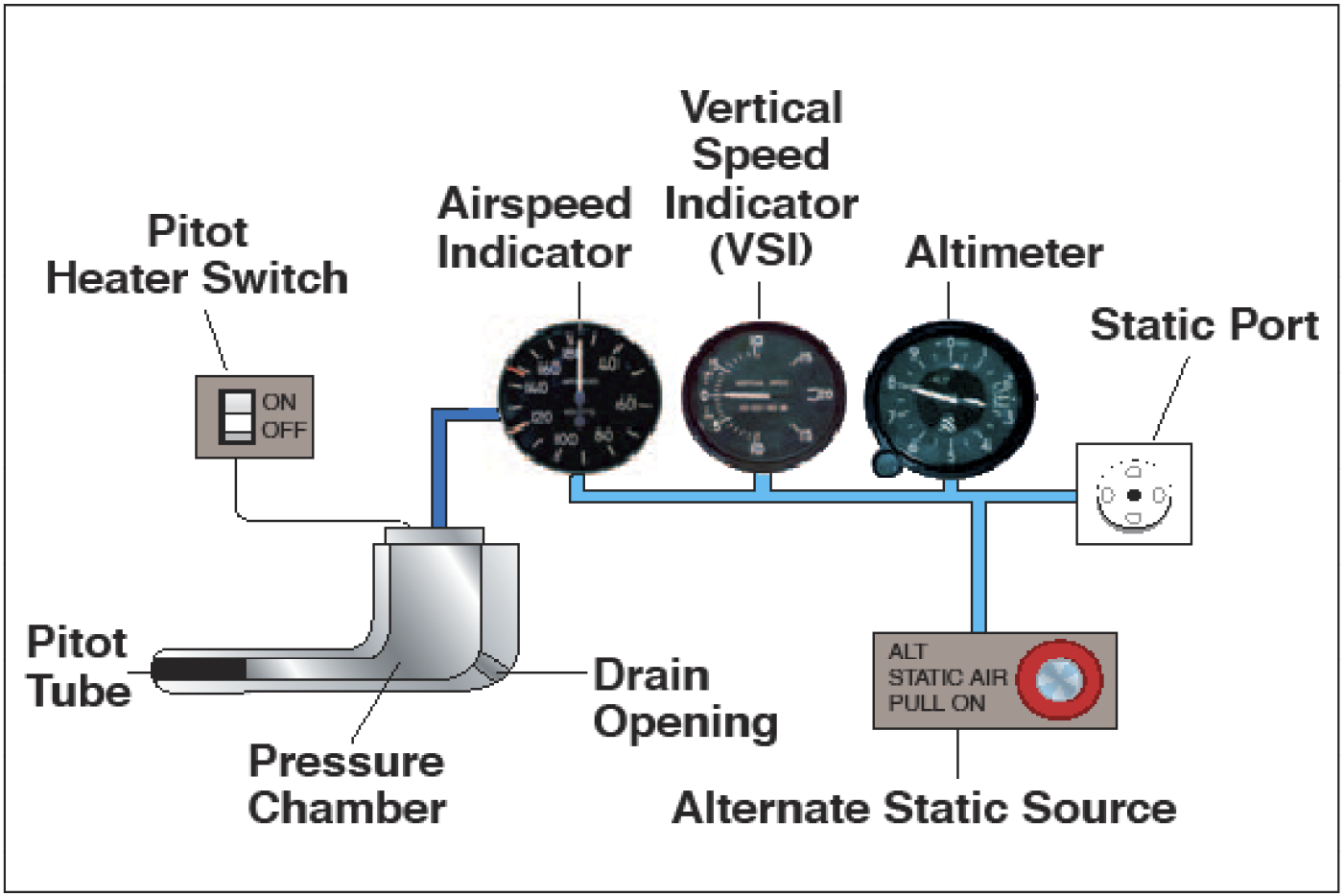
This oversimplified diagram of a typical pitot-static system shows the routing of pitot and static lines.
Gemini Sparkle

Key Takeaways:

  • Modern aircraft utilize Air Data Computers (ADCs) and solid-state sensors to digitally derive airspeed, altitude, and vertical speed from pitot and static pressures, replacing older mechanical systems.
  • Pitot tube blockages typically cause the airspeed indicator to read zero or incorrectly increase with altitude, while static port blockages lead to an altimeter/VSI freezing and the airspeed decreasing rapidly during a climb.
  • In digitally integrated cockpits, pitot/static failures can lead to more severe and sometimes illogical system responses, affecting envelope protection and primary flight displays due to their reliance on air data for various functions.
  • Pilots encountering such failures must rely on thorough system knowledge, cross-check all available instruments and external cues (like pitch/power settings, wind noise, visual horizon), and avoid fixation on a single erroneous instrument to diagnose the problem.
See a mistake? Contact us.

With “steam gauge” round dials, the airspeed reading was mechanically determined inside the airspeed indicator. Likewise, the altimeter had its own independent mechanical movement, and the vertical speed indicator had a similar arrangement.

In today’s digitally integrated cockpits, the altitude, airspeed, and vertical speed are developed from solid state sensors inside an air data computer (ADC) or air data module (ADU). This article will discuss how the air data information is generated in today’s “glass cockpit” and what to expect if the pitot tube or static port is obstructed.


Ready to Sell Your Aircraft?

List your airplane on AircraftForSale.com and reach qualified buyers.

List Your Aircraft
AircraftForSale Logo | FLYING Logo
Pilot in aircraft
Sign-up for newsletters & special offers!

Get the latest stories & special offers delivered directly to your inbox.

SUBSCRIBE