














Register

The Douglas XB-42 ‘Mixmaster’ Flew Almost as Fast as It Looked

When approached to develop a fast bomber, Douglas responded with the Douglas XB-42 “Mixmaster,” a decidedly unconventional, piston-powered design promised to achieve nearly 500 mph.

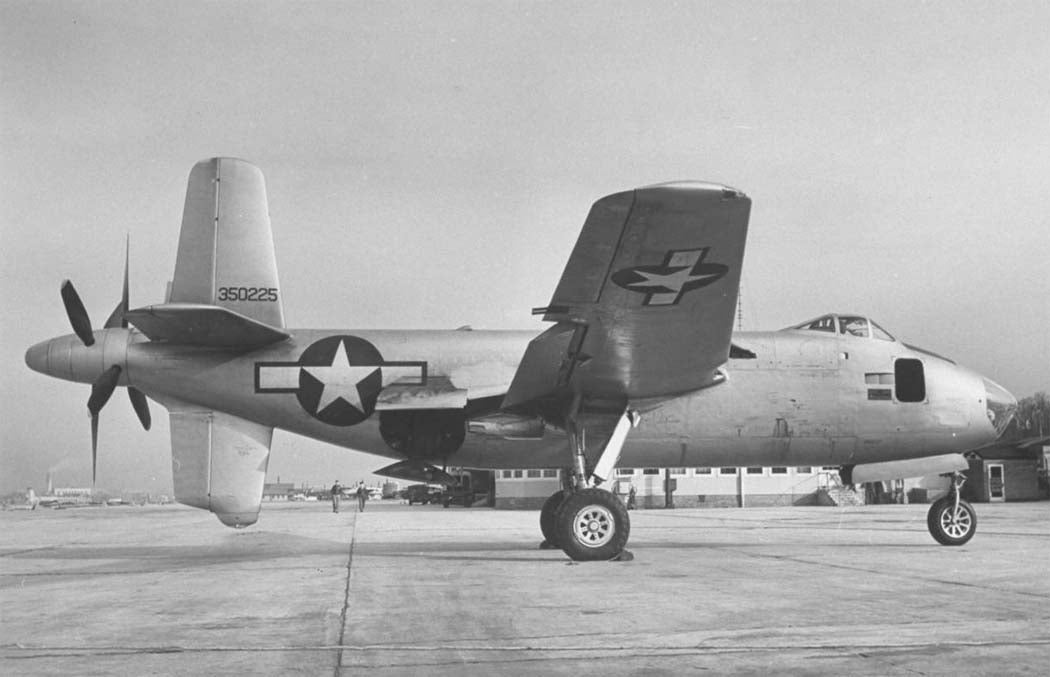
A side view of the XB-42, showing the dual-purpose, ventral vertical stabilizer that doubled as protection against prop strikes during takeoff and landing. [Photo: U.S. Army Air Forces]
Gemini Sparkle

Key Takeaways:

  • The Douglas XB-42 "Mixmaster" was an unconventional World War II bomber designed for high speed, featuring its two powerful piston engines housed within the aft fuselage to drive twin pusher propellers and minimize wing drag.
  • Despite its innovative design and aim for nearly 500 mph, the XB-42 only achieved a maximum speed of 410 mph, falling short of its ambitious performance targets.
  • The unique pusher propeller configuration presented several challenges, including potential prop strikes during takeoff and landing (requiring a ventral stabilizer) and the need for an explosively jettisonable propeller system for crew bailout safety.
  • One of the two prototypes crashed during testing, and although the design was not adopted, the remaining XB-42 was later modified into the XB-42A with added jet engines, eventually evolving into the pure jet-powered XB-43.
See a mistake? Contact us.

The World War II era was an interesting time to be an aircraft engineer. Piston-engine technology was reaching a pinnacle of power and complexity, huge design and production demands were incoming from the war effort, and the advent of jet power had just emerged. It was a time to push up sleeves, sharpen pencils, and push boundaries.

This was certainly the case at Douglas Aircraft Co. When approached by the military to develop a small bomber that prioritized speed, Douglas responded with the XB-42, nicknamed “Mixmaster”—a decidedly unconventional, piston-powered design that it promised would achieve nearly 500 mph. When the military gave the go-ahead to build and fly two prototypes, it was up to the engineers to deliver the extreme performance.


Jason McDowell

Jason McDowell is a private pilot and Cessna 170 owner based in Madison, Wisconsin. He enjoys researching obscure aviation history and serves as a judge for the National Intercollegiate Flying Association. He can be found on Instagram as @cessnateur.

Ready to Sell Your Aircraft?

List your airplane on AircraftForSale.com and reach qualified buyers.

List Your Aircraft
AircraftForSale Logo | FLYING Logo
Pilot in aircraft
Sign-up for newsletters & special offers!

Get the latest stories & special offers delivered directly to your inbox.

SUBSCRIBE
