
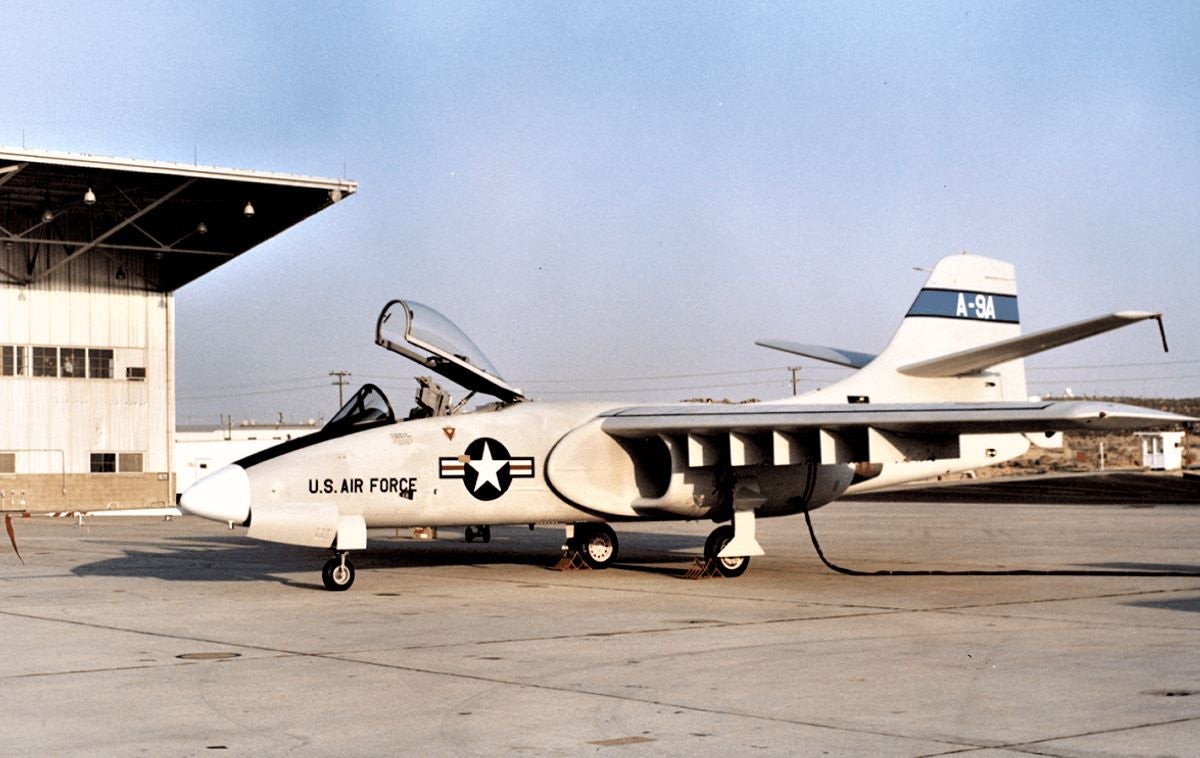


In the mid-1960s, the U.S. Air Force presented aircraft manufacturers with an interesting challenge—design a clean-sheet close air support (CAS) aircraft to replace the aging Douglas A-1 Skyraider. Accustomed to developing sleek fighters and bombers that ventured into supersonic speeds, this new request challenged them to instead prioritize cost, survivability, and low-speed maneuverability. It was a new set of requirements that required new thinking.
Just as the design requirements were unconventional for the time, so too was the appearance of each proposed contender. A total of six manufacturers submitted a wide variety of proposals, ranging from multiengine jets to a single-engine V-tail pusher turboprop. In each case, the manufacturers prioritized function over form, with most concepts utilizing straight wings, bulbous canopies, and a multitude of external hard points on their wings.