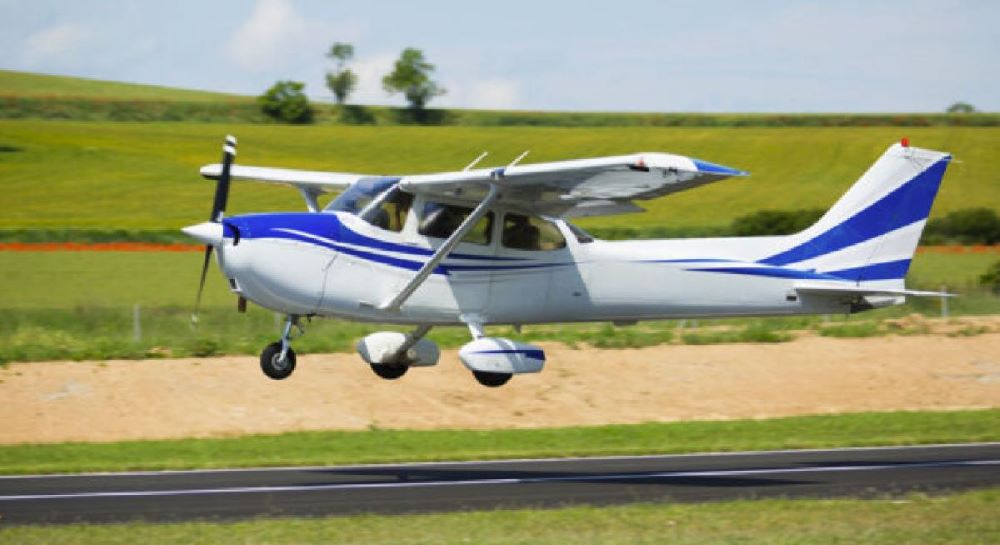
Of all the maneuvers you will learn during your primary flight training, the touch and go will be the one you practice most often. [FLYING file photo]
Key Takeaways:
The touch and go is a frequently practiced but complex flight training maneuver, requiring precise and rapid execution of multiple tasks after touchdown, which can easily lead pilots to get "behind the airplane."
Key risks associated with touch and go include loss of aircraft control, power-on stalls, and, especially in retractable gear aircraft, inadvertent belly landings caused by rushing the simultaneous retraction of gear and flaps.
To ensure safety, pilots are taught to prioritize aircraft control and confirm a positive rate of climb and gear retraction before cleaning up flaps, often reinforced through simulated high-altitude "faux pattern" drills.
Of all the maneuvers you will learn during your primary flight training, the touch and go will be the one you practice most often.
The touch and go is a variation on a normal landing. Instead of bringing the aircraft to a complete stop, after the aircraft touches down, you add full power to takeoff. It is sort of a modified go-around.
CREATE A FREE ACCOUNT
Sign up to keep reading
Create a free account to continue. Already a member? Sign in below.
Meg Godlewski has been an aviation journalist for more than 24 years and a CFI for more than 20 years. If she is not flying or teaching aviation, she is writing about it. Meg is a founding member of the Pilot Proficiency Center at EAA AirVenture and excels at the application of simulation technology to flatten the learning curve. Follow Meg on Twitter @2Lewski.