The Terminal Arrival Area has been dissected and rehashed a lot. For those of us who became instrument rated when, say, Loran was cutting-edge technology, the TAA is a bit of a paradigm shift for approach planning. If you were raised /G, its just another navigation parameter.
The Terminal Arrival Area (TAA) provides a seamless transition from the enroute environment to the RNAV approach initial fix, offering obstacle clearance and allowing descent to IAF altitudes.
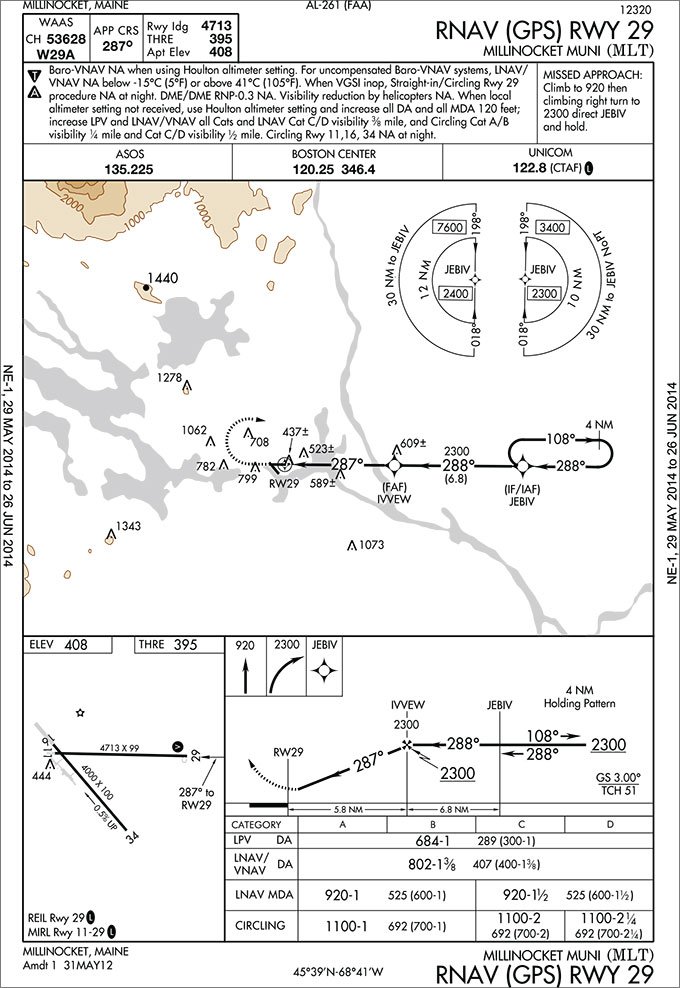
The RNAV (GPS) RWY 29 TAA at Millinocket Municipal Airport (KMLT) is a non-standard design, deviating from the typical "T" configuration due to challenging local terrain.
Pilots approaching KMLT from the western TAA hemisphere face a significant descent (5200 feet in 12 nautical miles) which requires careful planning, potentially utilizing the course reversal for proper altitude management.
Thorough pre-flight review of all approach peculiarities, especially unusual TAA designs, is critical for safe and comfortable descent planning and execution.
The Terminal Arrival Area has been dissected and rehashed a lot. For those of us who became instrument rated when, say, Loran was cutting-edge technology, the TAA is a bit of a paradigm shift for approach planning. If you were raised “/G,” it’s just another navigation parameter.
CREATE A FREE ACCOUNT
Sign up to keep reading
Create a free account to continue. Already a member? Sign in below.