

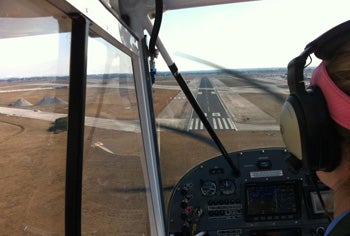


Here’s a tip if you’ve ever wondered when you should start your descent to your arrival airport (assuming you don’t have an FMS with top-of-descent calculation capability). A quick and easy way to figure it out is to start with your altitude above field elevation and multiply that number by three. This will give you the approximate distance in nautical miles from the airport to start a 500-foot-per-minute descent in the typical light general aviation airplane and reach pattern altitude.
So, for example, if you’re cruising at 7,500 feet en route to an airport with a 500-foot field elevation, do the math and you’ll come up with 21,000 – drop the last three zeroes, and you can see that you should start your descent when you’re 21 miles out.
Using a time equation is just as easy, and it actually makes more sense when you’re flying faster airplanes. A good rule of thumb is to allow yourself two minutes for each 1,000 feet of altitude you need to lose. So, if you’re cruising at 10,000 feet above field elevation, start descending 20 minutes before your planned arrival.