













(October 2011) We are all familiar with the adage “To err is human.” This means that if you are human, you should accept the fact that from time to time you will make errors. Left unabated, many of these errors will be trivial and the outcomes insignificant. But in the operation of an aircraft, the smallest, most trivial errors can link together quite quickly to form the well-known error chain. Situations that aren’t normal can be a breeding ground for errors due to the fact that pilots might find themselves in novel situations: rare or unusual events that may be compounded by stress, anxiety and distractions.
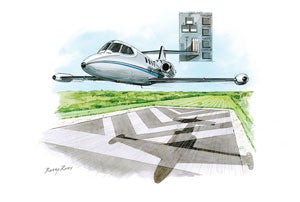
That was exactly what happened to me a number of years ago when, as a Part 135 Learjet check airman, I was giving a Part 135 proficiency check ride to a captain. The captain was in the left seat, I was in the right seat, and another company pilot and an FAA inspector were riding in the back as observers. The weather was good VFR on this day, and after some airwork we set up to do a no-flap landing. There was a lot of chatter going on between me and the captain as well as back-seat conversations and input by the FAA inspector. All of this was occurring below 10,000 feet when the cockpit should have been sterile. The before-landing checklist was accomplished in what we thought was its entirety, but one item was omitted: the extension of the landing gear. No one caught the error. We were going to make an unintentional gear-up landing with an FAA inspector on board. This would have been a big problem, at many levels, for the occupants of this Learjet. The omission was directly attributed to distractions, high workload and the stresses related to a check ride (for the captain and for myself). You may be wondering why the gear warning horn did not sound to give us an aural clue of the misconfiguration. It normally would except for the fact that, if the flaps are not extended beyond 25 degrees, the gear warning horn will not sound. Our flaps were at 0 degrees. Thus, our last line of defense to avert a gear-up landing (an aural warning) was not active. At about 100 feet above touchdown, with the before-landing checklist “completed,” I did something that dramatically changed the outcome of this event. I looked at the landing gear indicator lights one final time “just to be sure.” What I saw were three gear indicator lights that were not green. I immediately called for a go-around, and the captain complied. No further problems occurred and the rest of the check ride continued smoothly and successfully.

