











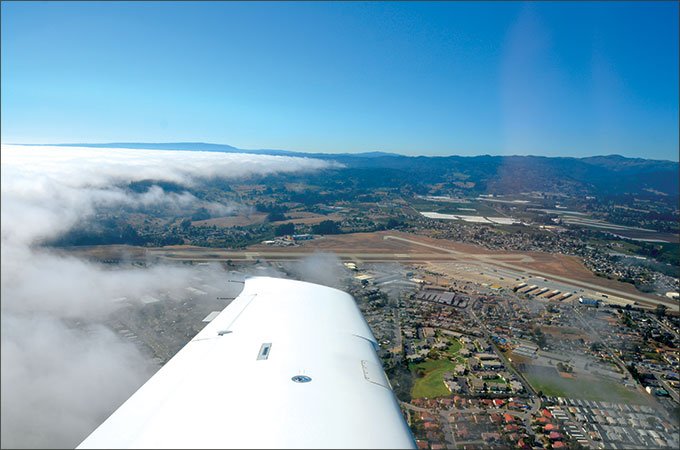
When operating near large bodies of water, especially on the west coast of the United States, you might encounter the “Fog Monster” from the excellent article by Tim Vasquez in the May, 2013 IFR. Since I’ve spent over 20 years under the spell of this weather pattern, I’ve learned that fog is only a symptom of the marine layer that spawns it. So, the monster could be actual fog or low, dense clouds.
Tame the Fog Monster

Key Takeaways:
- Coastal marine layer weather is highly unpredictable, capable of rapid and localized changes from VMC to IMC, often within minutes.
- Pilots operating in these areas must vigilantly observe weather patterns over time, understand key indicators like temperature/dew point spread and onshore breezes, and always have robust alternate plans.
- Automated weather reports (AWOS/ASOS) can be misleading due to microclimates and the localized nature of marine layer encroachment, requiring pilots to consider broader conditions and manual observations.
- Specific flight strategies, including careful IAP selection, utilizing flight following for VFR, and exercising caution during low-visibility departures, are essential for safe operations near coastal areas.
Key takeaways sponsored by Aviator Pro | Start Your Training ->
See a mistake? Contact us.

