














Senate Advances NASA Chief Nominee Isaacman

Commerce, Science, and Transportation Committee votes 18-10 to approve the Shift4 Payments founder and private astronaut.

Jared Isaacman
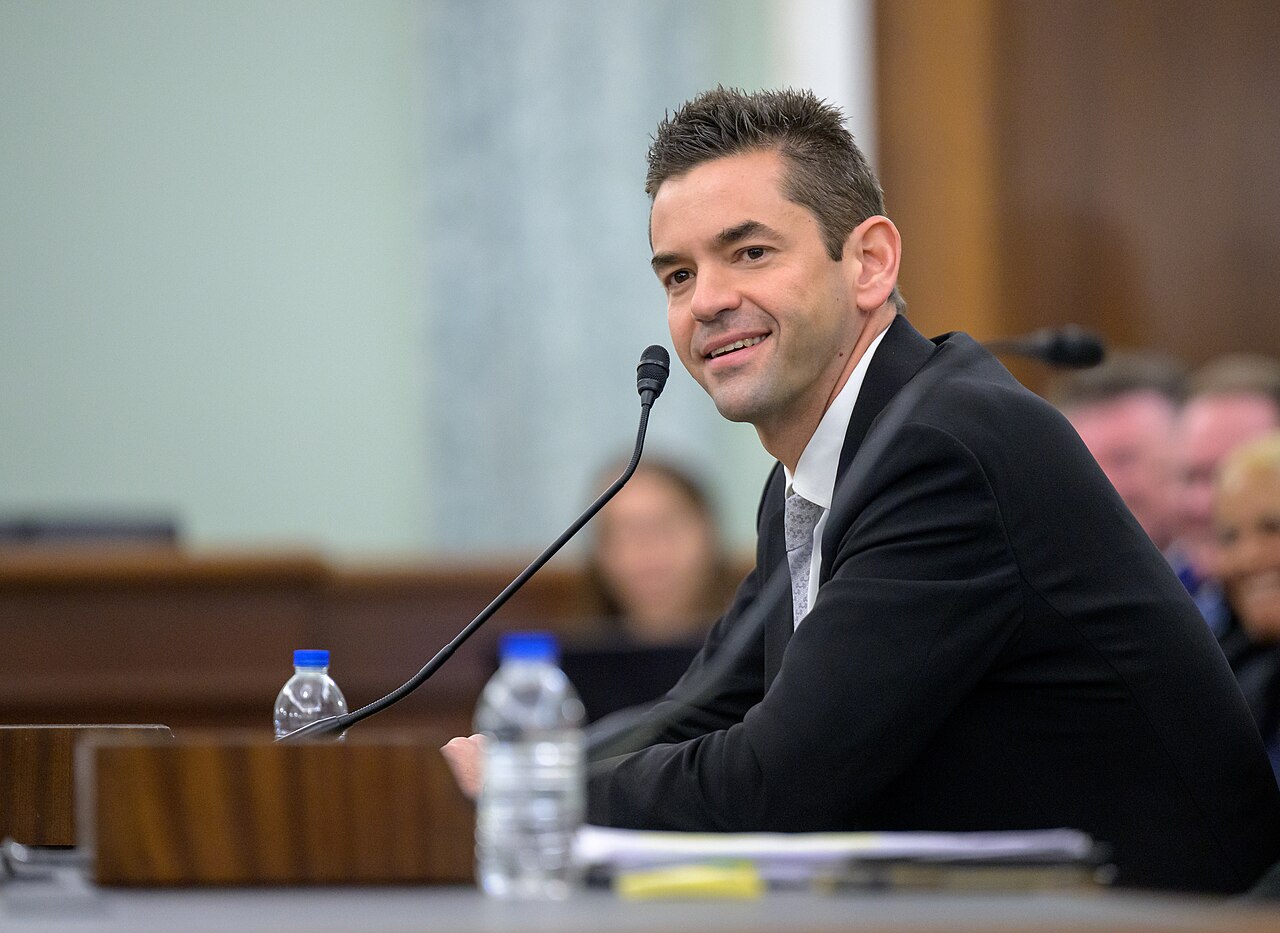
Shift4 Payments founder Jared Isaacman moves closer to securing the role of NASA Administrator. [Credit: NASA/Bill Ingalls]
Gemini Sparkle

Key Takeaways:

  • Jared Isaacman's nomination as NASA Administrator was advanced by the U.S. Senate Committee on Commerce, Science, and Transportation in an 18-10 vote.
  • Senators questioned Isaacman extensively on his leaked "Athena" plan, which raised concerns about prioritizing Mars over Artemis lunar missions, potential cuts to science programs, and workforce reductions.
  • Isaacman defended the "Athena" document as a "living document" taken out of context, reiterating his commitment to the Artemis lunar landing program, the Space Launch System (SLS), and important science initiatives while emphasizing NASA's role in pioneering efforts beyond commercial capabilities.
See a mistake? Contact us.

In an 18-10 decision, the U.S. Senate Committee on Commerce, Science, and Transportation on Monday voted to advance the nomination of President Donald Trump’s pick for NASA Administrator, Shift4 Payments founder and private astronaut Jared Isaacman.

Despite concerns over his recently leaked “Athena” plan, ties to SpaceX and CEO Elon Musk, and circumstances of his reemergence after Trump withdrew his initial nomination in May, Isaacman won bipartisan support as expected. The committee in April previously advanced Isaacman’s nomination to the full Senate in a 19-9 vote, days before he was removed from consideration.


Senators Ted Cruz (R-Texas), the committee’s chair, and Maria Cantwell (D-Wash.), its Democratic minority leader, both voted to confirm Isaacman. Though members of both parties had questioned his candidacy, Democrats levied more scrutiny.

“You are as committed to American supremacy in the final frontier as is this committee and the entire Senate,” said Cruz. “My hope is that you will be confirmed and in this role before the end of this year.”

Isaacman in the lead-up to the vote secured the endorsement of 36 former NASA astronauts, as well as industry groups such as the Commercial Space Federation, which counts SpaceX and Blue Origin among its members. But though he has a broad backing, Isaacman’s plans for the space agency are somewhat opaque.

Should NASA Stay the Course?

In a rare occasion, Isaacman on Friday fielded questions from Senators during a second confirmation hearing.

“I supported your nomination the first time you came before the committee, and I hope to do so again,” said Cantwell.

A recurring topic of inquiry was Isaacman’s leaked Athena plan—a 62-page document drafted in May that outlines his vision for NASA. He responded to the leak in a post on X, confirming certain details and disputing others.

Among the document’s key tenants is a ramp-up of Mars exploration efforts, aligning with comments from Trump and Musk. Senators worried that will come at the expense of Artemis, NASA’s lunar landing program that has four crewed missions on its manifest. The next, Artemis II, could launch as soon as February.

Isaacman told senators that much of what has been reported about Athena is taken out of context and that the plan is intended as a “living document,” with “ideas, thoughts on the direction of the agency, research requests” that will later be refined. He offered support for the upcoming Artemis missions as well as the Lunar Gateway space station, which is targeted for cancellation under Trump’s fiscal year 2026 budget request.

“There is no question the overwhelming near-term priority is to return American astronauts to the moon,” Isaacman said.

Senators also questioned what vehicles the Artemis astronauts will fly. Trump’s budget request calls to end work on NASA’s Space Launch System (SLS) and Orion capsule—the assigned Artemis crew vehicles—in favor of commercially built spacecraft. Lawmakers rejected that move, allocating billions to keep SLS and Orion funded through Artemis V.

Athena calls for NASA centers working on the SLS to shift focus toward nuclear electric propulsion—a key focus of the plan—once the program ends. But Isaacman said he would stay the course.

“I absolutely believe the current architecture, with SLS, is the fastest path to achieving our near-term lunar objectives, which should be to return to the moon before our great rival,” he said.

Isaacman was also asked about interim NASA Administrator Sean Duffy’s announcement that NASA would reopen competition for the Artemis human landing system (HLS), which SpaceX is contracted to provide for Artemis III and IV. He did not specify whether or how that could occur but said SpaceX and Blue Origin—the other HLS contractor—should be ready to compete.

“I don’t think it was lost on either one of those organizations that the first company that is capable of delivering a lander to take American astronauts to the lunar surface and back is the one that this nation is going to go with,” Isaacman said.

Will Isaacman Save NASA Science?

Senators during Isaacman’s confirmation hearing repeatedly emphasized NASA’s lunar ambitions as essential to competing with China. Several of them also questioned the nominee’s plans for science programs.

Trump’s budget request calls for a 24 percent reduction in NASA’s top line funding—including a nearly 50 percent cut to science programs—in order to funnel more money to human space exploration. The proposal has faced deep opposition from stakeholders as well as Congress.

In questions for the record following the hearing, Senator John Hickenlooper (D-Colo.) said the Athena plan “aligns with the President’s budget request to cut NASA’s Science Mission Directorate by nearly 50 percent,” to which Isaacman responded that it “never made any determinations to cut agency budgets or programs.” During the hearing, he avoided taking a hard stance on the cuts but endorsed funding for early-career scientists and university-based research.

“We only inhabit one planet, and Earth science is pretty vitally important,” he said.

At the same time, Isaacman said he would “absolutely support the president and the goal of reducing the deficit and ensuring the nation is on good footing.” But he added that “a lot has changed” since Trump’s initial budget request. Responding to concerns that he would be a rubber stamp for Trump’s agenda, Isaacman said he would “absolutely maximize every dollar Congress affords to the agency.”

According to Senator Andy Kim (D-N.J.), Athena proposed eliminating thousands of civil servant positions, adding to the estimated 4,000 NASA employees who have departed the agency in 2025. The budget request aims to shrink its workforce by one-third. Athena reportedly also called for privatization or consolidation of some NASA center work. Goddard Space Flight Center field sites, for example, were billed as “opportunities for deletion.”

Isaacman pushed back on both points, arguing that NASA will “naturally attract” talent despite a smaller budget. In response to questions for the record, he wondered whether workforce reductions would be necessary at all.

“It is worth noting that the draft document was several months old and developed during a period when NASA was contemplating multiple [reduction in force] and reorganization efforts,” he said. “Given how much time has passed and how much has changed since then, I am not certain a comprehensive reorganization, at least on the scale previously contemplated, is even still necessary.”

Isaacman said he does not plan to close any NASA centers and that Goddard specifically is “very important to spearheading the scientific efforts of NASA.” However, he emphasized that the agency should focus on capabilities that private companies cannot replicate.

“I think NASA should constantly be recalibrated to work on that near impossible, what no one else is doing,” he said. “When they figure it out, they hand it off to industry, and they recalibrate to the next big bold endeavor.”

Kim was among senators who criticized Athena’s proposed “science-as-a-service” framework that would “take NASA out of the taxpayer-funded climate science business and leave it for academia to determine.” Senator Ed Markey (D-Mass.) alleged that it calls for NASA to “stop collecting its own data.”

Isaacman clarified that the document “contemplated” contracting private firms for Earth observation and climate science data, “specifically to free up resources for other planetary science missions that commercial companies are not capable of doing.”

The Shift4 Founder was adamant that the more controversial portions of Athena were misreported or devoid of context. But ultimately, he said, “I think it was all directionally correct.”

“It was always something meant to be refined with actual data should I have been confirmed,” he said. “But I do stand behind everything in the document, even though it was written seven months ago.”

Jack Daleo

Jack is a staff writer covering advanced air mobility, including everything from drones to unmanned aircraft systems to space travel—and a whole lot more. He spent close to two years reporting on drone delivery for FreightWaves, covering the biggest news and developments in the space and connecting with industry executives and experts. Jack is also a basketball aficionado, a frequent traveler and a lover of all things logistics.

Ready to Sell Your Aircraft?

List your airplane on AircraftForSale.com and reach qualified buyers.

List Your Aircraft
AircraftForSale Logo | FLYING Logo
Pilot in aircraft
Sign-up for newsletters & special offers!

Get the latest stories & special offers delivered directly to your inbox.

SUBSCRIBE
