











Register

Search Results for: maintaining your airplane

Learning Experiences

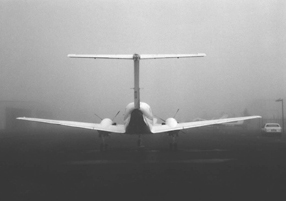
Cumulo-Greyhound

We had just had three to four weeks of absolutely beautiful late summer/early fall weather. I got in as much flying during that time as I could, but unfortunately other commitments prevented me from getting in more than a few hours.

I was buoyed by the knowledge that my wife and I were about to embark on an extended trip that would take us to a resort in South Carolina for a four-day stay, then on to a week in Florida visiting relatives, followed by a stop in Atlanta to visit our daughters family.

There were things that needed to be done to get the plane ready for the trip. In the last few weeks I had received two mandatory service bulletins on my 1995 A-36 Bonanza. Id also had a few…

Read More »
Unicom

Any Ol Bank Wont Do

At the end of an excellent article on engine-out procedures and preparation for landing [Reality Check, April], Wally Miller states: … fly the airplane … trim for best guide speed and do not give up an inch of altitude.

I am somewhat perplexed by that statement. if you lose and engine, I always felt that you should pitch the plane up to the best glidespeed, thereby gaining altitude.

I fly a Mooney 201 which cruises at 145 to 150 KIAS. My best glide speed is 85 KIAS. If I lost an engine, I would pull the nose up and immediately trim the plane for 85 KIAS. During the pitch up and trim, I would gain several hundred of feet of altitude, which could buy me a better landing spot. I…

Read More »
Airmanship

Cheating the Turn

A fairly new private pilot recently mentioned that hes read about stalls occurring while turning from base to final but doesnt remember hearing much discussion about it during his private pilot training.

The pilot had done all the approach-to-stall, stall recognition and stall recovery training required to perform the tasks required by his certificate. However, he had no idea why he was doing them – other than to pass the checkride – nor how he might apply this training in the real world.

The central concept never presented to him is that the main reason for stall training, including the spin discussions (which replace the mandatory spin training of the old hairy-chested days), is…

Read More »
Features

Twice Bitten

Light twin flying and rattlesnake encounters start without much drama, certainly, but with carelessness and a casual attitude about the possible end results. Theyre rigged against untrained and unwary people, however, and the results are often the same.

Twin-engine airplanes demand a healthy respect from those who fly them. Some of that must come from the improved performance when everything is working right, and some must come from the slim margins for error that exist when something goes wrong.

Once upon a time, back in 1979, things were booming in general aviation circles. Sales of light piston twins had been increasing by leaps and bounds for a decade. The popular reasoning of the…

Read More »
Learning Experiences

Busting Loose

I own a Cessna 170 thats a great plane and has received a lot of attention of would-be buyers. I am not interested in selling the plane but have received a number of unsolicited inquiries. I believe some of that interest led to what turned out to be a new lesson for me in the value of a thorough pre-flight inspection.

My wife and I had decided to take a quick day trip to Wendover, Utah, for brunch and a little gambling. My airplane is kept at Salt Lake International Airport, where access is restricted through a gate with an electronic access code.

When we arrived, everything appeared to be in order. We began removing the tie downs, chocks and windshield cover and then I conducted my…

Read More »
Features

Where Ya Goin?

Situational awareness is more than knowing where you are; it means knowing how the flights history affects its future.

Read More »
Features

Landing Softly

After being immersed in complex airspace with rapid fire clearances and sometimes holding number fifteen for takeoff, I really look forward to flying into the mom and pop grass airstrips scattered across the countryside. Theres just something about being able to slip on final and glide into a nice landing without a controller in my ears telling me to take the next high speed exit because theres another airliner on my tail.

Ah, such fun! Back to simple stick-and-rudder once again.

Fun? Absolutely. Low risk? Not necessarily. If you rank the biggest dangers in aviation, icing and thunderstorms might appear near the top of the list. Flying into grass airstrips isnt something that caus…

Read More »
Accident Probes

Unnatural Reaction

The anniversary of one of the most publicized general aviation accidents ever came and went, and almost on cue the NTSB released its official report on the crash that killed John F. Kennedy Jr. Together, they made a powerful reminder that one of the earliest identifiable pitfalls of flying is still with us today. Aptly named the graveyard spiral, it has taken its toll of lives since the invention of the airplane.

Like its cousin the tailspin, the entry is insidious – resulting from spatial disorientation – and the conclusion is often fatal. The entry pattern associated with either maneuver is similar, but the resultant maneuvering track quite different. Real-life testing and experience,…

Read More »
Features

Winter Wonderland

Although some recreational fliers ground themselves during the dingy winter months, most pilots continue to rely on their airplanes even when the mercury dips and the gray skies move in. And theres no reason not to, as long as you take into account the icy grip winter weather can have on everything it touches.

Planning for defensive flying in winter conditions begins on the ground. For VFR flight, youll need to plan to stay clear of clouds by a reasonable distance and be alert for signs of carb ice. For the pilots who are going to go IFR, things get more complicated. Watching The Weather Channel just isnt enough.

Preflight planning has to be thorough and thoughtful. Consider the rou…

Read More »
Airmanship

Boats or Floats?

They are leviathans sleeping on the tarmac. Towering amphibious floatplanes, boasting adventures of which their landlubbing cousins only dream. Nearby, small flying boats, engines mounted oddly above the fuselage, ponder remote lakes brimming with bass. If youre pondering whether to take the aqua plunge, the next question is floats or boats?

Flying boats, or hull designs, splash down on their bellies and have small floats, or sponsons, under each wing for stability on the water. Floatplanes are common aircraft that sit atop two pontoons. Which you choose will depend upon your anticipated missions and your budget. The decision may also have a substantial impact on your future safety.<...

Read More »
Pilot in aircraft
Sign-up for newsletters & special offers!

Get the latest stories & special offers delivered directly to your inbox.

SUBSCRIBE