Register

Search Results for: general aviation inc

Features

LSA Engine Safety

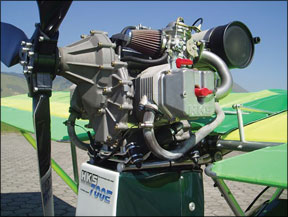
Aircraft engines these days come in a lot more flavors and configurations than they used to, thanks largely to the advent of two forms of alternative aviation: most recently, the light sport aircraft (LSA) market and, much earlier, the 1990s surge in experimental/amateur kit-built aircraft. Where some of the more-popular experimental designs and several legacy-S-LSA models employ familiar powerplants, the majority fly with engines from BRP-Rotax in Austria, HKS in Japan and Jabiru in Australia. Who are these companies and whats their track record in making flying-machine engines? How do they compare to the “traditional,” FAA-certified offerings from Continental and Lycoming? Who sets the standards? And whats their safety record? These newer engines can spur concerns among ardent fans of the familiar, tried-and-true air-cooled flat aircraft engines from Textron Lycoming and Teledyne Continental Motors. Often, it seems, those concerns grow out of unfamiliarity. The differences in care and feeding and in systems fuels debates about their reliability and, in turn, safety of the newer engines.
Read More »
Features

The Problem With Flight Instruction

Perhaps youve heard the riddle, “What do you call the person who graduates at the bottom of the class in medical school?” The answer: Doctor. The maxim being conveyed applies equally well to aviation: What do you call the pilot who has met the minimum standards set forth in FAR 61.183-187? Answer: Certificated Flight Instructor. Yet whether acting in the capacity of doctor or flight instructor, that individual is directly responsible for another persons well being. Others literally may live or die based directly on the doctors and the flight instructors knowledge and skills. The path to becoming a practicing doctor evolved to include a rigorous course of study and years of apprenticeship: college, med school, internship, residency, fellowship. The tradition in aviation, on the other hand, has been to treat flight instructing as the bullpen for corporate and airline flying. Still clinging to this model, many instructors teach largely for their own benefit and not the benefit of their students. Instructing, after all, is supposed to be a transient phase; building time, the primary goal; low pay and high turnover at flight schools, expected.

Read More »
Features

Flying an Aging Airplane

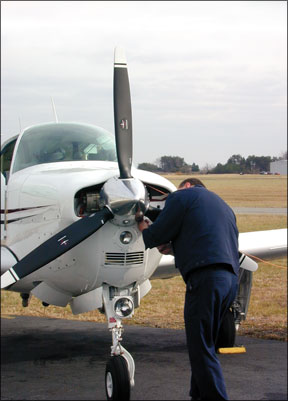
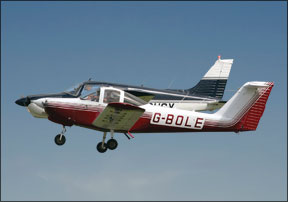
In 1985, I purchased a then-39-year-old 1946 Cessna 120. Several times my friends asked, “Is it safe to fly a 40-year-old airplane?” Their question was based on perceptions of the typical condition of 40-year-old cars, tools and houses. My answer was always a version of this: Properly maintained, a 40-year-old airplane is as safe as one much newer. Unlike cars and houses, airplanes are inspected annually and maintained to a high standard. As long as the pilot puts the time and money into it, and takes it to a mechanic experienced in the peculiarities of the type, it is indeed safe to fly a 40-year-old airplane. Fast-forward to 2008. According to AOPA, the average piston-powered general aviation airplane is more than 35 years old. Leisure suits, my high school graduation and the end of mass production of light propeller airplanes-1978 to 1979-were that long ago. Unlike when I bought my Cessna, now its not unusual at all for a light airplane to be 40 years old; 50- and even 60-year-old piston airplanes are increasingly common. Are airplanes this old still safe? What does it take to safely operate aging airplanes?

Read More »
Features

Deferring Airplane Maintenance

My grandmother loved an adage. “Never put off until tomorrow what you can do today.” “A stitch in time saves nine.” “If you dont find time to do it now, when will you find time to do it later?” All fine words to live by, but my grandmother never paid for an aircrafts annual inspection. With the base price of a straight-leg single-engine airplane annual at some shops hovering around $1500-thats the price if nothing is actually wrong with the airplane-some of the adages heard around the shop are “It flew in, itll fly out.” “You said it was fine that way last year: why is this year different?” and the most common, “I cant afford that-just sign it off now and well get it on the next annual.” To fix or not. What will it cost now versus the price later? Does it affect airworthiness? What does the FAA say about it? Whats the worst that can happen?

Read More »
Aircraft Analysis

Aircraft Awakenings

Now that winter snows have passed and the foliage is turning green, its time to get out and go flying. If you havent committed aviation since the seasons first snowfall, its going to take some effort to get both you and your craft ready to go. You might presume when pilots go out to resume flying in the spring after a winter hiatus theres an increase of certain kinds of accidents. An examination of the accident records for 1996 and 1997 and again for 2003 just didnt show any patterns. Runway loss of control (RLOC) accidents account for a significant portion of general aviation accidents throughout the year but theres no particular spike during the months many of us are out trying to knock off the rust. If there is an increase of RLOC accidents in the spring, its lost in the noise of the overall increase in flying.

Read More »
Features

Safer Flight Maneuvering

In this series first installment (“The Problem With Flight Training,” March 2008), we identified a few of the systemic errors and omissions committed during flight training, and how they feed into typical aviation accidents. We dealt primarily with issues pertaining to the mechanics of flying an airplane. In this second of three articles, well look at some of the psychological aspects involved. A lot of educational material has been generated in recent years on aeronautical decision making, hazardous attitudes and cockpit resource management. The FAA has been actively promoting the Perceive-Process-Perform (P-P-P) risk management decision path as well. Perceiving risk in the P-P-P model is aided with the PAVE checklist; processing levels of risk is facilitated with the CARE checklist; and performing risk management is prompted by the TEAM checklist (see the sidebar on page 6 for more).

Read More »
General

Home Study

If you are like me you have the best of intentions. As a conscientious pilot who wants to fly in a professional manner, you desire to stay up to date on the latest aviation information. You are planning to go to the next safety seminar that the FAA or AOPA puts on in your area. […]

Read More »
Airmanship

Trimming

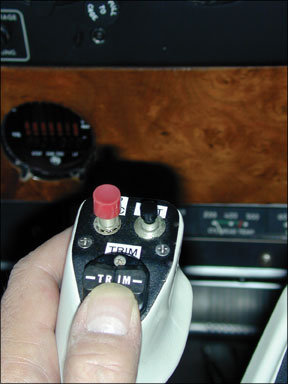
Like most student pilots, I tended to fly with the type of casual lan my primary instructor described, none too deferentially, with the term “death grip.” Then somewhere along the way came my first introduction to that little knurled disk, which is usually just called the trim wheel. Trim? Huh? Whats that? What does it do? How does it work? How is it used? Its nothing miraculous, really. Just think back to your childhood. If you were like me and many other airplane-crazy kids, when you built a balsa wood glider and you started flying it, whats the first thing you adjusted? You adjusted its surfaces balance and deflection so it would fly the way you wanted it to, thats what. Unlike what youre doing today, there was no little man or woman in there jockeying the controls. Instead, the slots in the fuselage within which one could adjust the forward or aft position of the wings and horizontal stabilizer was strictly a hands-off affair. If youre younger, and your glider was made of that new-fangled plastic foam, you might have had the luxury of “bendable” control surfaces. Same idea; different solution.

Read More »
Aircraft Analysis

Automation Complacency

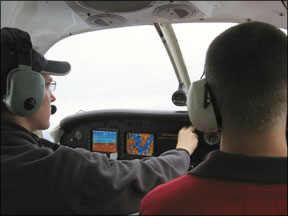
It happens all the time. We invest in all this fancy hardware and top it off with that new autopilot that does everything for us except close the flightplan. We like using that stuff because its easy, precise and, well, kind of cool. However, reliance on the automation can go too far and actually cause the very trouble were trying to avoid. A good coupled autopilot is a wonderful thing. It frees us from much of the mind-numbing concentration of keeping the airplane right side up to allow us to focus on bigger things like setting up for the approach or even just relaxing a bit at cruise. Add a GPS and you can program everything but your initial departure vectors and the vectors to final. The airplane can fly your entire flight plan while you pay attention to more important things like fuel management or the weather. Or not, and thats one of the problems.

Read More »
Features

How Not To Get Experience

Its said we learn to make good decisions by experience, and that experience results from making bad decisions. The flaw in this plan is that in flying, bad decisions can have awful consequences. How can we learn to make good flying decisions without exposing ourselves and our passengers to undue risk? What are we as an industry doing wrong, that pilots regularly make such poor decisions about safety of flight? After all, as much as 80 percent of all aircraft mishaps result from a chain of poor decisions on the part of the pilot, with actual mechanical issues being secondary if they indeed are a factor at all. I think whats going on is the whole culture of how we “learn to fly.”

Read More »
Pilot in aircraft
Sign-up for newsletters & special offers!

Get the latest stories & special offers delivered directly to your inbox.

SUBSCRIBE