Register

Search Results for: general aviation inc

Readback

Readback: September 2014

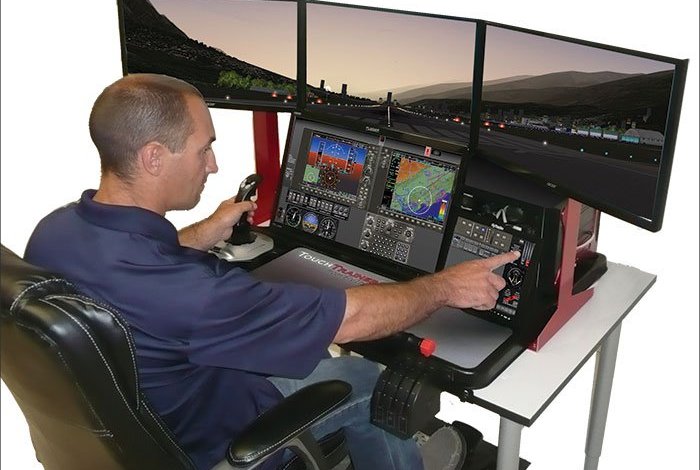
Can You See Me Now?The first question on your June Quiz left me scratching my head. You say the correct answer involves flight visibility as determined by the pilot and I understand that point for making an approach. By the time I got Microsoft’s FSX up on a custom built PC with 3 monitors, an […]


Read More »
System

Close, but not Too Close

Nutjob. Thats what we all called him. He was one of my trainers at my first tower. Extreme skydiving and off-the-grid adventure travel earned him the title. His not-safe-for-work There I was… stories were legendary throughout our ATC community.

Read More »
Pilot Proficiency

Sky Kings: Pilots Who Should Scare Us

If you are ready to deal with the answer, here’s something you can try the next time you are in a room full of pilots. Ask them to hold up their hands if the answer to this question for them is “yes.” “How many here knew someone personally who was killed in an aircraft accident?” […]

Read More »
News

AirPooler Challenges FAA Ride-Sharing Decision

Steve Lewis, an MIT graduate and one of the founders of aircraft ride-sharing site AirPooler, says the startup will press the FAA for further clarification of a letter the agency sent that effectively pulled the plug on services that are designed to link private pilots with passengers headed for the same destination. The problem with […]

Read More »
Editor's Log

Networking GA

When comparing new personal aircraft to old ones, there are two major developments that stand out to me: Using composite materials to construct airframes and the proliferation of advanced, GPS-driven avionics in their panels. Eventually, these developments will be joined by modern powerplants to truly revolutionize how and what we fly, but the technology and economics for advanced engines aren’t quite there yet. In the meantime, using composites and installing advanced avionics result in aircraft lighter and more efficient than ever, plus they’re easier and safer to fly, thanks to the automation.

Read More »
Unicom

Certified Vs. Experimental

This passage from “As We Know It,” the July 2014 Editor’s Log, caught my attention: “What we’ve seen, instead, is the proliferation of smaller, lighter airplanes, often with range and capabilities that seem limiting when compared to what was the norm 30 years ago. This market is populated by storebought LSAs and experimental aircraft. They’re great for a $100 hamburger run, and possibly even an overnight getaway to the mountains or a beach, but the destinations need to be close, the load light and the weather good.”

Read More »
Features

Matching The Plane To The Mission

Many of us fly, or have flown, some rather capable high-performance single-engine airplanes providing excellent long-distance transportation value and utility. Flying a Cirrus, Centurion, Bonanza or Mooney and cruising between 150-180 knots allows you to operate over the entire country on a practical basis. You can, however, achieve almost as much utility from simple fixed-gear airplanes, providing you know and account for their limitations, your “utility envelope” and certain associated risks.

Read More »
Features

Advanced Stalls

Every primary student who’s at least been ready to solo has experienced a few stalls and recoveries. If they’re lucky, they also are introduced to different kinds of stalls, and how the ways we enter them can help determine their characteristics. Along the way, we learn ways to recover from them. We learn these maneuvers for three reasons: So we’ll recognize, avoid and be able to recover from them.

Read More »
Features

Practical Preflights

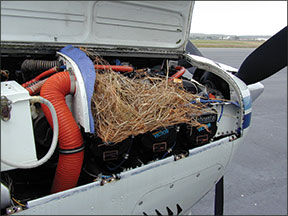
When it comes to preflighting an airplane, there is nothing more true. Sure, you can follow the diagram laid out in the pilot’s operating handbook, or routinely drone through a do-list of items a mile long that are spelled out in the aircraft’s preflight check list, but if you don’t understand what problems you are looking for, what’s the point?

Read More »
Features

Max-Gross Weight Ops

My brother slipped me a piece of paper on which he’d jotted three numbers: 260, 240 and 180. If you haven’t guessed, they’re weights. Add me and the load is 860 pounds well-marbled (not 170-pound), above-average Americans. Add full tanks, 56 gallons of fuel and we would approach gross weight. I had yet to add backpacks, fly-fishing gear and food for a week, but after that I’d have to start trading fuel for payload, and worry about CG as well. Welcome to the world of gross-weight ops.

Read More »
Pilot in aircraft
Sign-up for newsletters & special offers!

Get the latest stories & special offers delivered directly to your inbox.

SUBSCRIBE