Register

Search Results for: Lear 45

Pilot Proficiency

Left Seat: Pilots and Controllers

Air traffic controllers are terrific people dedicated to helping pilots complete their flights smoothly and safely. That is a true statement until the smooth part, or maybe even the safe part, comes into conflict with the only absolute requirement in ATC, which is to separate airplanes under its control from one another by required minimum […]

Read More »
Aircraft

Stuart Woods: Real Flying, Real Fiction

I remember, back when I lived in Kentucky, watching news coverage one evening of a midair collision that had occurred that day. The TV news reporter was giving his report on the accident while standing in front of a tied-down Piper Archer at the local airport. The Archer had foam-backed, silver, reflective sunshades in all […]

Read More »
Learning Experiences

Wax On, Wax Off

In a recent ferry flight, I encountered a sudden and very irrational electrical and avionics failure as I entered IMC conditions. I was in a Cirrus SR22 with an Avidyne MFD, an Aspen PFD and a full set of steam gauges to boot. Within about one minute of entering the clouds for a descent, instruments began to fail and then come back on. They often came back with confusing data. The twin Garmin 430s also failed and came back-and then failed again-and so it went for what seemed like hours.

Read More »
Accident Probes

Mountain Wave

Learning to fly as I did in the relatively flat Eastern U.S., I never really had to deal much with windy, mountainous terrain until after I earned my instrument rating and started using a personal airplane for transportation. My most memorable encounter involved flogging a Skyhawk north out of Asheville, N.C., at 9000 feet. Improbably, I had a tailwind. All was well until passing Mt. Mitchell, the highest point in North Carolina. While I enjoyed the tailwind, I did not enjoy the mountain wave it generated. I soon found my relatively heavy 160-hp Skyhawk needed to be in a climb attitude with full power-which aint much-to maintain a descent rate of less than 300 fpm.

Read More »
Airmanship

Finessing Fuel

Few in-flight emotions evoke more sweat and discomfort than when youre unexpectedly low on go-juice and arent sure your remaining fuel is enough to keep the engine spinning until touchdown. If ever youve experienced the accompanying emotional swing, you already know that they stay with you. First comes disbelief-“I cant be that short….” Next comes the quiet surge of adrenaline-juiced anxiety between asking yourself the useless rhetorical question-“How did this happen?”-and when you turn to a useful one: “What do I do to survive this?” For the lucky, the final wave of emotions comes after the airplane is on the ground intact, on a real runway with the engine running…if, that is, youre really living well.

Read More »
Preliminary Reports

May 20, 2010, Plattekill, N.Y., Cessna 172N

At about 2145 Eastern time, the airplane was substantially damaged when it impacted the ground in a residential area shortly after takeoff. Night visual conditions prevailed. The private pilot and one passenger were seriously injured; the other two passengers sustained minor injuries.

Read More »
Aircraft

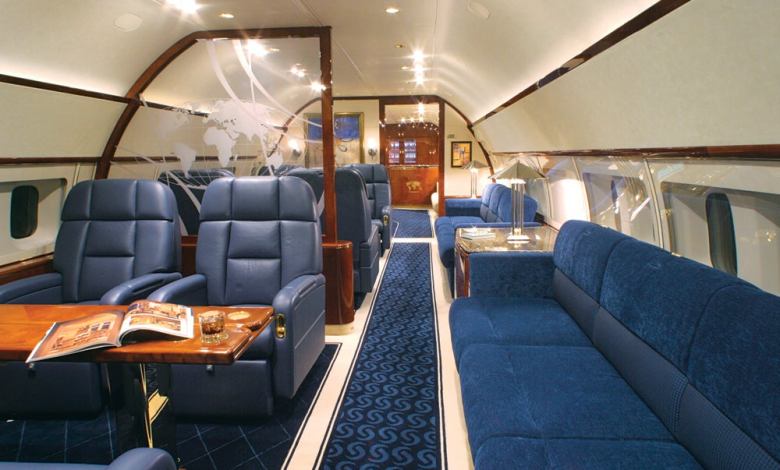
Gear Up: The Intricate Installation of Elegance and Range

JUNE 2010 — ON A COLD WINTER’S DAY, an elegant Boeing 737-700 painted a subdued gray flew low toward the east over a very rural portion of Delaware, arched its back and turned to the north, then reversed course to land on the just barely 5,000-foot runway at Georgetown (KGED). With a spirited roar of […]

Read More »
Aircraft

Embraer Phenom 300

June 2010 — Like every other aviation journalist, I’ve been watching the development of the Embraer Phenom 300 for a few years now, and the more I’ve learned about the emerging light jet, the more I’ve come to appreciate just what an innovative airplane it is. It is, in essence, Embraer’s attempt to stretch the […]

Read More »
Training and Proficiency

The Short-Final Scud Run

June 2010 NOT ALL THAT long ago even the best full-motion jet simulators had very basic visual presentations that were restricted to nothing more than a view straight ahead through the windshield. Most simulators had a television-style screen mounted in each pilot’s windshield, and you couldn’t really see anything except the display on your side. […]

Read More »
Preliminary Reports

April 8, 2010, Seattle, Wash., Grumman G-1159 Gulfstream II

The airplane collided with a fuel truck at about 1845 Pacific time while taxiing. Although the two flight crewmembers, three passengers and single flight attendant were not injured, the fuel truck driver sustained minor injuries. The airplanes left wing was structurally damaged. Visual conditions prevailed.

Read More »
Pilot in aircraft
Sign-up for newsletters & special offers!

Get the latest stories & special offers delivered directly to your inbox.

SUBSCRIBE