











Search Results for: Lear 45
Secrets to Recovering a Sunken Airplane
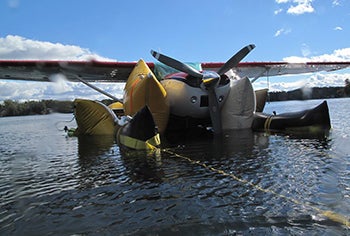
Thursday, October 11, 2012, a floatplane capsizes in Glen Lake, New York. The two pilots that were in the aircraft escaped without injury. The local emergency services were activated. After ensuring the safety of the pilots, a volunteer dive team decided that they would flip the aircraft back over. After attempting unsuccessfully for many hours, […]
November 6, 2012, Wichita, Kan. Cessna 208B Grand Caravan
At about 0745 Central time, the airplane was substantially damaged when it collided with a hedgerow during a forced landing following a loss of engine power shortly after takeoff. The solo commercial pilot was fatally injured. The airplane was operated as a Part 135 on-demand cargo flight. Day visual meteorological conditions prevailed.
High At Night
These pages often have extolled the virtues of night flying, with less traffic and smoother air foremost among them. In almost the same breath, however, we also caution against the many ways night flying can trip us up. Yes, our basic inability to, you know, actually see things outside the airplane can be a problem, but that’s only part of the challenges we face when flying at night.

Superjet 100 Captain’s Mistake Revealed
The Russian captain of a Sukhoi Superjet 100 that crashed in Indonesia last May inhibited the airplane’s terrain-warning system after receiving what he apparently judged to be a spurious nuisance alert, crash investigators say. Indonesian investigators said the Superjet’s TAWS sounded a warning 38 seconds before the twinjet slammed into a mountain in the jungle […]

Riding The Storm Out
The flight data recorder retrieved from the crashed twin-engine, modern turboprop revealed that while flying in an area of thunderstorm-generated, airframe-shattering turbulence, its airspeed was 60 knots greater than the published turbulence penetration speed, or the speed for maximum gust intensity (VB). An inflight break-up occurred; structural pieces of the airframe were strewn over miles of countryside. Abnormally increased structural loads imposed on the airframe were suspected as a contributing factor in the accident.

October 6, 2012, Mabank, Texas Beech A36 Bonanza
The airplane impacted terrain at about 0945 Central time. The private pilot, pilot-rated passenger and two other passengers were fatally injured. The airplane, which was powered by a Rolls-Royce 250-B17C turbine engine installed under a Soloy Conversions, Ltd., supplemental type certificate, sustained substantial airframe and engine damage. Instrument conditions prevailed; an IFR flight plan had been activated. The flight originated from the airplane’s base, which did not have jet fuel, at about 0845.According to preliminary…
Let Yourself Down
As an instrument instructor I’ve learned one of the most common topics of confusion among pilots is, “When is it safe—and expected—to descend in the process of an instrument arrival?” Confusion isn’t limited to non-professionals. One of the most frequent topics for quizzes and reviews in professional pilot journals involves determining the correct altitude to fly at various points on a charted terminal procedure.

Grand Renaissance Commander Levels Up the Twin Turboprop
Kevin McCullough’s grandfather, who started a Commander service center called Aero Air in 1956, used to say: “God never made a low-wing bird.” So when McCullough was old enough to start flying, there wasn’t much choice. “I learned to fly in a Lark Commander, got my multiengine rating in a Shrike Commander and then went […]
