Register

Search Results for: Lear 45

Accident Probes

NTSB Reports: March 2017

After taking air samples at various altitudes, the airplane was returning to its base and overshot a turn to the Runway 36 localizer. Shortly thereafter, the pilot reported an on-board fire. The airplane, which was at 1700 feet, lost altitude rapidly and radar contact was lost. The accident site was consistent with the airplane striking the ground at a high velocity, low angle of impact in a left wing slightly low attitude. There was a ground fire after impact.

Read More »
Avionics and Gear

We Fly: G1000 NXi

In the dozen or so years since Garmin’s G1000 integrated flight deck made its debut in Cessna and Diamond single-engine airplanes, the cockpit has steadily evolved to offer new features and improved displays that have managed to keep it fresh and relevant. Even in the face of Moore’s Law, the idea that ­suggests electronics double […]

Read More »
System

Runway Incursions

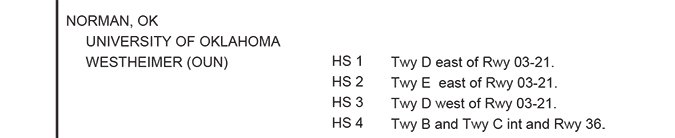
With all the distractions in the cockpit-whether its loading the navigator, copying a clearance or simply dropping the only pen you brought along-its no surprise that close calls on the ground are still common. Perhaps not surprising, but not acceptable either. After all, we have a lot of tools to help us remain safe on the ground. Weve had ground-safety procedures drilled into our heads in recent years. GPS is common now for taxiing, along with lots of signs and lights to guide us. So runway incursions and related incidents ought to be on the decline. As it turns out, though, things havent improved.

Read More »
Technique

No More Medicals?

The FAA has released the medical requirements for the Pilots Bill of Rights 2 (PBOR2) and quite frankly, I think it is a home run for general aviation, pilots, and the AOPA who fostered it through Congress. The new program is called BasicMed that is technically the FAAs implementation of medical requirements in the PBOR2 portion of the FAA Extension, Safety, and Security Act of 2016 known (of course) as FESSA. The final rule from the FAA, released January 10, 2017, and effective May 1, 2017, can be found on the FAA web site, FAA.gov.

Read More »
Avionics and Gear

Readback: February 2017

Not sure if this is a question or a frustration, but after reading the August 2016 quiz about PIREPs, it made me wonder why there are so few PIREPs in the system. It appears that most reports of icing, tops, and bases that are given to ATC never make it into the PIREP system. Most of us frequently report these conditions when departing or arriving, however I seldom take the time to change frequency and submit an official PIREP. Is there a process or key phrase that we can say to ATC to ask them to submit the PIREP on our behalf. Seems like if a pilot reports icing in climb or in descent to departure or approach, ATC should submit that report as a PIREP.

Read More »
Technique

Best Glide Speeds

Perhaps we should cut right to the life-saving takeaway: If youre engine-out in a typical single and gliding into a headwind of 15 knots or more, pitching down to at least 10 knots over published best glide speed will probably extend your glide range. This is true down to short final. Holding best glide into a headwind on short final and see you clearly wont make it? Pitch down and see if that improves things. Just remember to slow back to your normal procedures for the actual landing, using or shedding those extra knots as necessary.

Read More »
Sim Challenge

The IFR Simulation Challenge

A friend of mine used to work in customer support for a simulator manufacturer. He told me the most common customer support question was: OK, Im sitting at the end of the runway. Now what? Imagine a pilot in the real world pondering an equivalent question. There you are sitting at the end of the runway, engine running, and thinking, Hmm. What should I do with this airplane? Yet thats the abyss many folks face-and turn their backs on-when trying to use a simulator for proficiency.

Read More »
System

How We Goof with ATC

Periodically, NASAs Aviation Safety Reporting System publishes many of the most meaningful ASRS report submissions that relate to various specific aspects of aviation, such as weather, near-midairs, GPS and the like. We looked at these selected reports covering Air Traffic Control, with a view toward lessons we can learn in dealing with ATC, better practices we can follow, and generally ways to do things better. Youll note two recurring themes. The first is incorrect pilot readbacks of controller instructions and controllers not catching the mistake. The second is pilots turning incorrectly left, right or to the wrong heading, or similar errors with altitude, as in this first case below.

Read More »
Aircraft

Our First Look at the Gulfstream G500

For all the talk about lingering economic uncertainty and struggling aircraft market segments, it’s hard to think back to a more fascinating time for the business aviation industry. From emerging models like the Cessna Denali turboprop and Cirrus Vision Jet to larger airplanes, including the HondaJet, Pilatus PC-24, Citation Hemisphere, Bombardier Global 8000 and Dassault […]

Read More »
Aircraft

We Fly: One Aviation Eclipse 550

The crisp Michigan air afforded a visibility of at least 30 or 40 miles as we approached Mackinac Island (KMCD) in Ken Ross’ Eclipse 550, N140NE. The airplane sported a jazzy black-and-gold paint job that already had me thinking the flight would be different from the one I’d taken in the original Eclipse nearly eight […]

Read More »
Pilot in aircraft
Sign-up for newsletters & special offers!

Get the latest stories & special offers delivered directly to your inbox.

SUBSCRIBE