










On The Air: May 2018
For years, V141 from Boston would take you to CELTS and then to DRUNK, which mysteriously became DUNKK around St Patricks Day a few years back. I dont recall any announcement. I wonder if that was a lucid moment of sobriety.


For years, V141 from Boston would take you to CELTS and then to DRUNK, which mysteriously became DUNKK around St Patricks Day a few years back. I dont recall any announcement. I wonder if that was a lucid moment of sobriety.

Your favorite phrase as a pilot probably isnt, Go around. You might have been set up on final, aircraft perfectly configured, ready to call it a day, and suddenly youve got to throw all that out and try again. For a controller, the go-around is a last-minute tactic to resolve insufficient clearance or some other unexpected danger. Sure, it fixes an immediate problem, but it instantly creates other risks. Whether ATC initiates it, or you do, its adding complexity for everyone involved.

During initial interviews with NTSB officials, the pilot of the Airbus AS350B2 that crashed into New York’s East River on March 11 was unable to recall how many photographic flights he had conducted on the day of the accident. He could only remember that his duty day began about 11 a.m. local time and that […]
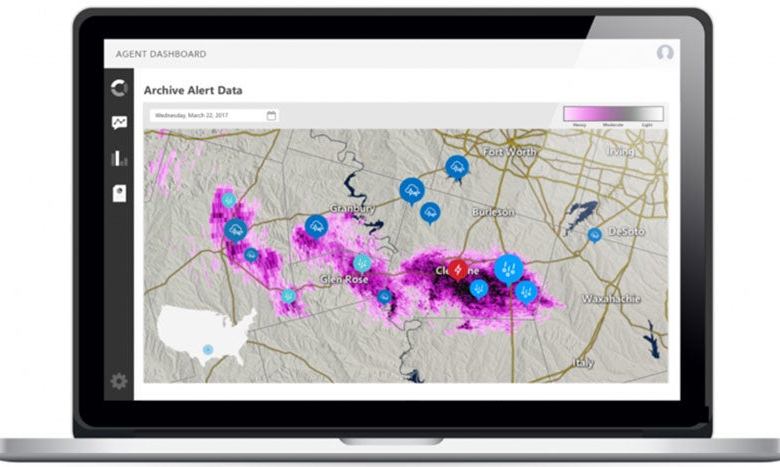
Baron, a worldwide creator of meteorological hardware, software and data, has added a 36-hour global turbulence and icing forecast data to its Baron Weather API allowing customers to create a vertical profile of both clear-air and in-cloud turbulence, icing and winds and temperature aloft, along their entire route all on the Baron website. Importantly too, […]

About 1 hours into the return flight, I noticed I was switching fuel tanks more frequently than normal. The headwind I now had was payback for the tailwind on my arrival flight. From 12,000 feet msl down to 4000, the headwind was here to stay. I spent several minutes deciding if I had enough fuel. After going back and forth, I decided to play it safe and admit I didnt plan appropriately for the headwind. I located my new destination which was just 10 miles ahead. A sigh of relief came over me as I chose the safer option, stopping to refuel.
At about 1725 Eastern time, the airplane sustained substantial damage following a landing gear separation during landing. The flight instructor in the right seat and the pilot receiving instruction in the left seat sustained no injuries. Visual conditions were present.

First my condolences and prayers go out to the entire Halladay family; his was a tragic loss.I commend Mr. Wright on his emphasizing risk management awareness, not only regarding the A5 but similar general aviation safety issues. Unlike many light sport aircraft that I am familiar with, the A5s inherent engineering design and safety features are second to none.
Over the last couple of years, Ive spent some time helping students transition to full-fledged private pilots. One of the first questions I do is ask them is to picture a standard six-pack of steam-gauge instruments and explain what they each do and where they get their energy. Most pilots can quickly rattle off the airspeed indicator, the altimeter and the vertical speed indicator. Those systems are relatively simple to understand and describe.
On the way out of Florida for Hurricane Irma, it was very, very busy on frequency with everyone trying to get out of the state. ATC was doing a great job of handling very heavy traffic loads, and still managing to provide flight following to the greatest extent possible, when I happened to overhear the following exchange:

From time to time we look at weather accidents, reviewing the factors that might have led to poor decision making or perhaps even weather that could not be anticipated. In this edition well take a look at the crash of a Pitts biplane in IMC conditions in California, and a Beechcraft Baron that went down in bad weather in Kentucky. Both of these incidents took place in April, so they should give you some food for thought this time of year.

Get the latest stories & special offers delivered directly to your inbox.
SUBSCRIBE