Register

Search Results for: Citation X

News

Cessna Gears up for Moving Corvalis Production to Kansas and Mexico

Starting next week, Cessna’s Corvalis 350 and 400 (nee Columbia) will share factory space with the Citation Mustang and Cessna’s other single-engine, piston-powered products. The Corvalis models were acquired by Cessna two years ago, and had been being built in the original Columbia plant in Bend, Oregon. One of Cessna’s moves in response to the […]

Read More »
News

Cessna Details New Cutbacks on Piston Line

Cessna has announced it will follow up on a production cutback on its Citation jet line for this year with further slowdowns on its piston aircraft output. According to the company, the resulting “work force adjustment” is not expected to exceed 500, including job losses associated with an announcement made last June. In addition, Cessna […]

Read More »
Pilot Proficiency

SimCom Training Centers

Back in 1989, businessman Wally David made an interesting observation: Computer graphics technology was improving so dramatically that a whole new realm of simulator training was about to become possible. With the new graphics technology, a non-moving Flight Training Device (FTD) might be able to provide a realistic sensation of movement simply by incorporating high-quality, […]

Read More »
Aircraft

Cancellations Continue Into Q2 as Cessna’s Revenues Drop

According to a report from parent company Textron, Cessna delivered 84 Citations in the second quarter of this year, compared with 117 for the same time period last year. Revenues also decreased by $630 million, a shortfall of some 42%. Profits were down also, to $48 million (from $214 million) due to low sales volume […]

Read More »
News

Textron Pulls the Plug on Cessna’s Columbus Project

Cessna’s parent Textron has announced the cancellation of the Columbus large-cabin jet program. First announced in 2006, what would have been the largest Citation had notched orders for some 70 units at a price of $27 million each. The current sales climate caused Cessna to suspend development of the Columbus a little more than two […]

Read More »
Photos

Hey, Let’s Make It Another Day!

“Whoosh!” Blustered the gust from the Amtrak Metroliner as it roared past the railroad crossing in my dream. I’d managed to incorporate the sound into my dream but then when Rueben, our geriatric Aussie mix, barked to go out in the middle of the night, I realized it wasn’t the Amtrak train; it was the […]

Read More »
Aircraft

Coal-Burning Turbofan?

A coal-powered CitationJet? It just might happen. Williams International, the turbofan engine manufacturer, has completed an extended engine run of one of its FJ44-3 turbofans running fuel made from coal. The tests, which included 21 hours of operation and 118 operating cycles, were extremely promising and confirmed, Williams said, the promise of the FJ44, a […]

Read More »
Photos

Airline Transport Professionals

When it comes to pure size and reach, no ab initio/professional career flight training academy can surpass Airline Transport Professionals (ATP), a flight academy founded in 1984 in Jacksonville Beach, Florida. With 25 locations now stretching from San Diego and Fort Lauderdale to Trenton, New Jersey, and another four locations (Charlotte, Tampa, Indianapolis and Oakland) […]

Read More »
Airmanship

Getting Higher

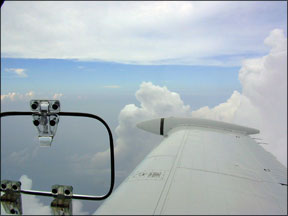
I doubt I ever flew higher than 4500 feet while earning my private pilot certificate. I remember 9000 feet as “high-altitude flying” when working on my instrument rating. Perhaps it was a function of the training environment, or a result of piloting low-powered airplanes. I think more likely it is expediency and the “little-plane” mindset that causes most training to be done at lower altitudes. Which begs the question: Are there any advantages to flying higher up, and if so, how should pilots plan for higher-altitude flight? Many pilots have found theres a “sweet spot” for cross-country flying, above the general crowd but below the realm of turbine airplanes, where traffic is scarce but the advantages are many. This is flight in the mid-teens (of altitude), which Ill define as anything from about 12,000 feet to 17,500 feet MSL. Here youll avoid much of weathers worst, enjoy almost-certain direct-to routing and overfly the majority of “ATC required” airspace. What are the advantages of flying between 12,000 and 18,000 feet? Probably the biggest one is youll usually find clear air. I find the mid-teens to be especially advantageous when flying in areas of forecast thunderstorms-usually youll be above the general haziness and murk abounding on the muggy days that promote thunderstorm development, allowing you to see and maneuver around the big build-ups from dozens of miles away. Mid-teen flying often puts you in less turbulent air than the skies down below, and the airs much cooler, improving pilot and passenger comfort. Its much less stressful to cruise in VMC, so mid-teen flying can reduce fatigue and workload. Be careful, however, to avoid overflying weather thats outside the certified capability of your airplane, or that youre not equipped or experienced enough to handle if an engine or instrument malfunction forces you to descend from your planned cruising altitude (see the sidebar, “Unplanned Descent,” on page 14).


Read More »
Photos

Embraer Phenom 100

The entire normal operating checklist for the new Embraer Phenom 100 light business jet fits on both sides of a laminated card that you can slide into a shirt pocket. While other business jets need giant spiral-bound pages upon pages to go through before liftoff, the Phenom is designed to cut pilot workload to a […]

Read More »
Pilot in aircraft
Sign-up for newsletters & special offers!

Get the latest stories & special offers delivered directly to your inbox.

SUBSCRIBE